


 Wolfspeed Sues Navitas Over GaN and SiC Patent Infringement
  Morgan Stanley Says China’s Reusable Rocket Progress Poses Long-Term Challenge to SpaceX
  Nvidia Tightens AI Chip Sales in Asia With Stricter Customer Approval Process
  OpenAI Executive Fidji Simo to Step Down Amid Health Challenges Ahead of IPO
  Deutsche Bank Fined A$2 Million by ASIC Over OTC Derivatives Reporting Errors
  Zhipu AI Raises HK$31.37 Billion in Discounted Share Sale to Accelerate AI Growth
  Elon Musk Says Anthropic Leads AI Race as Claude Models Challenge OpenAI
  SK Hynix Soars 13% in Nasdaq Debut After Record $26.5 Billion IPO
  Mastercard Explores Sale of Majority Stake in UK Payments Firm Vocalink: Report
  Yaskawa Electric Shares Slide as Weak Profit Overshadows Strong AI Demand
  Genesis Minerals to Acquire Vault in A$5.6 Billion Deal After Regis Withdraws
  OpenAI GPT-5.6 Set for Wider Release After U.S. Commerce Approval, Report Says
  Nippon Paint Reportedly Offers Up to €7.5 Billion for Akzo Nobel Decorative Paints Business
  Paramount-Warner Bros. Discovery Merger Faces Lawsuit From 12 States
  Samsung Chairman Lee Jae-yong Expected to Meet Nvidia CEO Jensen Huang on AI and Chip Partnership
  AstraZeneca Shares Sink After Wainua Trial Misses Key Heart Disease Goal
  SK Hynix’s $28 Billion U.S. Share Sale Draws Massive Demand Amid AI Chip Boom


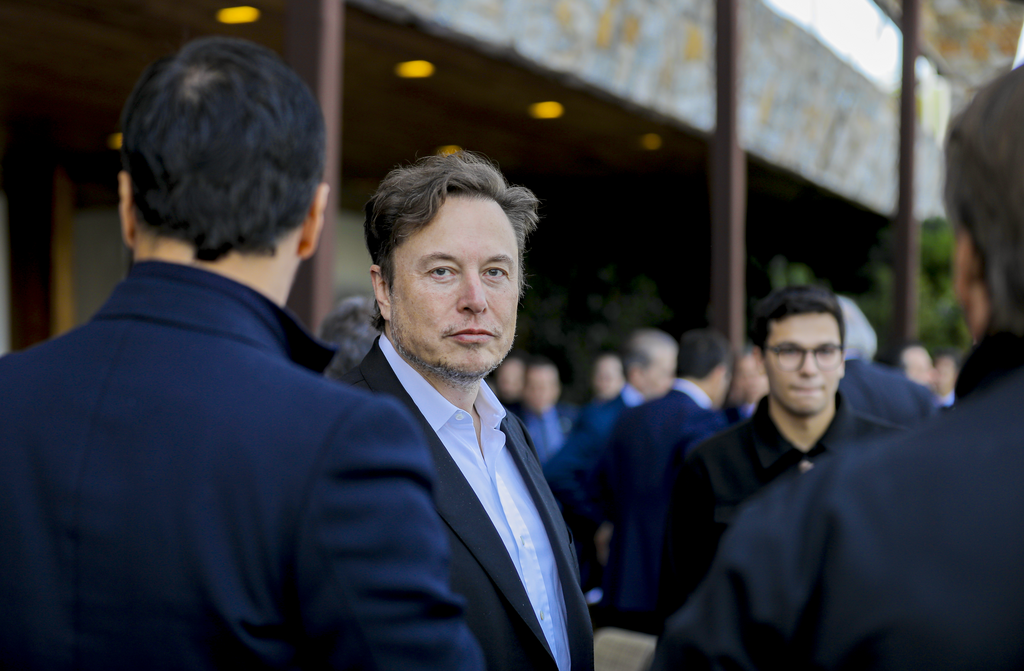
Tesla CEO Elon Musk has cautioned investors and technology enthusiasts that the early production rate of the company’s highly anticipated Cybercab robotaxi and Optimus humanoid robot will be “agonizingly slow” before accelerating significantly over time. His comments highlight the manufacturing challenges Tesla faces as it moves deeper into autonomous driving technology and robotics, two areas that are increasingly central to the company’s long-term valuation and strategy.
Tesla’s market capitalization, currently around $1.39 trillion, is driven largely by investor optimism surrounding its self-driving capabilities and humanoid robots, even though electric vehicle sales remain the company’s primary source of revenue and profit. Responding on X to a post claiming Cybercab production could begin in less than 100 days, Musk explained that manufacturing speed depends heavily on complexity. According to him, production rates are inversely proportional to the number of new parts and manufacturing steps required.
“For Cybercab and Optimus, almost everything is new, so the early production rate will be agonizingly slow, but eventually end up being insanely fast,” Musk said. This reflects Tesla’s approach of enduring early bottlenecks in exchange for long-term scalability.
The Cybercab is a fully autonomous, two-seater robotaxi designed without traditional manual controls such as a steering wheel or pedals. Tesla has previously stated that it remains on track to begin volume production of the Cybercab in 2026, while Optimus humanoid robot production is expected to start, hopefully, toward the end of that year.
Tesla has already made progress in robotaxi testing. In December, Musk revealed that the company was testing autonomous vehicles without safety monitors in the front passenger seat. Last year, Tesla also launched a limited robotaxi service in Austin, Texas, using Model Y vehicles equipped with Full Self-Driving software. These early robotaxi operations were geo-fenced and included human safety monitors.
Musk has repeatedly emphasized that Optimus could eventually surpass Tesla’s vehicle business in value. He believes humanoid robots could unlock massive economic potential by handling tasks humans are unwilling or unable to perform, positioning Tesla at the forefront of AI, robotics, and autonomous mobility.







