


 Nvidia CEO Jensen Huang Says AI Investment Boom Is Just Beginning as NVDA Shares Surge
  Bank of Japan Signals Readiness for Near-Term Rate Hike as Inflation Nears Target
  SpaceX Prioritizes Moon Mission Before Mars as Starship Development Accelerates
  Trump Signs Executive Order Threatening 25% Tariffs on Countries Trading With Iran
  Prudential Financial Reports Higher Q4 Profit on Strong Underwriting and Investment Gains
  South Korea’s Weak Won Struggles as Retail Investors Pour Money Into U.S. Stocks
  U.S.-India Trade Framework Signals Major Shift in Tariffs, Energy, and Supply Chains
  U.S. Stock Futures Slide as Tech Rout Deepens on Amazon Capex Shock
  OpenAI Expands Enterprise AI Strategy With Major Hiring Push Ahead of New Business Offering
  Tencent Shares Slide After WeChat Restricts YuanBao AI Promotional Links
  CK Hutchison Launches Arbitration After Panama Court Revokes Canal Port Licences
  Global Markets Slide as AI, Crypto, and Precious Metals Face Heightened Volatility
  Gold and Silver Prices Slide as Dollar Strength and Easing Tensions Weigh on Metals
  Trump’s Inflation Claims Clash With Voters’ Cost-of-Living Reality
  Dollar Near Two-Week High as Stock Rout, AI Concerns and Global Events Drive Market Volatility
  Asian Stocks Slip as Tech Rout Deepens, Japan Steadies Ahead of Election
  Russian Stocks End Mixed as MOEX Index Closes Flat Amid Commodity Strength


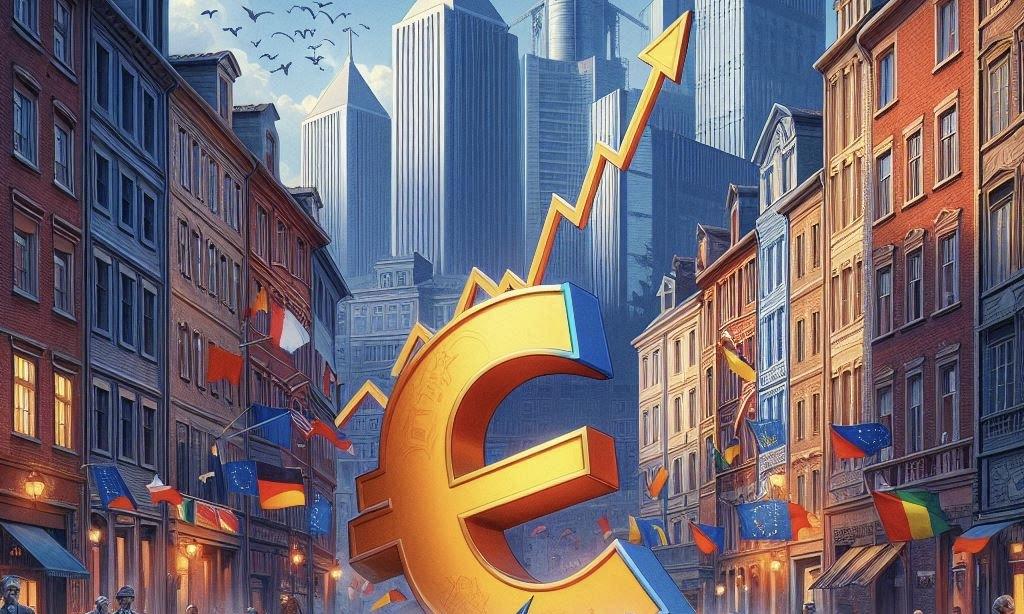
Inflation in the eurozone fell sharply to 2.2% in August, clearing the path for the European Central Bank to consider a rate cut in September, as lower energy costs eased price pressures across the bloc.
Eurozone Inflation Nears ECB Target, Rate Cuts Likely as Energy Prices Decline
The European Central Bank can reduce interest rates as the ECB and the U.S. Federal Reserve prepare to lower borrowing costs to support growth and employment. In August, inflation in the 20 European Union countries that use the euro fell sharply to 2.2%.
According to data released on August 30 by Eurostat, the European Union's statistical agency, the August figure decreased from 2.6% in July. In August, energy prices decreased by 3%, reducing the aggregate figure. Additionally, inflation in Germany, the eurozone's largest economy, reduced to 2%.
The monthly figure is currently approaching the ECB's objective of 2%, which is the level deemed to be most beneficial for the economy. According to the treaty that established the European Union, the central bank is responsible for maintaining constant prices. All 27 European Union member states do not utilize the euro.
The ECB is anticipated to reduce its key rate by a quarter point from 3.75% at its meeting on September 12, while the Fed is expected to lower rates from a 23-year high of 5.25%- 5.5% at its policy meeting on September 17-18. This assumption is based on economists' opinions.
The lower German inflation figure “tilts the balance toward a September rate cut,” said Carsten Brzeski, global chief of macro at ING bank. “Fading inflationary pressure combined with fading growth momentum offers an almost perfect macro backdrop for another rate cut.”
Some economists warn that the descent to 2% may be tricky. The European Central Bank has indicated that inflation is anticipated to fluctuate, but it is expected to decrease to its target by the end of the year.
Central Banks Face Balancing Act as Interest Rates Curb Inflation but Threaten Growth
In response to the global economy's recovery from the COVID-19 pandemic, central banks initiated a significant increase in interest rates to mitigate an inflationary surge that was precipitated by a rise in energy prices following Russia's invasion of Ukraine and by congested supply chains for raw materials and parts, per Yahoo Finance.
Inflation can be mitigated by increasing interest rates, which increase the cost of borrowing and purchasing goods, thereby decreasing the demand for goods and alleviating the pressure on prices. Europe's inflation has declined significantly since October 2022, when it peaked at 10.6%.
However, an increase in interest rates can also impact growth, and these concerns have been highlighted in both the United States and Europe. Although both economies maintain low unemployment rates, central bankers are increasingly concerned about the potential consequences of keeping rates at an excessively high level, such as job losses or a recession. It is a complex equilibrium, as the effects of rate fluctuations are only immediately apparent months later.
The eurozone experienced a modest growth rate of 0.3% in the second quarter. While complicating financing decisions for highly rate-sensitive new renewable energy projects, high rates have halted a years-long rally in European house prices and dampened loans to consumers and businesses.
At a Fed conference in Jackson Hole, Wyoming, Philip Lane, a member of the ECB's six-member executive board that oversees the central bank's daily operations at its Frankfurt headquarters, stated that rates that are "too high for an extended period" would not mitigate the adverse effects on economic activity and employment, which could result in "chronically below-target inflation."
Lane, however, maintained that the ECB's options for September are still open, stating that a return to the 2% objective still needs to be secured. Christine Lagarde, the head of the European Central Bank, has noted that the bank will determine rates at each meeting by considering the latest economic data.
The European Central Bank implemented its initial rate reduction in June, followed by a temporary moratorium in July. Subsequently, it has been anticipated that confirmation will be made that it is feasible to implement additional rate reductions.













