


 Judge Orders $5.8 Million Payment to E. Jean Carroll After Trump Loses Appeal Bid
  US Egg Producers Settle Price Manipulation Probe, Agree to Pay $3.3 Million and Donate 53 Million Eggs
  Asian Stocks Rally as Cooling U.S. Inflation Boosts Fed Rate Cut Hopes
  South Korea’s KOSPI Triggers Trading Curb as AI Chip Stock Selloff Deepens
  China Home Prices Fall Again in June Despite Slower Pace of Decline
  Japanese Yen Holds Steady as Intervention Hopes Grow Ahead of U.S. CPI Data
  US Appeals Court Limits ICE Detention Without Bond Hearings After 90 Days
  Paramount-Warner Bros. Discovery Merger Faces Lawsuit From 12 States
  Australia Sues Amazon Over Prime Video Ads and Subscription Terms
  Dollar Rises as Middle East Conflict Fuels Inflation and Rate Hike Fears
  US Supreme Court Strikes Down Hawaii Gun Carry Law on Private Property
  Gold Prices Fall as US-Iran Conflict, Rising Oil Prices Fuel Fed Rate Concerns
  Amy Coney Barrett Faces Conservative Backlash After Key Supreme Court Rulings Against Trump
  Gold Price Holds Near $4,000 as Middle East Tensions and Fed Rate Hike Bets Grow
  Goldman Sees Foreign Investors Driving India Stock Market Recovery
  South Korea Central Bank Set to Raise Interest Rates as Inflation Stays Elevated


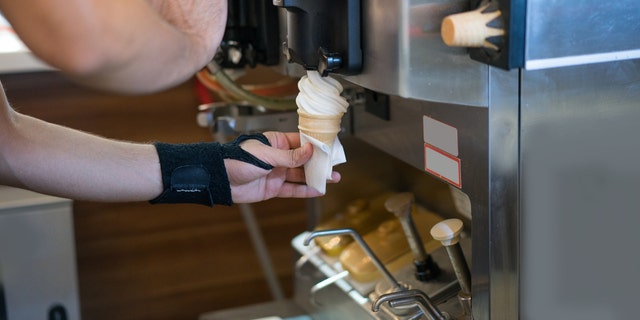
A couple that invented a gadget dubbed Kytch that helped fix McDonald’s chronically broken-down ice cream machines are suing the fast-food giant for $900 million for false advertising and tortious interference.
Kytch is a device about the size of a mobile phone that is planted inside the machines that make milkshakes, ice cream cones, and the McFlurry that are sold at McDonald’s locations.
McDonald’s buys its machines from Taylor, the manufacturer, at $18,000 apiece.
Jeremy O’Sullivan and his partner, Melissa Nelson, the creators of Kytch, tried to fix the problem by attaching the device to the machines. Kytch intercepts the machine’s internal communications and sends them via WiFi to a smartphone or web interface, where owners can troubleshoot the problem.
Kytch started to become increasingly popular among McDonald’s franchise owners — until McDonald’s told its franchisees not to use Kytch devices in November 2020.
McDonald’s intervened and warned that the hacking device violated the warranties of the ice cream machines while also posing a risk of “serious human injury.”
Kytch sued Taylor last year after Taylor allegedly obtained one of Kytch’s devices and reverse-engineered it to create its internet-connected monitoring product.
In its complaint in California Superior Court in Alameda County, K|tch described the case as being about corporate espionage and the extreme steps one manufacturer has taken to conceal and protect a multimillion-dollar repair racket.
Taylor denied having a copy of Kytch's device or wanting to steal the startup's intellectual property.
The co-founders of Kytch now claim that they sued Taylor to create a path for future legal action against McDonald's since the data that would be revealed during litigation may help their case.
Documents handed over by Taylor show that it was McDonald's that took the lead in attempting to prevent franchisees from utilizing the device, according to the Kytch developers.
According to Nelson, McDonald’s tarnished their name, scared their customers, and ruined their business. They were anti-competitive.
He added that McDonald’s had every reason to know that Kytch was safe and didn’t have any issues.
The FTC has launched an inquiry into McDonald's malfunctioning ice cream machines last fall after becoming the target of jokes on late-night television and social media.
In the US, treats made by the Taylor machines account for about 60% of the chain's dessert sales.
McDonald’s said Kytch’s claims are meritless.







