


 Apple Sues OpenAI, Former Employees Over Alleged Trade Secret Theft
  Zhipu AI Raises HK$31.37 Billion in Discounted Share Sale to Accelerate AI Growth
  Gold Surges Past $4150 on Dovish Fed Signals and Weak Jobs Data; Bullish Outlook Prevails
  USA at 250: the Black American struggle for life, liberty and the pursuit of happiness
  TSMC Q2 Revenue Surges 36% as AI Chip Demand Powers Growth Ahead of Earnings
  Elon Musk Says Anthropic Leads AI Race as Claude Models Challenge OpenAI
  OpenAI Executive Fidji Simo to Step Down Amid Health Challenges Ahead of IPO
  SK Hynix Soars 13% in Nasdaq Debut After Record $26.5 Billion IPO
  Chinese Chip Stocks Jump as Apple Reportedly Tests CXMT Memory Chips for China Devices
  SpaceX Stock Draws Bullish Wall Street Coverage Ahead of Nasdaq-100 Inclusion


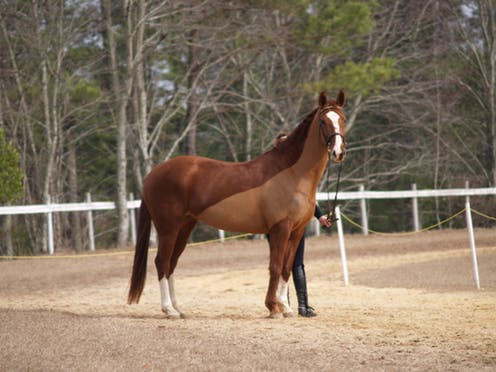



Since ancient times, horse behaviour, and the bond between horses and humans, has been a source of intrigue and fascination.
The horse-lore that has accumulated over the centuries is a rich mix of both useful practice (approaching horses from their left side, making them slightly less reactive) and unsubstantiated myth, such as the one that chestnut horses are especially difficult to deal with.
That’s why my colleagues and I at the University of Sydney are launching a global database of horse behaviour. Both vets and owners can log a horse’s physical, mental and social development, creating an evidence base on what constitutes normal and abnormal equine behaviour, and what defines good, effective and humane training.
This project builds on a similar project for dogs , which has collected information on over 85,000 dogs and been used in more than 70 research studies that have revealed behavioural differences that relate to head and body shape and the astonishing effect of desexing on behaviour.
Now it is the horses’ turn
We have created an online behavioural assessment package for horses and ponies, called the Equine Behaviour Assessment and Research Questionnaire (E-BARQ) that collects anonymous data for horse behaviour researchers, veterinarians and coaches. It’s a not-for-profit project that allows the global horse-folk community to donate their observational data to the University of Sydney and gain useful benefits in return.
Horse owners can upload photographs and videos to a custom-built app, recording their horse’s progress in training and competition over time. For the first time, they’ll also be able to compare their horse’s behaviour with that of other horses. The “share-&-compare” graphs will reveal attributes such as trainability, rideability, handling, compliance, boldness, and human social confidence.
There are two benefits. Firstly, owners can compare their horses’ behaviour to others around the world, giving them a useful benchmark.
Secondly, it will reveal the true impact of ancient traditions and modern trends. This can use used by everyone from the general riding public to veterinarians.
As E-BARQ can monitor the longitudinal consequences of different training methods, it can be a powerful tool for advancing horse welfare. It will also inform evidence-based judgements on the ethics and sustainability of horse sports.
Human safely, horse welfare
Horse vets know the importance of horse behaviour, as it often affects their safety. Indeed, a recent UK study has shown equine vet practice to be the civilian occupation with the highest risk of injury, surpassing firefighters. But vets also rely on owners to observe horse behaviour because it indicates health and recovery from surgery or disease. With the permission of owners, vets and riding coaches can monitor their clients’ horses over time in the app.
The questionnaire and app will expose how training and management influences horse behaviour, and vice versa. They will reveal how breeds differ in responses and illuminate breed-typical personality types, how male and female horses differ, how horses used in different disciplines (such as showjumping versus dressage) differ in their behaviour and how horse behaviour changes with maturation and training.
A horse’s behaviour has a direct impact on its usefulness and that, in turn, affects its value and – sadly – the care it receives. There is evidence from Europe that over 65% of horses outside the racing industry are slaughtered before the age of seven, very often for behavioural reasons.
Understandably, given riding is the most dangerous sport for children, parents crave authentic assessment of ponies’ behaviour. Information in E-BARQ could potentially help buyers identify warning signs of dangerous behaviours and make more informed choices.
By providing researchers with an unprecedented wealth of information, E-BARQ has the potential to revolutionise the way we train and manage our horses and, as a result, make real and lasting positive changes in horse welfare and the sustainability of horse sports.







