


 Asian Stocks Mixed in March 2026 Amid Iran War Fears and Tech Selloff
  Canada's Economy Grows Modestly in January 2025, Driven by Energy and Construction
  U.S. Dollar Posts Strong Monthly Gain Amid Middle East Conflict Despite Late Dip
  Gold Prices Rebound But Head for Worst Month Since 2008 Amid Iran War Uncertainty
  China Manufacturing PMI Hits 12-Month High Amid Energy Price Concerns
  Gold Prices Surge as U.S.-Iran Ceasefire Talks Spark Market Optimism
  South Korea's Exports Hit Record High in March on AI-Driven Chip Demand
  Gulf War Ceasefire Hopes Weigh on Dollar Ahead of Trump Address
  Gold Prices Rebound in Asia Amid Iran War Ceasefire Hopes
  Dollar Surges to Nine-Month High as Middle East Tensions Drive Safe-Haven Demand
  Oil Prices Climb as Middle East Conflict Keeps Supply Risks Elevated
  Japan's Business Confidence Rises Despite Iran War Uncertainty, BOJ Rate Hike Expected
  Oil Prices Surge to Record Monthly Highs as Middle East War Rattles Global Markets
  Trump Claims Iran Sought Ceasefire as Middle East War Escalates
  Oil Prices Hold Near Multi-Year Highs Amid Iran Conflict and Hormuz Supply Fears
  Japan Business Sentiment Rises as Iran War Fuels Inflation Fears, BOJ Rate Hike Looms
  U.S. Stock Futures Surge After WSJ Report on Trump's Iran War Exit Strategy


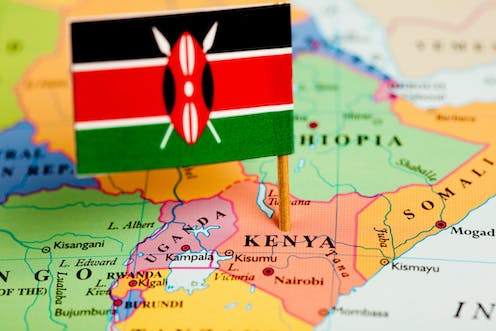

Kenyans are grappling with the high cost of living. Policy analyst Adan Shibia led a technical team that prepared a recent report on the state of Kenya’s economy. We asked him to unpack what’s driving costs, who’s affected and what can be done about it.
What is the cost of living crisis in Kenya and how bad is it?
There has been a general increase in prices of necessities like food, transport and energy. But incomes haven’t risen as much as prices. As a result consumers have less purchasing power than before. They are being forced to consume less of everything, or reallocate spending.
Real earnings growth declined by an average of 2.7 percentage points between 2020 and 2022. The earnings growth rate has been lower than inflation.
Since 2022 Kenya has been experiencing high inflation. Between June 2022 and June 2023 overall inflation averaged 8.7%, peaking at 9.6% in October 2022. This was the highest inflation recorded since 2017.
The government has a policy target of maintaining inflation within 2.5 percentage points above or below 5%. So the ceiling would be 7.5%. In June 2022 overall inflation rose above this ceiling, and remained above it up to June 2023.
Inflation is a measure of the rise in prices of a “basket” of goods selected by the Kenya National Bureau of Statistics. The main drivers of inflation were food and transport (fuel). These on average account for 42.56% of the consumption basket for all households in Kenya. Price increases for food and fuel averaged 13.5% and 12.3% between June 2022 and June 2023.
The triggers for this inflationary pressure were prolonged drought in 2022 and the Russia-Ukraine war, which disrupted global supply chains of food, energy and fertiliser.
Who is being affected the most?
There are three groups of consumers who are affected more than others.
The first group are low-income earners who spend over 60% of their incomes on food. The analysis in the Kenya Economic Report 2023 shows that prices of cereals, legumes, tubers, fruits and vegetables all increased substantially.
Low-income earners are also affected through prices of other commodities in the consumer basket. These include housing (rent and utilities) and transport. This is particularly the case in urban areas.
The second group of people affected most are minimum wage earners. The rise in their incomes didn’t match inflationary trends. The minimum wage has lagged behind the living wage, which is how much a worker must earn to pay for their family’s minimum basic needs. The basic needs are food, housing, clothing, healthcare, education, water, sanitation, transport and communication.
Minimum wage provisions are not well enforced, especially in the informal sector, where 83% of those employed work.
The third group are those living in arid and semi-arid parts of the country, where rainfall is low and erratic and temperatures are high. Households in these counties generally have low incomes and face multidimensional poverty. In counties such as Turkana and Wajir households spend over 70% of their income on food. They are also more likely to be affected by climate related shocks that disrupt food supply and livelihood sources.
What’s driving the rising cost of living?
A confluence of factors in the domestic and global markets is responsible.
In the domestic market, prolonged drought in 2022 was the main trigger. This disrupted food supply, increasing reliance on imports. The depreciation of the Kenya shilling against major trading currencies like the US dollar, the euro and the pound sterling also contributed to the rise in prices of imported commodities like food, fuel and fertiliser. While Kenya is a net exporter of unprocessed food items, it is a net importer of processed food products.
Within the global context, the Russia-Ukraine war disrupted supply of cereals (especially wheat), edible oils, energy and fertilisers. Kenya was to a large extent dependent on imports of wheat and fertiliser from Russia and Ukraine.
The surge in oil prices within the global markets also trickled to pump prices locally.
What policy priorities could help?
The long-term solution is policies that stimulate the private sector to produce and distribute goods and services more efficiently. Mechanisms to support markets include platforms for trading and access to information. A policy and legal framework that defines rules of interaction among market participants is also useful. This creates a level playing field for everyone. Markets also need clarity on property rights and incentive systems.
Strengthening the role of markets is vital because government has limited resources to subsidise basics like fuel, electricity and maize flour. With stronger markets, private sector players would also be more efficient in production and distribution of products.
Secondly, Kenya needs cushions against drought-related shocks. The key here is climate-smart agricultural practices such as improved crop varieties, adoption of early maturing crop varieties, irrigation and kitchen gardening technologies. And it’s vital to have better early warning systems, to prepare for climate change related risks.
The third consideration is improved infrastructure to ensure food supply: market information systems, transport and storage facilities.
Fourth, price fluctuations need to be addressed. The Kenyan government is currently rolling out County Aggregation Industrial Parks across the 47 counties. They are intended to support agro-processing industries by providing space, utilities, cold storage and so on. They will help even out prices of products across seasons. Processing fresh produce is essential for longer shelf lives and stable prices.
Fifth, the government must encourage private sector investment in the production of electric mobility vehicles. Fuel is the second key driver of inflation in Kenya. Kenyan households spend 9.65% of their income on transport and the transport sector consumes 75% of imported petroleum products. A shift to electric mobility is an opportunity to reduce exposure to global fuel price fluctuations.
Sixth, cushioning the vulnerable sections of the population is an area for consideration. This includes enforcement of minimum wage provisions and aligning it with the living wage. Access to affordable financial services such as credit and insurance would help households avoid falling into extreme poverty due to shocks and catastrophic expenditures such as health-related expenses.
Well-targeted social protection interventions are essential as policies are implemented towards market-enabled solutions for effective interactions of demand and supply.







