


 TrumpRx.gov Highlights GLP-1 Drug Discounts but Offers Limited Savings for Most Americans
  China Warns US Arms Sales to Taiwan Could Disrupt Trump’s Planned Visit
  India–U.S. Interim Trade Pact Cuts Auto Tariffs but Leaves Tesla Out
  U.S.-India Trade Framework Signals Major Shift in Tariffs, Energy, and Supply Chains
  Federal Judge Restores Funding for Gateway Rail Tunnel Project
  Pentagon Ends Military Education Programs With Harvard University
  Jack Lang Resigns as Head of Arab World Institute Amid Epstein Controversy
  Trump Signs “America First Arms Transfer Strategy” to Prioritize U.S. Weapons Sales
  Trump’s Inflation Claims Clash With Voters’ Cost-of-Living Reality
  Japan Election 2026: Sanae Takaichi Poised for Landslide Win Despite Record Snowfall
  U.S. to Begin Paying UN Dues as Financial Crisis Spurs Push for Reforms
  South Korea Assures U.S. on Trade Deal Commitments Amid Tariff Concerns
  Iran–U.S. Nuclear Talks in Oman Face Major Hurdles Amid Rising Regional Tensions
  U.S. Lawmakers to Review Unredacted Jeffrey Epstein DOJ Files Starting Monday
  Netanyahu to Meet Trump in Washington as Iran Nuclear Talks Intensify
  Missouri Judge Dismisses Lawsuit Challenging Starbucks’ Diversity and Inclusion Policies


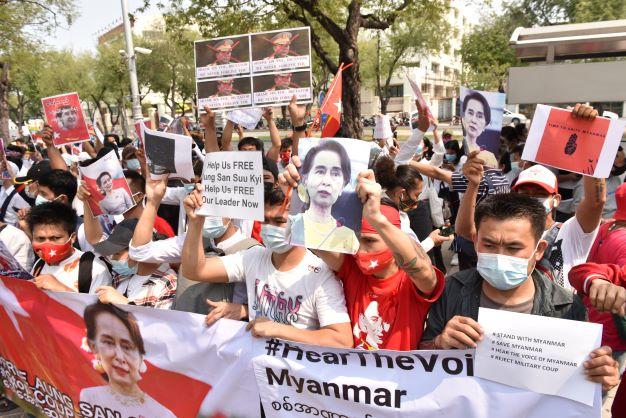
Myanmar has been under military rule since its generals seized power in a coup in February last year. Despite the country’s military possessing more modern arms and weapons, the coup opponents have made significant gains in the country.
In a piece by Al Jazeera, the country’s anti-coup fighters have only strengthened their resolve despite suffering from serious injuries due to the military. Previous reports found that the resistance, paired with militia groups that oppose the military rule, has made territorial gains in more rural areas in Myanmar, with the shadow government and international experts revealing that the resistance has control of over half the country.
The shadow government, the National Unity Government, declared a nationwide “people’s defensive war” against the well-armed military back in September last year. Over a year later, the NUG reported that resistance forces have control of more than half the country while describing the year ahead as a “decisive year” of the final standoff with the military.
This September, a panel of independent international experts that make up the Special Advisory Council for Myanmar also had similar findings as the NUG. In the assessment published by the council, resistance forces have control of 52 percent of Myanmar, and the country’s military is in an “irreversible decline” in its capability to function as a government.
The gains made by the resistance were not without casualties of their own. The NUG said that at least 1,500 members of the resistance groups were killed and 700 were injured as of August this year.
The military has killed hundreds and detained thousands in its crackdown on coup protesters shortly after the generals seized power from the elected government. Since the coup, Myanmar has become isolated and sanctioned by several countries.
The United States and the European Union have announced additional sanctions on Myanmar. This time the sanctions are targeting officials, arms dealers, and companies as experts and activists are urging tougher measures to be implemented against the generals. The EU’s sanctions target 19 additional individuals and entities, including a minister and a chief justice.
Washington’s sanctions target arms dealer Kyaw Min Oo and his Sky Aviator Company.













