


 X Challenges Australia’s Expanded Social Media Ban Enforcement Powers
  Standard Chartered Beats Profit Forecasts as First-Half Earnings Rise 9%
  Zhongji Innolight Raises $6.8 Billion in Hong Kong IPO as AI Demand Fuels Growth
  Nvidia Invests $1 Billion in Naver as South Korea AI Data Center Expansion Gains Momentum
  TSMC Gradually Restarts Japan Chip Plant After Kumamoto Earthquake
  TeamViewer Shares Fall Despite Profit Growth as ARR and Customer Base Decline
  ASML, Applied Materials Slide as China DUV Chip Equipment Breakthrough Sparks Market Jitters
  Sika Raises 2026 Sales Outlook After Strong First-Half Results Beat Expectations
  Philips Shares Slide 10% Despite Earnings Beat as Weak Orders Raise Growth Concerns
  CXMT IPO Debut in Shanghai Puts $85.5 Billion Chipmaker in Spotlight
  Unilever Raises 2026 Sales Outlook After Strong Q2 Volume Growth
  Meta CEO Zuckerberg Opposes U.S. Ban on Chinese AI Models, Warns Against Overregulation
  Exosens H1 Profit Beats Forecasts as Defense Demand Drives Growth
  Johnson & Johnson Proposes $5.5 Billion Talc Settlement to Resolve U.S. Ovarian Cancer Lawsuits
  Seagate Stock Jumps as AI-Fueled Earnings Beat and Strong FY2027 Outlook Impress Investors
  Tech Stock Positioning Nears Neutral as Investor Rotation Enters Final Phase, Deutsche Bank Says


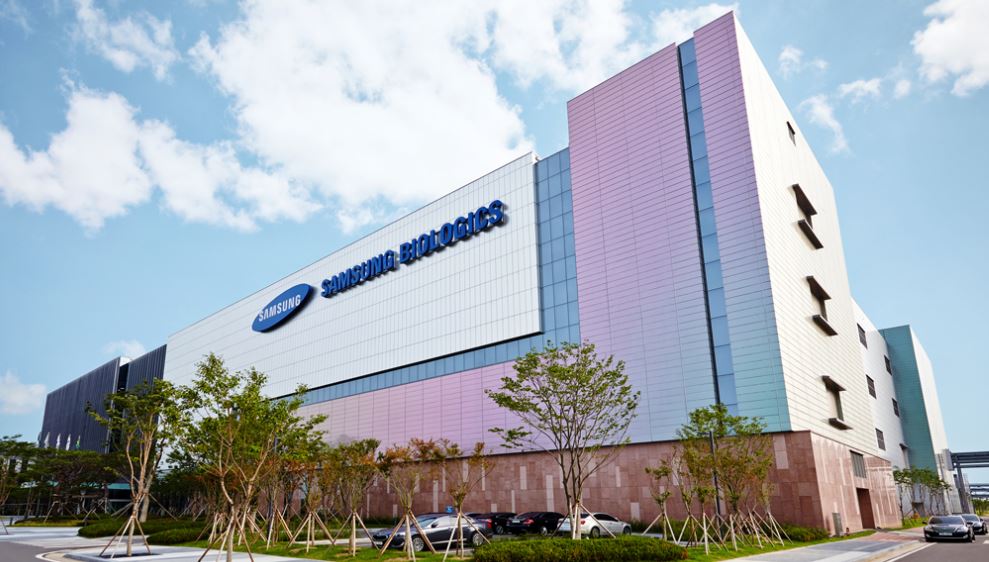
With the world impacted by the pandemic, the goal to bring medical alternatives to market first is now the utmost priority for many pharmaceutical companies. In support of finding these solutions, Samsung Biologics has signed a contract manufacturing agreement with GlaxoSmithKline (GSK) to produce neutralizing antibodies for COVID-19.
In April, GSK invested $250 million in the research of Vir Biotechnology to create a collaborative COVID-19 antibody treatment. With no approved treatment currently on the market, the collaborative efforts are looking at antibodies of recovered patients to see how they can help new patients recover. This is different than plasma therapy with antibodies because Vir is selecting key antibodies from the plasma to establish a process easier to administer on a large scale, making it more efficient to reach a global market. Samsung Biologics looks to help speed up that solution by offering its manufacturing service to GSK
The boost of outsourcing contracts that Samsung Biologics has gained during the COVID-19 pandemic can be largely chalked up to their unwavering drive towards quality and innovation. The company prides itself on offering a wide range of services, so clients need fewer jumps in their production and testing process.
Samsung Biologics also recently announced plans for a fourth plant expansion—estimated to invest around 2 billion USD—which will maximize operational efficiency, scale up its development and manufacturing capabilities, and through a second bio complex, foster biotech companies with an Open Innovation Center and global R&D facility.
In a time where resilient supply chains and pharmaceutical solutions are desperately needed, Samsung Biologics is filling the gap. Clients can use the large capacity and proven regulatory track record to place their products in good hands for a faster-to-market turnaround. The company also works to cut excess production time and create a development process that works best for the client. The goal is to get quality products into the hands of the patients that desperately need them.
This article does not necessarily reflect the opinions of the editors or management of EconoTimes







