


 Wolfspeed Sues Navitas Over GaN and SiC Patent Infringement
  AstraZeneca Shares Sink After Wainua Trial Misses Key Heart Disease Goal
  OpenAI Executive Fidji Simo to Step Down Amid Health Challenges Ahead of IPO
  Australia Flags Child Safety Gaps at Apple, Meta, Google Over Online Sexual Extortion
  Apple Sues OpenAI, Former Employees Over Alleged Trade Secret Theft
  Muji Owner Ryohin Keikaku Stock Soars After Raising Full-Year Earnings Forecast
  SoftBank Corp Partners With Sierra to Expand AI Customer Support Across Japan
  Zhipu AI Raises HK$31.37 Billion in Discounted Share Sale to Accelerate AI Growth
  DOJ Grand Jury Investigates UAW President Shawn Fain Ahead of Union Election
  SK Hynix Prices Record U.S. ADR Offering at $149 After $200 Billion Investor Demand
  Kitron Q2 Revenue Beats Estimates as Defense Demand Lifts Growth
  Morgan Stanley Says China’s Reusable Rocket Progress Poses Long-Term Challenge to SpaceX
  Nippon Paint Reportedly Offers Up to €7.5 Billion for Akzo Nobel Decorative Paints Business
  TSMC Q2 Revenue Surges 36% as AI Chip Demand Powers Growth Ahead of Earnings
  Yaskawa Electric Shares Slide as Weak Profit Overshadows Strong AI Demand
  Chinese Chip Stocks Jump as Apple Reportedly Tests CXMT Memory Chips for China Devices
  SK Hynix Soars 13% in Nasdaq Debut After Record $26.5 Billion IPO


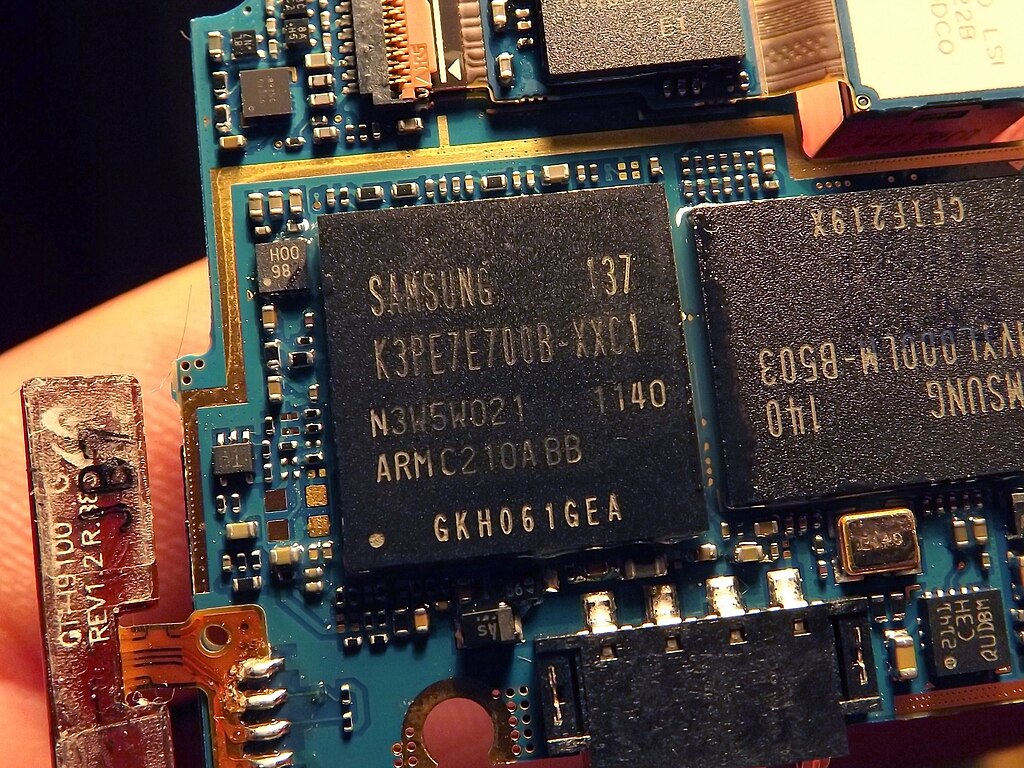
Samsung Electronics Co Ltd (KS:005930) delivered record-breaking revenue and profit in the fourth quarter of 2025, driven largely by booming demand from the artificial intelligence industry for advanced memory chips. The South Korean tech giant reported an operating profit of 20 trillion won (approximately $13.98 billion) for the three months ended December 31, matching its earlier forecast and marking a more than threefold increase from 6.49 trillion won in the same period last year.
Quarterly revenue surged to an all-time high of 93 trillion won, up from 75.79 trillion won a year earlier. Both revenue and operating profit reached the highest levels in Samsung’s history, highlighting the company’s strong rebound amid a global AI investment wave. The standout performer was Samsung’s memory chip division, which benefited from rising prices and strong margins for high-bandwidth memory (HBM) chips and other advanced processors widely used in AI data centers.
Memory chip prices climbed sharply throughout the fourth quarter and are expected to continue rising in the near term as AI-driven demand accelerates. Advanced memory solutions are a critical component in AI workloads, supporting large-scale data processing and model training. Samsung stated that in the first quarter of 2026, favorable market conditions fueled by the ongoing AI boom are expected to persist, with the company prioritizing high value-added memory products designed specifically for AI applications.
In 2025, Samsung largely closed the technology gap with competitors Micron Technology (NASDAQ:MU) and SK Hynix (KS:000660) in the development and mass production of advanced HBM chips. The company also secured a major data center agreement with AI startup OpenAI, involving chip supply and the construction of AI-focused data centers in South Korea. Additionally, recent reports indicate Samsung plans to begin producing advanced HBM chips for NVIDIA Corporation (NASDAQ:NVDA) as early as February.
Robust chip performance helped offset weaker demand in Samsung’s smartphone, display module, and camera sensor businesses during the quarter, underscoring the strategic importance of AI-driven semiconductor growth to the company’s future outlook.







