


 Gold Surges Past $4150 on Dovish Fed Signals and Weak Jobs Data; Bullish Outlook Prevails
  Morgan Stanley Names Marks & Spencer Top European Retail Pick, Sees Strong Upside
  UNAIDS Urges U.S. to Reconsider South Africa HIV Funding Withdrawal
  Morgan Stanley Says China’s Reusable Rocket Progress Poses Long-Term Challenge to SpaceX
  Trump Administration Bars U.S. Travelers From Congo Flights Amid Ebola Outbreak
  US Tightens Ebola Controls as Congo Outbreak Sparks Global Concern
  Bank of America Upgrades T-Mobile to Buy, Says LEO Satellite Fears Are Overdone
  US Plans Kenya Ebola Quarantine Facility Amid Congo Outbreak
  USA at 250: the Black American struggle for life, liberty and the pursuit of happiness
  RFK Jr. Orders Extended Hantavirus Quarantine for Cruise Passenger
  France Battles Mediterranean Wildfires as Heatwave Fuels Fire Risk
  Should I take zinc or eat oysters to ward off colds, boost my immune system or improve fertility?
  Medicare to Cover GLP-1 Weight-Loss and Diabetes Drugs Starting July 1


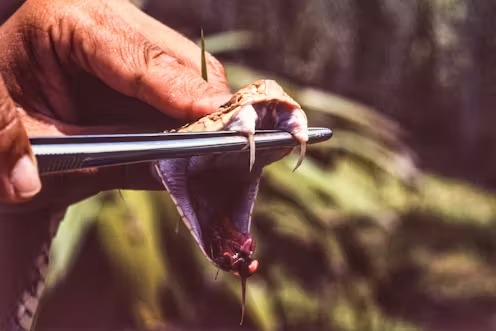



Snakebites kill over 100,000 people each year, and hundreds of thousands of survivors are left with long-term disabilities such as amputations.
Africa, Asia and Latin America are the regions most heavily affected. The most venomous snakes in Africa are the black mamba, cobras and saw-scaled and carpet vipers. In Asia, the Indian cobra, Russel’s viper, saw-scaled viper and common krait are the most venomous.
In the Central America and northern South America regions, the venomous pit viper Bothrops asper is responsible for most of the fatal and harmful bites.
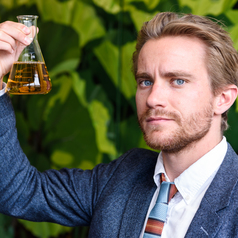
We are venom and antivenom specialists who spent four years developing a therapeutic antibody to mitigate the effects of the pit viper’s bites. We were certain that we’d met all the standards for an effective, safe and efficacious antivenom. But, at the last hurdle, we realised the antibody didn’t neutralise the snake’s toxins: it enhanced them, worsening the venom’s effects.
Initially this was, of course, very disappointing. But it was also a valuable lesson. By reporting this new way that future antivenoms can fail, we have highlighted a problem with the current recommendations for testing antivenoms that was hidden until now.
Our lesson is likely to have a much larger impact on the development of snakebite treatments than if the antibody had been a success, because the discovery will help antivenom researchers focus their efforts so they don’t fail at the last hurdle as we did.
Developing our antivenom
A large percentage of B. asper’s venom consists of potent muscle-damaging molecules called phospholipases A₂ (PLA₂s) and PLA₂-like toxins. These have severe effects, often leading to irreversible damage and disability.
Myotoxin II, a formidable PLA₂-like toxin within B. asper’s arsenal, is particularly significant. The precise mechanisms that underlie myotoxin II’s action aren’t fully understood. It is known to exert its effects locally, binding to muscle fibres and triggering muscle damage. This localised action poses a challenge for traditional antivenom treatments.
We have attempted to develop human monoclonal antibodies that target and neutralise this membrane-disrupting myotoxin II. For the first four years of our research project, the antibodies we discovered kept showing impressive effects in neutralising myotoxin II.
Even when tested in living mice, using the current gold standard for antivenom testing, the antibodies continuously showed impressive neutralisation. However, for our most promising antibody, we wanted to go a step further and carry out an experiment that more closely resembled a human envenoming, in which the antibody is injected after injection of the venom.
The results of this additional experiment were equal parts disappointing and surprising. Our most promising antibody in this last experiment changed its toxin-neutralising effect to toxin-enhancing instead, as we’ve documented in a research paper.
The results were so surprising that we decided to immediately repeat the experiment. We thought something must’ve gone wrong, like the antibody or other materials having gone bad. However, the results remained the same.
This curious phenomenon, which we termed “antibody-dependent enhancement of toxicity”, represents a novel discovery in toxin immunology. Similar phenomena have been observed in other contexts, such as with poisonous mushrooms and bacterial toxins, but never before with toxins from the animal kingdom.
Additional studies will be needed to fully understand what causes antibody-dependent enhancement of toxicity.
Reassessing preclinical models
There’s good news about this failure. It’s a chance for antivenom researchers all over the world, no matter what snake species they’re working with, to reassess their preclinical models (like the current gold standard model).
We also think antivenom researchers should consider incorporating more sophisticated experiments like the ones used in our study, which more closely resemble a real-life envenoming case. By doing so, the antivenom research community can streamline the drug discovery process. This will expedite the identification and development of safer and more effective snakebite treatments.







