


 Anthropic Eyes $350 Billion Valuation as AI Funding and Share Sale Accelerate
  Palantir Stock Jumps After Strong Q4 Earnings Beat and Upbeat 2026 Revenue Forecast
  SpaceX Seeks FCC Approval for Massive Solar-Powered Satellite Network to Support AI Data Centers
  Oracle Plans $45–$50 Billion Funding Push in 2026 to Expand Cloud and AI Infrastructure
  SoftBank Shares Slide After Arm Earnings Miss Fuels Tech Stock Sell-Off
  Nvidia Nears $20 Billion OpenAI Investment as AI Funding Race Intensifies
  Elon Musk’s Empire: SpaceX, Tesla, and xAI Merger Talks Spark Investor Debate
  Instagram Outage Disrupts Thousands of U.S. Users
  Amazon Stock Rebounds After Earnings as $200B Capex Plan Sparks AI Spending Debate
  Global PC Makers Eye Chinese Memory Chip Suppliers Amid Ongoing Supply Crunch
  SoftBank and Intel Partner to Develop Next-Generation Memory Chips for AI Data Centers
  Baidu Approves $5 Billion Share Buyback and Plans First-Ever Dividend in 2026
  TSMC Eyes 3nm Chip Production in Japan with $17 Billion Kumamoto Investment
  Sony Q3 Profit Jumps on Gaming and Image Sensors, Full-Year Outlook Raised
  Nvidia CEO Jensen Huang Says AI Investment Boom Is Just Beginning as NVDA Shares Surge
  Google Cloud and Liberty Global Forge Strategic AI Partnership to Transform European Telecom Services


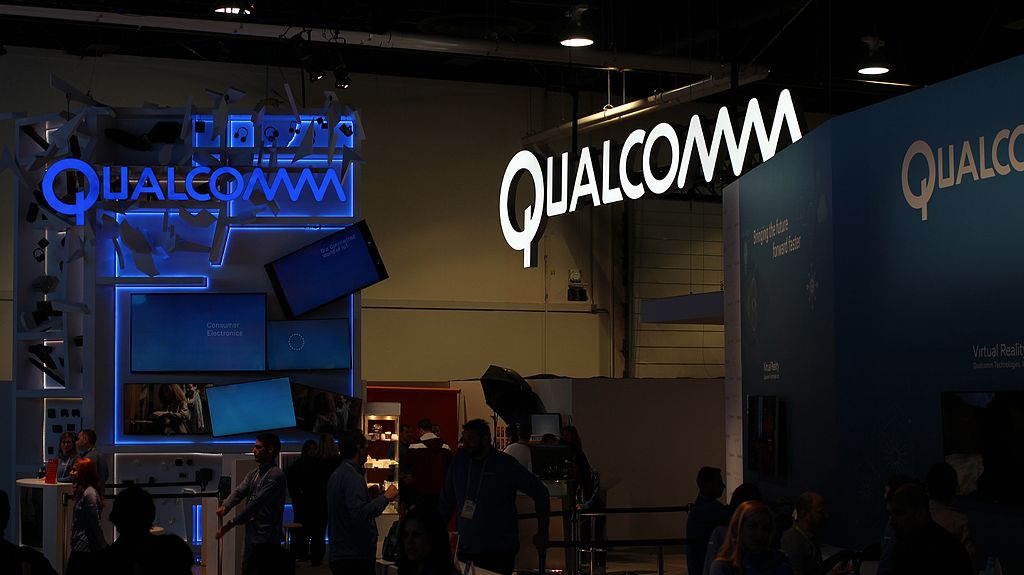
Qualcomm has already confirmed a key aspect of the Snapdragon 8 Gen 4, and an executive has now disclosed a release date for the upcoming smartphone chipset.
Qualcomm Confirms Snapdragon 8 Gen 4 Is Coming And Here's When To Expect It
Don McGuire, chief marketing officer of Qualcomm, confirmed at the Snapdragon Summit in October via a video uploaded to X (spotted by FoneArena) that the Snapdragon 8 Gen 4 would be available.
The Snapdragon 8 Gen 2 and Snapdragon 8 Gen 3 were officially introduced in October 2022 and October 2023, respectively, so this development is not entirely unexpected. Thus, the release date of the new chip is consistent with this trajectory.
McGuire reaffirmed that Oryon CPU technology would be incorporated into the Snapdragon 8 Gen 4. As the company verified this information a year ago, off-the-shelf Arm CPUs may not experience a significant increase in performance.
This week, the American chip designer also unveiled the FastConnect 7900 connectivity suite. This wireless connectivity platform features incorporated UWB capabilities and is anticipated to be included in the Snapdragon 8 Gen 4. This indicates that by 2025, a greater number of high-end Android smartphones will support UWB.
Regrettably, smartphones equipped with the Snapdragon 8 Gen 4 may be more expensive than existing models. Qualcomm has previously stated that it anticipates the forthcoming chipset to surpass the Snapdragon 8 Gen 3 in terms of cost by a certain amount.
Qualcomm Snapdragon 8 Gen 4 Power Draw Revealed
In January, leaks indicated that it would comprise two Phoenix M cores and six Phoenix L cores. Qualcomm has appropriately assigned it the internal pseudonym Sun, given the veracity of certain rumors concerning its power consumption.
DCInside, a South Korean technology forum, states in a post that one of its high-performance processors can consume up to 5.47 Watts. The sum of the power outputs of both engines is 9.32 Watts.
These are the Nuvia (likely Phoenix L) processors developed by Qualcomm, not commercial Arm Cortex variants. In a similar fashion, each Phoenix M core consumes 1.1 Watts when under duress. Under full-core conditions, the Snapdragon 8 Gen 4 can consume up to 14.2 Watts of power.
These numbers were obtained from an early engineering sample of the Snapdragon 8 Gen 4 and are subject to change in the months preceding its release. 14 watts is slightly excessive for the form factor of a smartphone and will necessitate a robust cooling solution to control temperatures.
In conjunction with the enhanced transistor density facilitated by TSMC's N3E process, this should bestow upon the Snapdragon 8 Gen 4 the necessary competitive advantage to contend with the Exynos 2500 from Samsung and the MediaTek Dimensity 9400.
Photo: Maurizio Pesce from Milan, Italia, CC BY 2.0, via Wikimedia Commons














.jpg)