


 Nighttime Shelling Causes Serious Damage in Russia’s Belgorod Region Near Ukraine Border
  US Pushes Ukraine-Russia Peace Talks Before Summer Amid Escalating Attacks
  U.S. Lawmakers to Review Unredacted Jeffrey Epstein DOJ Files Starting Monday
  Pentagon Ends Military Education Programs With Harvard University
  South Korea Assures U.S. on Trade Deal Commitments Amid Tariff Concerns
  Oil Prices Slide on US-Iran Talks, Dollar Strength and Profit-Taking Pressure
  Trump Signs Executive Order Threatening 25% Tariffs on Countries Trading With Iran
  Trump Allegedly Sought Airport, Penn Station Renaming in Exchange for Hudson River Tunnel Funding
  Trump Endorses Japan’s Sanae Takaichi Ahead of Crucial Election Amid Market and China Tensions
  U.S. Stock Futures Slide as Tech Rout Deepens on Amazon Capex Shock
  Japan Economy Poised for Q4 2025 Growth as Investment and Consumption Hold Firm
  TrumpRx.gov Highlights GLP-1 Drug Discounts but Offers Limited Savings for Most Americans
  Trump Signs “America First Arms Transfer Strategy” to Prioritize U.S. Weapons Sales
  U.S.-India Trade Framework Signals Major Shift in Tariffs, Energy, and Supply Chains
  Fed Governor Lisa Cook Warns Inflation Risks Remain as Rates Stay Steady
  Jack Lang Resigns as Head of Arab World Institute Amid Epstein Controversy


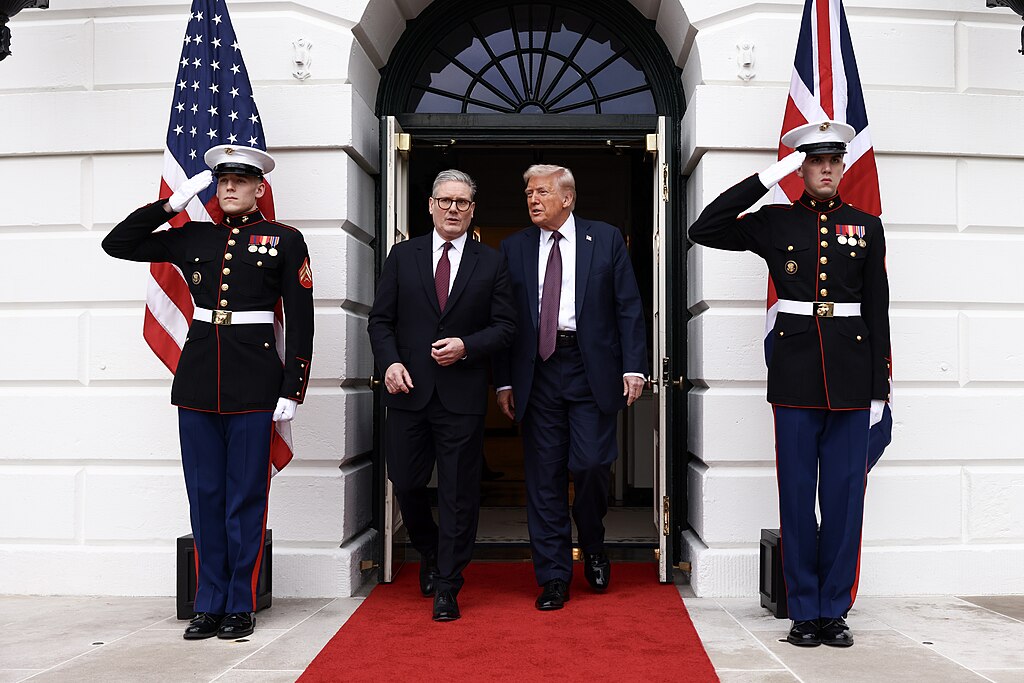
British Prime Minister Keir Starmer has expressed strong opposition to the idea of imposing tariffs on NATO allies, arguing that such measures undermine collective security efforts. Starmer made his position clear during a phone call with U.S. President Donald Trump on Sunday, following a series of discussions with key European and transatlantic leaders, including Denmark, the European Union, and NATO.
According to a Downing Street spokesperson, Starmer first spoke with Danish Prime Minister Mette Frederiksen, European Commission President Ursula von der Leyen, and NATO Secretary General Mark Rutte. These conversations focused heavily on shared security concerns in the High North, particularly in relation to Greenland, a strategically important region for NATO and Euro-Atlantic security. After these discussions, Starmer held a call with President Trump to relay his concerns directly.
During the conversation, Starmer emphasized that applying tariffs on allied nations for actions tied to NATO’s collective defense responsibilities is fundamentally wrong. He stressed that NATO allies should not face economic penalties for pursuing shared security objectives, especially at a time when geopolitical tensions continue to rise. Starmer highlighted that unity among allies remains essential for maintaining stability across the Euro-Atlantic region.
The prime minister reiterated that security in the High North is a top priority for all NATO members. He underscored that protecting this region is crucial not only for regional stability but also for safeguarding broader Euro-Atlantic interests. Greenland, in particular, has gained increased strategic attention due to its geographic location and its role in Arctic security, defense infrastructure, and emerging global trade routes.
Starmer’s comments reflect the UK government’s broader stance on strengthening alliances and promoting cooperation within NATO rather than pursuing unilateral economic measures that could strain relationships. By engaging directly with U.S. leadership and European partners, Starmer aimed to reinforce the importance of coordinated policy decisions that align security, economic stability, and diplomatic trust.
The discussions come amid ongoing debates over trade policy, defense spending, and the future direction of NATO. Starmer’s intervention signals the UK’s commitment to collective defense principles and its opposition to actions that could weaken allied solidarity at a critical moment for global security.













