


 Apple Intelligence Cleared for China as Alibaba and Baidu AI Power iPhone Features
  SK Hynix Prices Record U.S. ADR Offering at $149 After $200 Billion Investor Demand
  Morgan Stanley Says China’s Reusable Rocket Progress Poses Long-Term Challenge to SpaceX
  Trump Administration Launches AI Cybersecurity Partnership to Protect Critical Infrastructure
  BHP Faces Major Port Hedland Strike as Labor Talks Stall Ahead of Production Report
  Samsung to Launch First Yongin Chip Plant by 2029 as South Korea Speeds Up Semiconductor Hub
  SK Hynix Shares Drop After Strong Nasdaq Debut Despite $26 Billion ADR Listing
  Nvidia Invests $500M in Firmus Technologies Ahead of Planned ASX IPO
  Muji Owner Ryohin Keikaku Stock Soars After Raising Full-Year Earnings Forecast
  TSMC Q2 Revenue Surges 36% as AI Chip Demand Powers Growth Ahead of Earnings
  Apple Sues OpenAI, Former Employees Over Alleged Trade Secret Theft
  Stripe, Advent Offer $53 Billion Deal to Acquire PayPal: Reuters
  Australia Flags Child Safety Gaps at Apple, Meta, Google Over Online Sexual Extortion
  Stellantis Q2 Vehicle Shipments Rise 10% as North America Drives Growth
  Chinese Chip Stocks Jump as Apple Reportedly Tests CXMT Memory Chips for China Devices
  Samsung Chairman Lee Jae-yong Expected to Meet Nvidia CEO Jensen Huang on AI and Chip Partnership
  SoftBank Corp Partners With Sierra to Expand AI Customer Support Across Japan


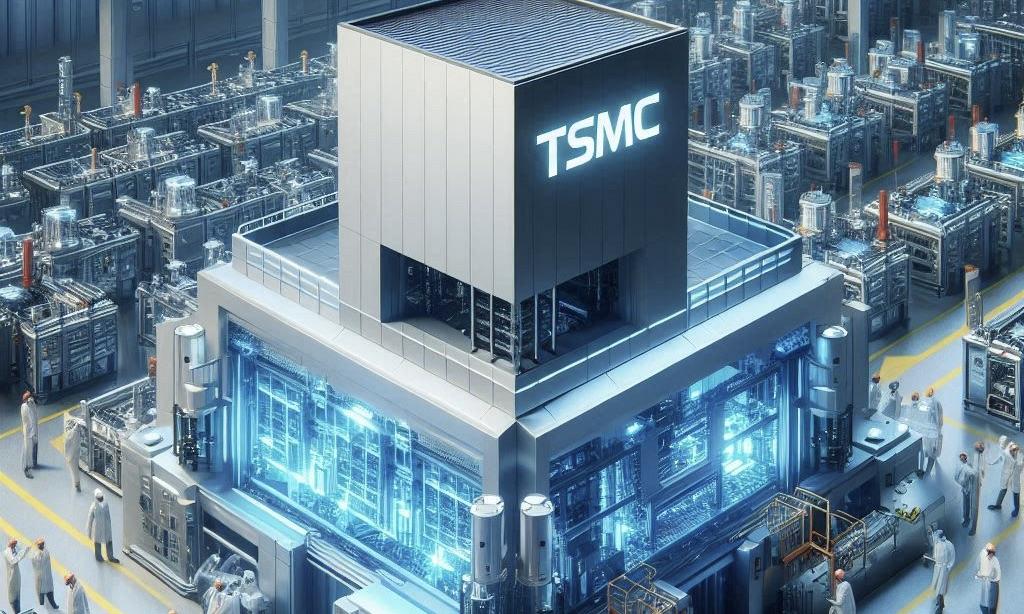
TSMC is set to receive its first high NA EUV machine from ASML later this month, bolstering its competitive edge over rivals like Samsung. The advanced scanner, priced at over €400 million, will enhance TSMC’s ability to develop cutting-edge semiconductors.
TSMC Overcomes High NA EUV Cost Concerns, Set to Receive €400M Scanner for Advanced Chipmaking
Rumors are circulating in Taiwan that the Taiwan Semiconductor Fabrication Company (TSMC) is scheduled to receive its first high NA EUV chip fabrication machine from the Dutch company ASML later this month, per Wccftech.
TSMC has been embroiled in a controversy regarding high NA machines. Initially, the company's management expressed dissatisfaction with the equipment's cost earlier this year. Subsequently, the company acquired a scanner from ASML.
Compared to their EUV predecessors, the utilization of distinct lenses enables these machines to achieve a more precise resolution of smaller circuits, thereby facilitating chip manufacturers' development of cutting-edge semiconductors. According to the specifics, TSMC's high NA EUV scanner is priced at over €400 million and may necessitate traffic planning to transport it to the company's facilities.
TSMC to Maintain Edge Over Samsung with Arrival of High NA EUV Scanner, Boosting Chip Production
According to Taiwanese industry sources, TSMC will preserve its competitive advantage over its primary contract chip manufacturing rival, Samsung, after receiving its first high NA EUV scanner later this month. Using this business model, TSMC and Samsung are the sole companies worldwide producing cutting-edge semiconductors. The Taiwanese company maintains a significant market share due to its consistent product yields and robust industry partnerships.
According to the sources, the foundry allegedly spent over €200 million on TSMC's high NA EUV machine. The scanner's dimensions also pose a challenge, as specific components exceed the height of the chambers in TSMC's facilities, rendering it impossible to disassemble. They further stated that the high NA scanner is expected to be transported to TSMC's facilities at night to prevent traffic congestion and the potential implementation of unique route management plans upon its arrival in Taiwan.
Furthermore, it is anticipated that TSMC will relocate the machine to its research and development facilities to facilitate the development of advanced process technologies. The company has previously stated that the machines may not be necessary for several years, as the current iteration of EUV scanners can produce chips until at least 2026. This assertion was made about high NA EUV. TSMC intends to manufacture its A16 process technology by that time, equivalent to 1.6 nanometers in layperson's terms.
TSMC and ASML Remain Silent on High NA Scanner, as Intel and Samsung Prepare for Adoption
ASML and TSMC declined to disclose any information regarding the scanner allegedly scheduled to arrive in Taiwan later this month. Intel, which is presently grappling with exorbitant expenses, established itself as the pioneer in high-NA equipment by receiving its initial machine late last year and operating it for the first time earlier this year. The company announced in April that it intends to implement the devices into production next year to reclaim its position as a process leader.
It is rumored that Samsung, TSMC's primary contract chip manufacturing rival, will acquire the first high NA EUV detector in either Q4 2024 or 2025. Although high NA EUV devices have challenges, such as necessitating chip manufacturers to "stitch" together half fields, they also enhance productivity and throughput. By procuring them in advance, semiconductor manufacturers can resolve the technological intricacies before risking mass production or finalizing production timelines with the equipment.







