


 OpenAI Executive Fidji Simo to Step Down Amid Health Challenges Ahead of IPO
  SK Hynix Soars 13% in Nasdaq Debut After Record $26.5 Billion IPO
  Nvidia Invests $500M in Firmus Technologies Ahead of Planned ASX IPO
  TSMC Q2 Revenue Surges 36% as AI Chip Demand Powers Growth Ahead of Earnings
  SoftBank Corp Partners With Sierra to Expand AI Customer Support Across Japan
  Morgan Stanley Says China’s Reusable Rocket Progress Poses Long-Term Challenge to SpaceX
  Bain Capital Exits Kioxia After AI-Fueled Valuation Surge
  SK Hynix Prices Record U.S. ADR Offering at $149 After $200 Billion Investor Demand
  Wolfspeed Sues Navitas Over GaN and SiC Patent Infringement
  Australia Flags Child Safety Gaps at Apple, Meta, Google Over Online Sexual Extortion
  Meta Says States Seek $1.4 Trillion in Penalties Over Teen Social Media Addiction Lawsuit
  Apple Tests China's CXMT Memory Chips as DRAM Maker Gains Global Market Share
  SK Hynix Shares Drop After Strong Nasdaq Debut Despite $26 Billion ADR Listing
  Nvidia Tightens AI Chip Sales in Asia With Stricter Customer Approval Process
  Stellantis Q2 Vehicle Shipments Rise 10% as North America Drives Growth
  Samsung to Launch First Yongin Chip Plant by 2029 as South Korea Speeds Up Semiconductor Hub
  Elon Musk Says Anthropic Leads AI Race as Claude Models Challenge OpenAI


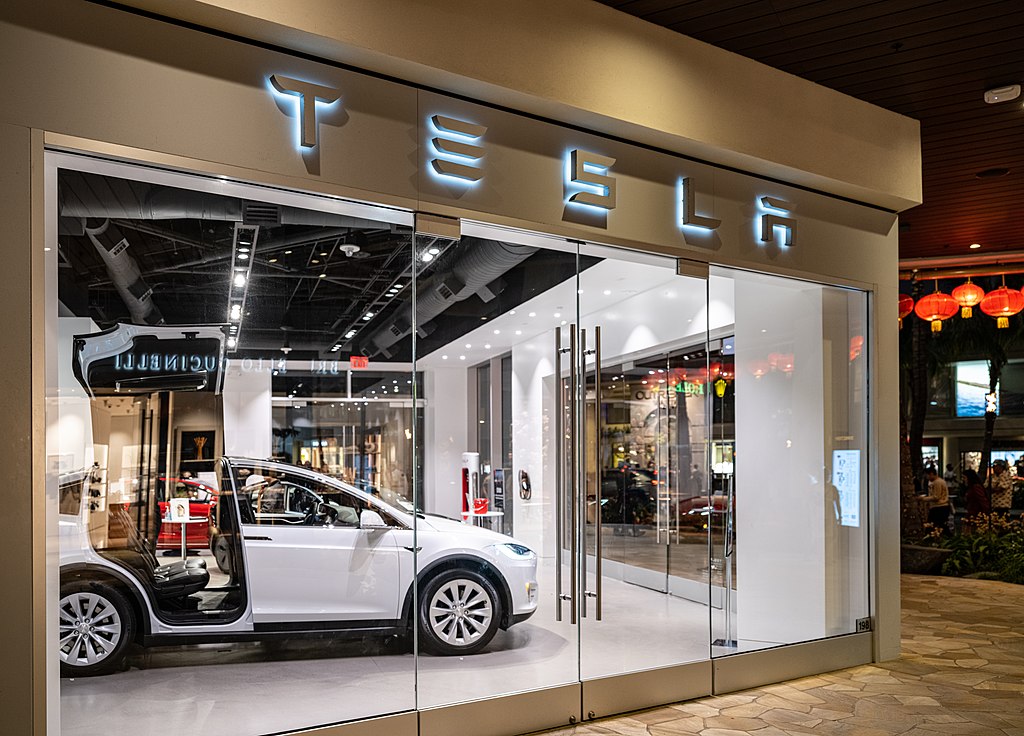
Tesla reported stronger-than-expected first-quarter 2026 earnings, driven largely by resilience in its core electric vehicle business, even as the company continues shifting focus toward artificial intelligence, robotics, and autonomous driving. The Elon Musk-led company posted earnings of 41 cents per share on revenue of $22.39 billion, surpassing analyst forecasts and signaling improved operational performance.
Despite the earnings beat, Tesla stock experienced volatility in after-hours trading, reflecting investor concerns about the company’s long-term transition strategy. Musk acknowledged uncertainty surrounding the production timeline for Tesla’s Optimus humanoid robot, emphasizing that scaling manufacturing will be slow due to the need for entirely new production systems. He also noted that revenue from robotaxis and autonomous driving technologies is unlikely to significantly impact financial results this year, though it may become more meaningful in 2027.
Tesla’s automotive segment remained a key growth driver, with revenue rising 16% year-over-year to $16.23 billion. The company delivered over 358,000 vehicles in the quarter, marking a 6% increase, while production climbed 13% compared to the previous year. Gross margins also improved, exceeding expectations and highlighting better efficiency in operations.
The company continues investing heavily in future technologies, including expanding AI infrastructure, launching new battery production facilities, and preparing manufacturing lines for upcoming products such as the Cybercab, Tesla Semi, and Megapack systems. Tesla also plans to begin construction of a large-scale factory for its Optimus robots, aiming for long-term production capacity in the millions.
While Tesla’s EV business remains central to its revenue, Musk has repeatedly positioned AI and robotics as the company’s next major growth engines. However, ongoing challenges in execution and uncertain timelines have raised questions among investors. As Tesla balances current automotive demand with ambitious future projects, market performance will likely depend on how effectively the company delivers on its long-term innovation strategy.







