


 Russia Targets Danish Ukraine Suppliers in Sabotage Campaign
  Saudi Airport Attacks Kill Three as Yemen Fighting Escalates
  US Appeals Court Keeps Trump IRS Case Sanctions in Place
  CNN, MS NOW and Politico Sue Trump Over White House Media Ban
  US Appeals Court Upholds Anthropic AI Supply Chain Ban
  US Waives $320M Egypt Military Aid Conditions After Iran War Role
  Lincoln University Students Sue Missouri Over Decades of Underfunding
  Trump Weighs FBI Probe Into Nolan Wells’ Death
  Australia Probes Flydubai Co-Pilot’s Links After FZ1073 Hijack Attempt
  Judge Orders Trump to Restore White House Access for CNN, MS NOW and Politico
  US Treasury Drops Crypto Wallet Tracking Plan
  US Conducts Non-Nuclear Explosion Test to Boost Nuclear Detection
  Trump Asks Supreme Court to Restore Third-Country Deportations
  TikTok Reaches $100 Million Alabama Settlement Over Child Safety Claims
  Judge Blocks Trump Election Conditions on Counterterrorism Grants
  Crypto Rallies as CLARITY Act Failure Opens Door to Faster SEC Rules
  EU Rejects Italy, Greece Calls for Fiscal Rule Flexibility


 Add as a preferred source on Google
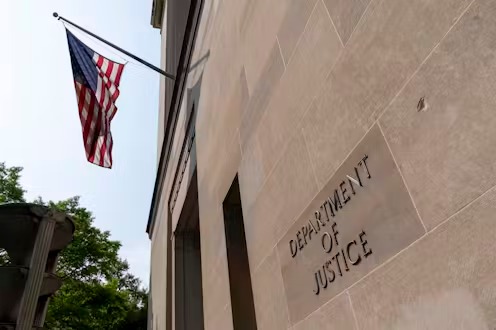
The U.S. Justice Department has filed a lawsuit seeking to block a California law that requires oil and gas drilling operations to maintain significant buffer zones from schools, homes, hospitals, and other community spaces. The lawsuit, announced on Wednesday, targets California Senate Bill 1137, a measure designed to protect public health by limiting where new oil and gas wells can be drilled and by imposing stricter safety rules on existing operations.
According to the Justice Department, the federal government is asking the court to issue an injunction to stop enforcement of the law and plans to seek a preliminary injunction in the coming days. The department argues that federal energy laws should preempt the California legislation, claiming that the buffer zone requirements interfere with federally authorized oil and gas leases. In its statement, the Justice Department said the law “would knock out about one-third of all federally authorized oil and gas leases in California,” potentially limiting domestic energy development.
Senate Bill 1137 went into full effect in 2024 and prohibits the approval of new oil and gas wells within 3,200 feet, or roughly half a mile, of sensitive locations such as residential neighborhoods, schools, and healthcare facilities. The law also introduces enhanced health and safety standards for existing wells that continue to operate near populated areas. California lawmakers and state officials have argued that these measures are necessary to reduce pollution exposure and safeguard vulnerable communities.
The lawsuit highlights ongoing political and policy tensions between the Trump administration, which strongly supports fossil fuel development, and California Governor Gavin Newsom. Newsom has consistently promoted California as a leader in climate change action and environmental regulation, often clashing with federal authorities over energy and environmental policies.
Environmental advocates have strongly defended the California law. Earthjustice, a prominent environmental group, estimates that more than three million Californians, representing about 8% of the state’s population, live within 3,200 feet of active oil wells. The organization warns that proximity to drilling sites is linked to serious health risks, including asthma, reduced lung function, and higher rates of preterm birth.
As the legal battle unfolds, the case is expected to have significant implications for environmental regulation, public health protections, and the balance of power between state and federal authority over energy policy in the United States.







