


 Rubio, Saudi Foreign Minister Discuss Iran Threats and U.S. Embassy Riyadh Attack
  Michael Whatley Wins North Carolina GOP Senate Primary, Setting Up High-Stakes Battle With Roy Cooper
  Trump Offers U.S. Insurance and Naval Escort for Tankers as Strait of Hormuz Crisis Disrupts Global Oil Trade
  U.S. Pledges Support to Turkey After Iranian Missile Threat
  Spain Denies Deal With U.S. Military After Trump Threatens Trade Cutoff
  Senators Urge Better Coordination After Texas Counter-Drone Incidents Disrupt Airspace
  U.S. Military Strikes on Iran Complicate Xi-Trump Summit and Expose China’s Energy Risks
  Trump Defends Extended U.S.-Israel Military Campaign Against Iran
  U.S. Senate Rejects War Powers Resolution Aimed at Halting Trump’s Military Campaign Against Iran
  Suspected Iranian Drone Hits CIA Station at U.S. Embassy in Riyadh Amid Rising Middle East Tensions
  Nepal General Election 2026: Youth Protests, Political Change, and a New Generation of Voters
  Iran Crisis Could Threaten AI Data Center Expansion and Global Chip Demand, South Korea Warns
  Young Trump Voters Divided After U.S. Strike on Iran and Death of Ayatollah Khamenei
  US Lawmakers Raise Security Concerns Over Intel Testing ACM Research Chipmaking Tools
  Australia and Canada Strengthen Critical Minerals Partnership Through New G7 Alliance Agreements
  Trump Signals Support for John Cornyn in Texas GOP Senate Primary as Party Seeks to Avoid Runoff
  Defense Contractors Move to Drop Anthropic AI After Trump Administration Ban


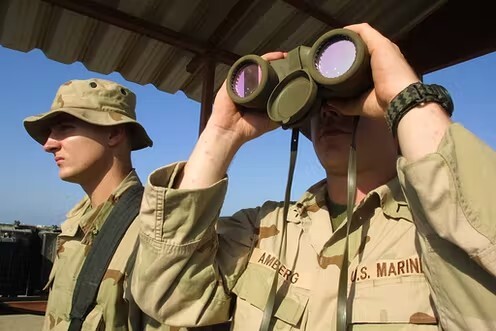
The United States is preparing to deploy approximately 200 troops to Nigeria to help train the country’s military in its fight against Islamist militant groups, according to a U.S. official. The deployment comes weeks after President Donald Trump ordered U.S. airstrikes on what he described as Islamic State-linked targets in Nigeria, signaling a possible expansion of American military involvement in West Africa.
The U.S. military confirmed last week that it had already sent a small team of troops to Nigeria, without disclosing exact numbers. This marked the first official acknowledgment of U.S. forces operating on the ground since airstrikes were carried out on Christmas Day. The additional 200 troops are expected to reinforce a limited U.S. presence already assisting Nigerian security forces with training, advisory support, and coordination.
President Trump has indicated that further U.S. military action in Nigeria remains possible. Reuters previously reported that U.S. surveillance flights have been conducted over Nigeria from neighboring Ghana since at least late November, highlighting Washington’s growing focus on the region’s security challenges. U.S. Africa Command has not yet commented publicly on the planned troop increase.
Nigeria has faced mounting pressure from Washington following accusations by Trump that the Nigerian government has failed to adequately protect Christian communities from Islamist militants operating primarily in the country’s northwest. Nigerian officials strongly reject claims of systematic persecution, emphasizing that military operations target armed groups responsible for violence against both Christians and Muslims.
Militant organizations including Boko Haram and Islamic State West Africa Province (ISWAP) have escalated attacks in recent months, targeting military convoys and civilians alike. The northwest remains a major hotspot in Nigeria’s 17-year-long Islamist insurgency, which has caused widespread displacement and insecurity.
With a population exceeding 230 million, Nigeria is nearly evenly split between Christians, who largely reside in the south, and Muslims, who dominate the north. The planned U.S. troop deployment underscores Washington’s strategic interest in stabilizing the region and supporting Nigeria’s efforts to combat extremist violence.













