


 Thailand Inflation Remains Negative for 10th Straight Month in January
  U.S.-India Trade Framework Signals Major Shift in Tariffs, Energy, and Supply Chains
  Trump Endorses Japan’s Sanae Takaichi Ahead of Crucial Election Amid Market and China Tensions
  Gold Prices Fall Amid Rate Jitters; Copper Steady as China Stimulus Eyed
  Global Markets Slide as AI, Crypto, and Precious Metals Face Heightened Volatility
  Gold and Silver Prices Rebound After Volatile Week Triggered by Fed Nomination
  RBI Holds Repo Rate at 5.25% as India’s Growth Outlook Strengthens After U.S. Trade Deal
  Dollar Steadies Ahead of ECB and BoE Decisions as Markets Turn Risk-Off


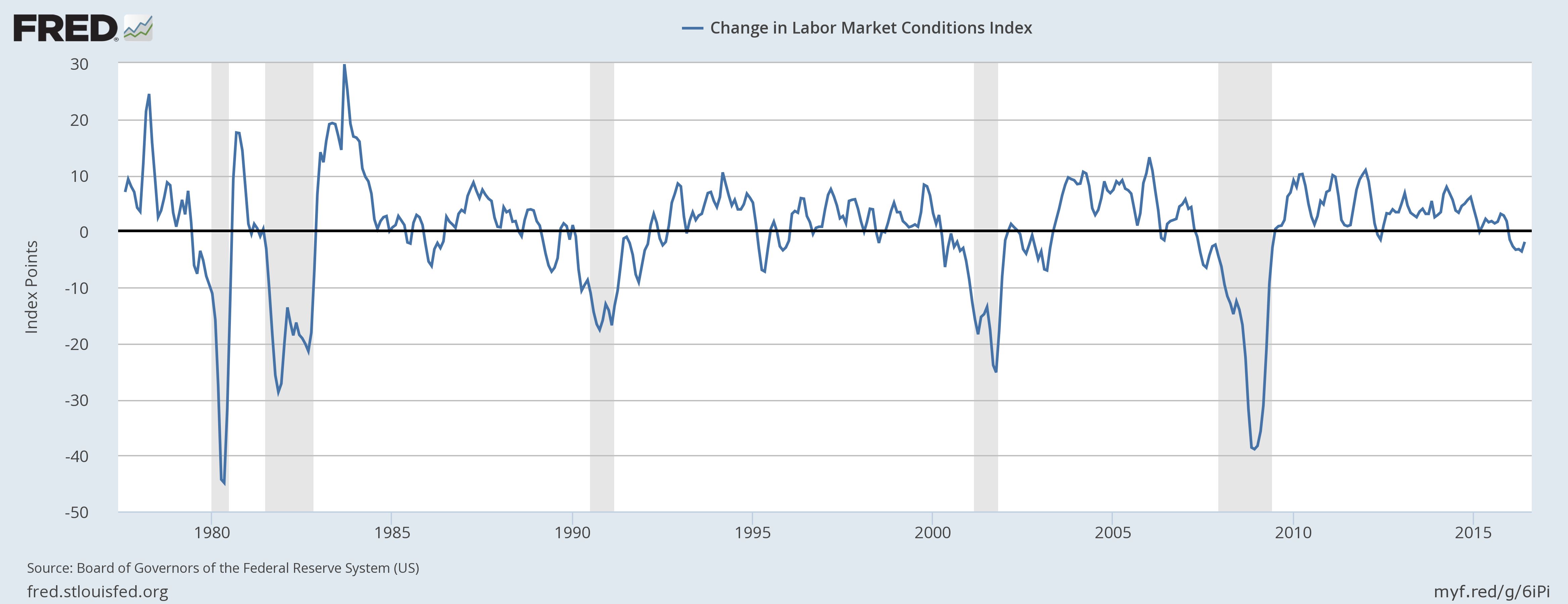
Labor market condition index (LMCI) that was developed by the U.S. Federal Reserve in 2014 to better track the conditions prevailing in the U.S. labor market is sending worrying signals. The LMCI is derived from a dynamic factor model that extracts the primary common variation from 19 labor market indicators. This year the index has been pretty weak.
In January 2016, LMCI has declined to negative territory and hasn’t been in the positive since. In May it bottomed at -3.6, the worst reading since the 2008/09 crisis.
The index since 1977 (back calculated using data) has dropped to negative 12 times (including the current) and in 8 cases it has been for long (more than 6 months) and deep. And in 5 instances among these 7 (excluding the current) the drop has been followed by deep recession.
LMCI became of the many indicators that have been warning the possibility of a recession in the United States. Focus is on today's payroll data to see what it points to - recovery or recession.













