


 SK Hynix Soars 13% in Nasdaq Debut After Record $26.5 Billion IPO
  SoftBank Corp Partners With Sierra to Expand AI Customer Support Across Japan
  Bain Capital Exits Kioxia After AI-Fueled Valuation Surge
  SK Hynix Prices Record U.S. ADR Offering at $149 After $200 Billion Investor Demand
  TSMC Q2 Revenue Surges 36% as AI Chip Demand Powers Growth Ahead of Earnings
  Samsung Chairman Lee Jae-yong Expected to Meet Nvidia CEO Jensen Huang on AI and Chip Partnership
  Samsung Q2 Profit Hits Record on AI Memory Boom as Shares Tumble
  Zhipu AI Raises HK$31.37 Billion in Discounted Share Sale to Accelerate AI Growth
  LG Energy Solution Q2 Profit Plunges 77% Despite Revenue Growth on Weak EV Demand
  Nvidia Tightens AI Chip Sales in Asia With Stricter Customer Approval Process
  Wolfspeed Sues Navitas Over GaN and SiC Patent Infringement
  China 618 Smartphone Sales Drop 13% as Higher Prices Hurt Demand, Huawei Gains Market Share
  OpenAI GPT-5.6 Set for Wider Release After U.S. Commerce Approval, Report Says
  Yaskawa Electric Shares Slide as Weak Profit Overshadows Strong AI Demand


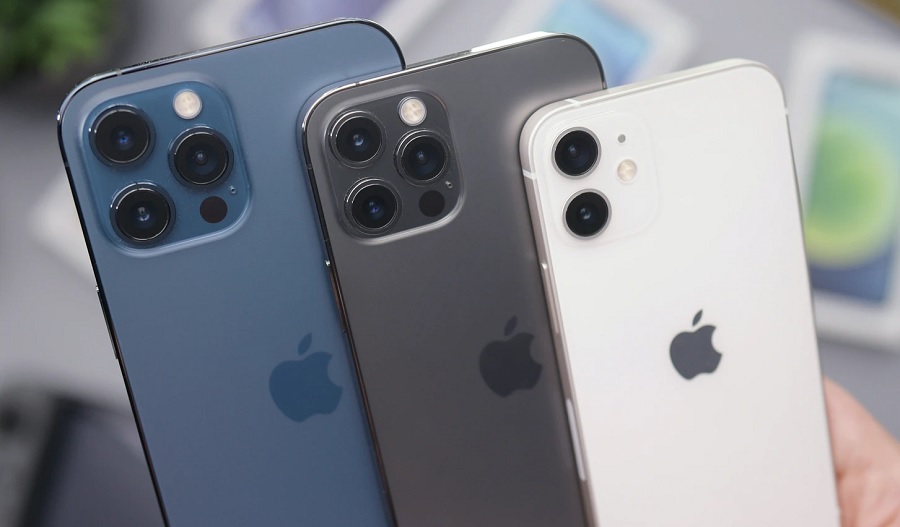
It was previously reported that, of the entire iPhone 12 series, the “mini” had the least sales in the first couple of months since the devices launched. Now, Apple is said to be shifting massive production orders from the “smallest 5G phone” to the high-end iPhone 12 Pro.
iPhone 12 Pro is a big hit for Apple, report suggests
A Morgan Stanley investor note obtained by PED30 indicated that Apple would “outperform expectations in the December quarter.” However, it is still trying to keep up with the demands for iPhone 12 Pro. With that, the tech giant is increasing the high-end model’s production for the March quarter raising by adding two million units. This figure was reportedly taken away from the initially planned iPhone 12 mini production.
The iPhone 12 series was launched a few weeks later compared to Apple’s earlier Apple launches due to the COVID-19 pandemic. But the new timeline did not seem to have an adverse effect on the new smartphones’ sales.
Why removing 2 million units away from iPhone 12 mini production makes sense
Earlier this year, the Consumer Intelligence Research Partners reported (via 9To5Mac) that the iPhone 12 lineup accounted for 76% of the total iPhone sales between October and November. For the same period, 27% of the iPhones sold were the 6.1” iPhone 12 model, followed by the two Pro models that each accounted for around 20% of the sales.
The 5.4” iPhone 12 mini only accounted for 6% of the sales, per the same report. With that data, it makes sense for Apple to offset as much as two million units for production from the mini onto the Pro models.
The iPhone 12 mini is the latest addition to Apple’s premium smartphone series. It is packed with the same upgrades as the rest of the lineup, including the new design, 5G connectivity, and OLED display, and support MagSafe accessories. Apple has seen success in previous small-build iPhones like the iPhone SE, so it was a little surprising to many how the iPhone 12 mini performed in its first months in the market.
The same report took note of analyst Mike Levin’s suggestion that iPhone 12 mini’s appeal may have been hampered by the presence of other iPhones with small screens in Apple’s official store. To this day, people can still order the iPhone 11 and iPhone XR on apple.com. Both devices have 6.1” screens with starting prices of $599 and $499, respectively, while the iPhone 12 mini costs at least $699. Apple also launched the second-gen iPhone SE with the A13 chip last April 2020 for $399 only.







