


 Disney Expands Infinity Vision to Challenge Imax
  US Suspends Microsoft, Adobe From Green Card Program
  Anthropic Launches Claude Dashboards and Motion AI Tools
  Moscow Exchange to Launch Crypto Trading on December 1
  TSMC Q3 Revenue Beats Estimates as AI Chip Demand Surges
  Starbucks Explores Chipotle Acquisition as Shares Swing
  Polkadot Launches dotUSD Stablecoin as DOT Price Falls
  Oracle Uses Trucked Natural Gas to Power AI Data Centers Amid Pipeline Delays
  Zcash Plans Quantum-Resistant Security Upgrade for January
  OpenAI Revenue Hits $50 Billion, Below Earlier $70 Billion Estimate
  Tencent Shares Fall as $5 Billion AI Bond Sale Weighed
  Blockchain.com Seeks CFTC Approval for Prediction Markets and Crypto Derivatives
  Apple Cuts iPhone 18 Pro Production Orders Amid Weak Demand
  Trump Buys Up to $25M in Meta Stock, Invests in SpaceX Debt
  David Schwartz to Reveal XRP Ledger Future at Ripple Swell 2026
  OpenAI Annualized Revenue Hits $50 Billion, Below Earlier Estimates
  DWF Labs Sues BitGo for $114 Million Over Alleged Token Sales Breach


 Add as a preferred source on Google
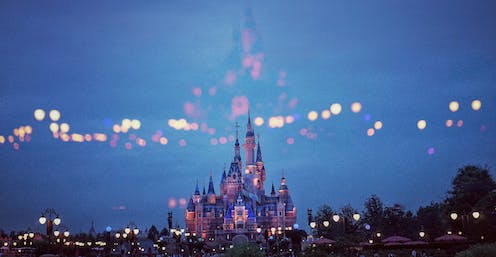

On October 16 1923, brothers Walt and Roy set up a modest cartoon studio. Their goal was to produce short animated films. They created a new character: a mouse, with large ears.
Named “Mickey”, he soon became one of the world’s most recognisable images.
Walt Disney was an innovator in terms of space, colour and movement. He had an uncanny ability to provide pleasure for millions of viewers struggling through the Great Depression.
A century later, Disney is one of the world’s largest entertainment conglomerates.
Disney has influenced countless other animation studios and artists. It has received Academy Awards for Best Animated Feature for the likes of The Incredibles, Up and Frozen. Walt himself holds the record for most nominations (59) and Oscar wins (22 competitive awards, plus four honorary awards) for a single individual.
Just how did Disney manage to do it?
Steamboat Willie and technological wonders
Based in Los Angeles, Disney set about innovating. He created The Alice Comedies, a series of short films featuring a live-action child actress in a cartoon world. Then came Oswald the Lucky Rabbit, a precursor to Mickey Mouse.
Steamboat Willie, released in 1928, was the world’s first fully synchronised sound cartoon. His pioneering use of sound quickly became an industry norm.
A simple story featuring Mickey as a steamboat captain trying to navigate the boat while dealing with various comical situations, Steamboat Willie was universally praised. After a short theatrical run in New York, the film was exhibited nationwide and set Disney on its way.
The clip of Mickey holding the ship’s wheel and whistling became the company’s logo in 2007, reminding audiences of Steamboat’s enduring importance.
New characters emerged post-Steamboat, such as Donald Duck and Mickey’s love interest, Minnie, which still endure today.
Flowers and Trees, made in 1932, was the first animated short film to win an Academy Award – it was also Disney’s (and the industry’s) first full-colour three-strip Technicolor film.
By the end of the 1930s, Disney had pivoted to feature-length animated films, releasing Snow White and the Seven Dwarfs in 1937.
The golden age and feature films
What followed Snow White is often referred to as Disney’s “golden age”, with the release of Pinocchio (1940), Dumbo (1941) and Bambi (1942).
Those early films still dazzle today – think of the Sorcerers’ Apprentice scene in Fantasia (1940) or the Pink Elephants hallucinogenic number in Dumbo. And is there any scene, in any film, more heart-wrenching than the death of Bambi’s mother?
But the golden age never really stopped. The hits just kept on coming - Peter Pan (1953), Lady and the Tramp (1955) and Mary Poppins (1964) remain enduring classics. In the 1990s, a new generation fell in love with Beauty and the Beast (1991), Aladdin (1992) and The Lion King (1994) – and these films were then remade as live-action versions in the 2010s.
Even a minor Disney film like Zootopia (2016) could make a billion dollars at the box-office.
Disneyland and diversification
In 1955, Walt Disney opened Disneyland in Anaheim, California. He wanted to build an inclusive theme park where all the family could have fun.
It set the standard for theme park design and showed the way forward for the company: diversification.
After Disneyland came Disney World in Florida in 1971, then versions of Disneyland in Paris, Tokyo, Hong Kong and Shanghai.
A famous diagram, sketched by Walt himself in 1957, foreshadowed the direction Disney would ultimately take: a huge business empire of synergies, merchandising and cross-promotion.
Buyouts and a cultural behemoth
In 2006 Disney bought Pixar, in 2009 it bought Marvel and in 2012 it bought LucasFilm. These acquisitions solidified Disney’s position as the brand leader in the entertainment industry.
Pixar was known for films like Toy Story (1995) and Finding Nemo (2003) and the purchase would lead to multiple collaborations between the two.
Most recently, in 2019, Disney acquired 21st Century Fox for a staggering US$71 billion. The deal gave them instant access to Fox’s vast back catalogues.
The deal made some industry insiders uneasy: Disney had become a cultural behemoth, strangling competition, homogenising content and swallowing up entire franchises.
Not all plain sailing
Disney films proudly prioritise family values, stress teamwork and empathy and promote gender equality. Yet until relatively recently, its heroes and heroines were very visibly white, and the studio was criticised for invoking messages of privilege, racial hierarchy and standards of beauty.
Its 1946 film Song of the South has long been criticised for its racist portrayal of African Americans and its romanticisation of the plantation era. Since 1986, Disney have tried to keep it out of circulation, although clips can be found online.
Many old films streaming on Disney+ now feature a disclaimer telling viewers some scenes will include “negative depictions” and “mistreatment of people or cultures”.
LGBTQ+ representation has become more visible since LeFou became Disney’s first openly gay character in its 2017 live-action Beauty and the Beast. But the backlash was troubling, and Disney also ran into trouble with conservative critics with its same-sex kiss in Lightyear (2022), and would later be mocked as “woke Disney” by conservative politicians and media personalities.
CEO Bob Iger – who stepped down in 2021 but was then brought back in 2022 on a huge salary – has not fared well during the recent SAG-AFTRA disputes, with comments deemed out of touch and tone-deaf by many.
Still, despite these tricky issues, Disney’s corporate stranglehold shows no sign of abating. Its reach is gigantic. From cartoons to comics to CGI, Disney controls much of our popular culture.
“If you can dream it, you can do it,” Walt once said. As Disney turns 100, with a market capitalisation today of more than US$150 billion, that’s some dream come true.







