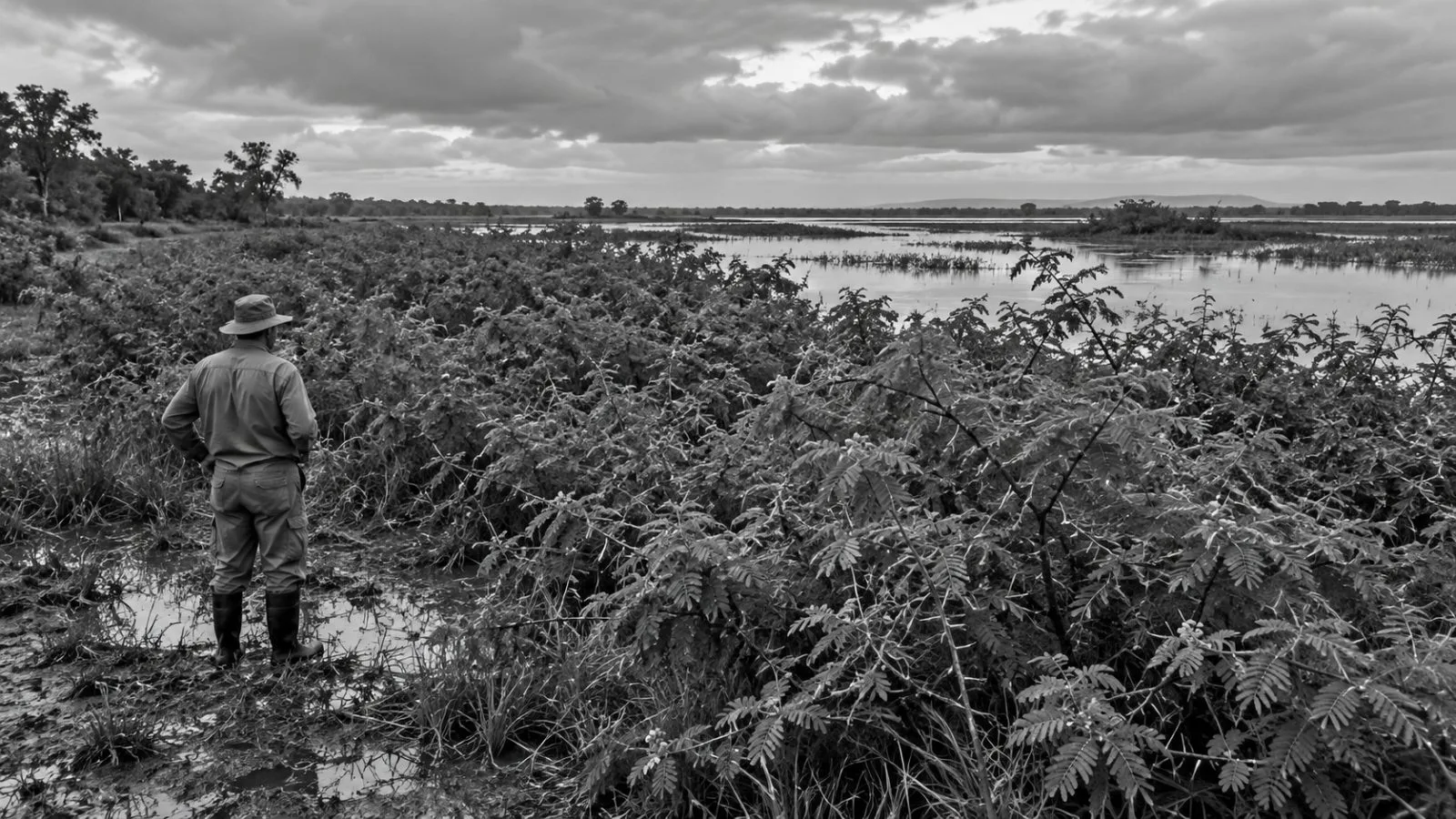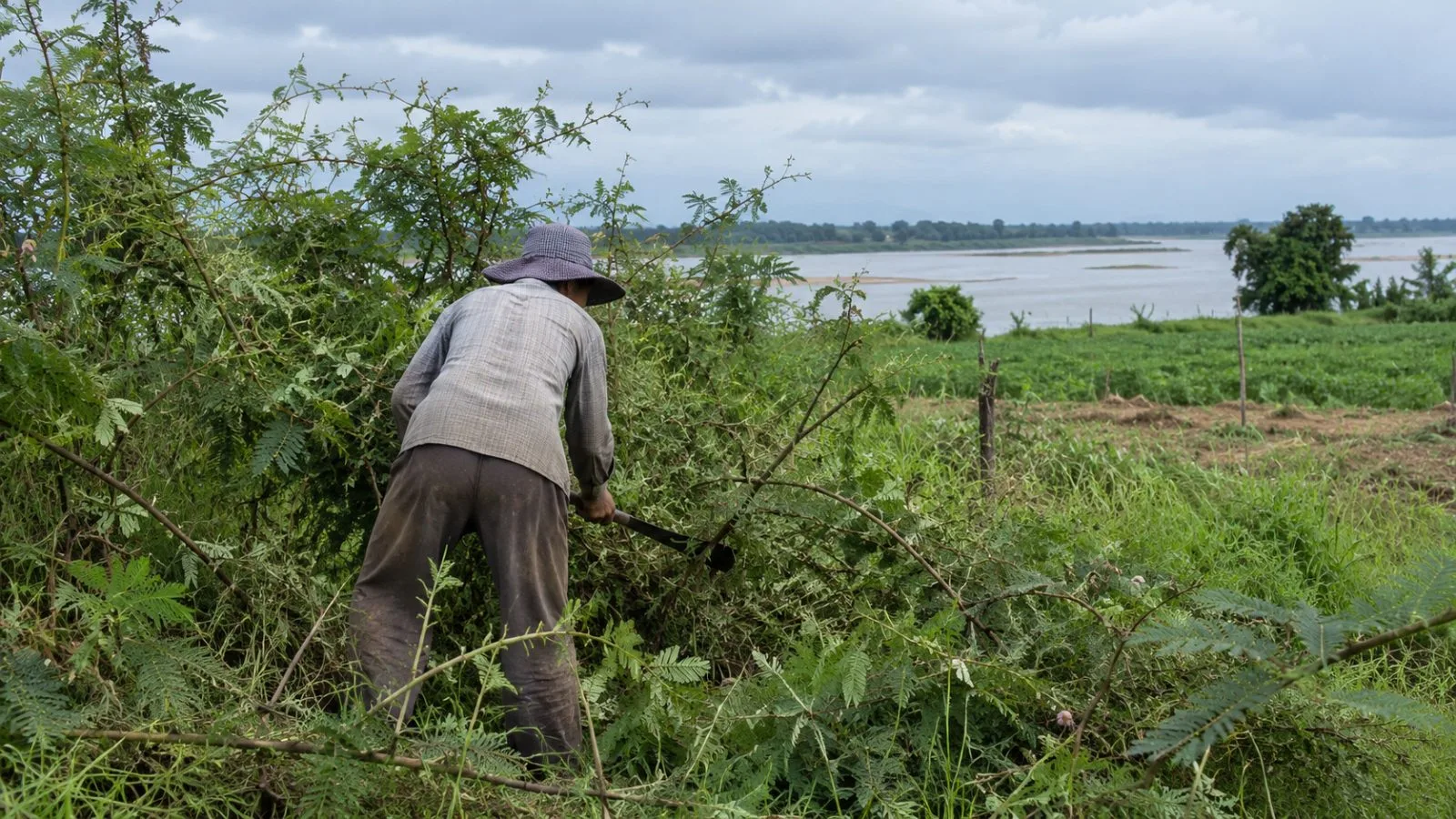
Giant mimosa added a recurring labor cost for farmers near Kratie, Cambodia: those surveyed devoted an average of 11 days a year to its removal for every hectare, researchers found.
In research published online in 2015, Samridhi Rijal and Roland Cochard interviewed 81 farmers in affected areas near the Mekong River. They estimated that infestations occupied about 30% of land near the surveyed fields, a local finding that does not describe the wider Mekong floodplain.
Clearing the shrub added to pressures that included animal pests, water shortages and limited resources. Rijal and Cochard described the removal work as a major cost for farmers in the affected areas.
The researchers said giant mimosa (Mimosa pigra) had spread through the Mekong River Basin since about 1970. Floods disperse its seeds each year. Historical accounts describe an introduction from Indonesia to northern Thailand in 1947 for agricultural use, though a 2011 genetic study by Pairot Pramual and coauthors suggested multiple introductions to Thailand and could not rule out a single genetically diverse source.
Evidence of the shrub’s effects on wildlife comes from a separate wetland. At Bung Boraphet on Thailand’s Chao Phraya River floodplain, Rehan Ul Haq and coauthors recorded a 27% decline in resident waterbirds from 2003 to 2014. They found that more mimosa-infested vegetation was associated with fewer large wading birds, but did not identify the shrub as the cause of the overall bird decline.
From 2001 to 2014, the area the Thai researchers classified as vegetation dominated by giant mimosa increased 81%. The area classified as open water fell 31% over the same period. The researchers examined other habitat and hydrological changes and called for testing their findings at more sites before drawing broader conclusions.
Removing the plant may require more than one approach. In a 2023 review, Hisashi Kato-Noguchi said giant mimosa can grow again from plant parts left behind after removal. Kato-Noguchi argued that using several control approaches together could improve results.