


 Trump Signs Executive Order to Boost AI Research in Childhood Cancer
  NASA Partners with Katalyst to Save Swift Observatory with Innovative Docking Mission
  SpaceX Prioritizes Moon Mission Before Mars as Starship Development Accelerates
  SpaceX’s Starship Completes 11th Test Flight, Paving Way for Moon and Mars Missions
  SpaceX Delays Starship V3 Launch Ahead of Potential Record IPO
  Cogent Biosciences Soars 120% on Breakthrough Phase 3 Results for Bezuclastinib in GIST Treatment
  Neuralink Expands Brain Implant Trials with 12 Global Patients
  Trump Administration Releases New UFO Files and Apollo Mission Records
  China vs. NASA: The New Moon Race and What's at Stake by 2030
  Is space worth the cost? Accounting experts say its value can’t be found in spreadsheets
  Trump and Merck KGaA Partner to Slash IVF Drug Costs and Expand Fertility Coverage
  Blue Origin’s New Glenn Achieves Breakthrough Success With First NASA Mission


 Add as a preferred source on Google
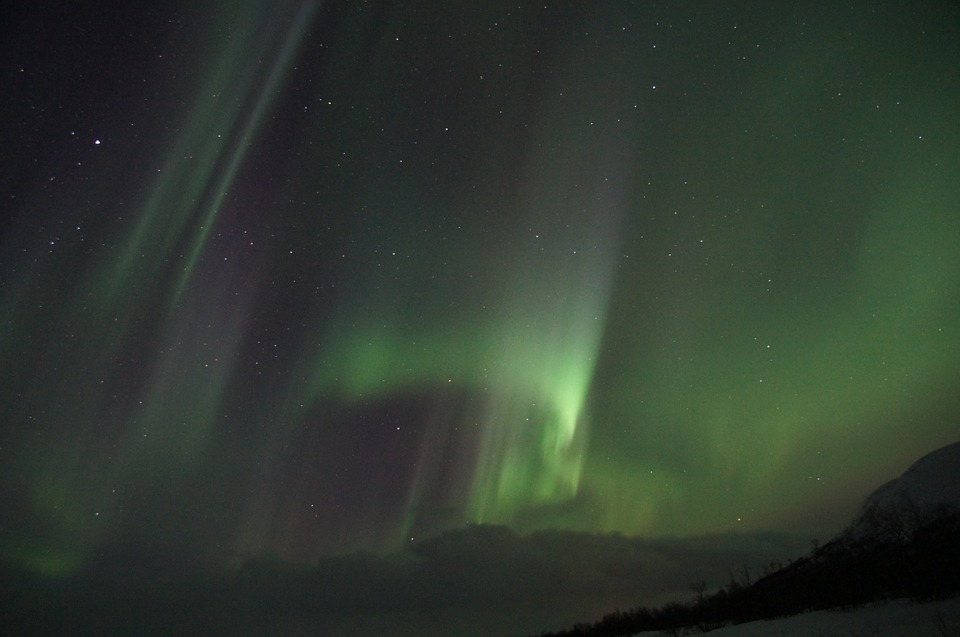
It is not every day that there is a forecast on the weather outside the Earth. A report reveals that just in time for spring, there will be a solar storm that will occur.
Not many people know that there are also forecasts on the weather in space, and Express reports that space weather forecasters have detected a stream of solar winds that may hit Earth on the first day of spring, which is on the 19th of March. Because of the solar winds hitting the Earth, it could result in auroras in the northern hemisphere.
According to cosmic weather forecasting site Space Weather, “A minor stream of solar wind is due to hit Earth’s magnetic field on March 19th, possibly causing auroras around the Arctic circle. The gaseous material is flowing from a newly-opened hole in the sun’s atmosphere.”
The scientists have also noted that the solar storm also comes with its own downsides that go beyond producing auroras - aurora borealis and aurora australis. At the most, the solar storms will affect the technology on Earth that is based on satellites. The solar winds can also heat up the outer atmosphere of the planet and cause it to expand. Either way, the solar storm can affect the satellites in orbit which in turn affect the satellite-depended technology on Earth, such as GPS, mobile phone signals, and satellite TV.
On the extreme end, the surge of particles into the Earth’s magnetosphere can result in a higher electricity surge in the power lines. This would result in overloads among electrical transformers and power stations and lead to blackouts. Thankfully, this kind of incident rarely happens.
Aside from these effects, solar storms may also lead to other odd instances. It was previously reported that powerful solar storms have an effect on whales, which would lead them to beach themselves. One theory explaining why is because magnetic lines can shift during a solar storm, and thus confuse a whale’s compass. However, according to a new study, this is not the case at all, as the researchers found that the whales wind up confused as an effect of a solar radio burst that coincidentally comes with a solar storm.







