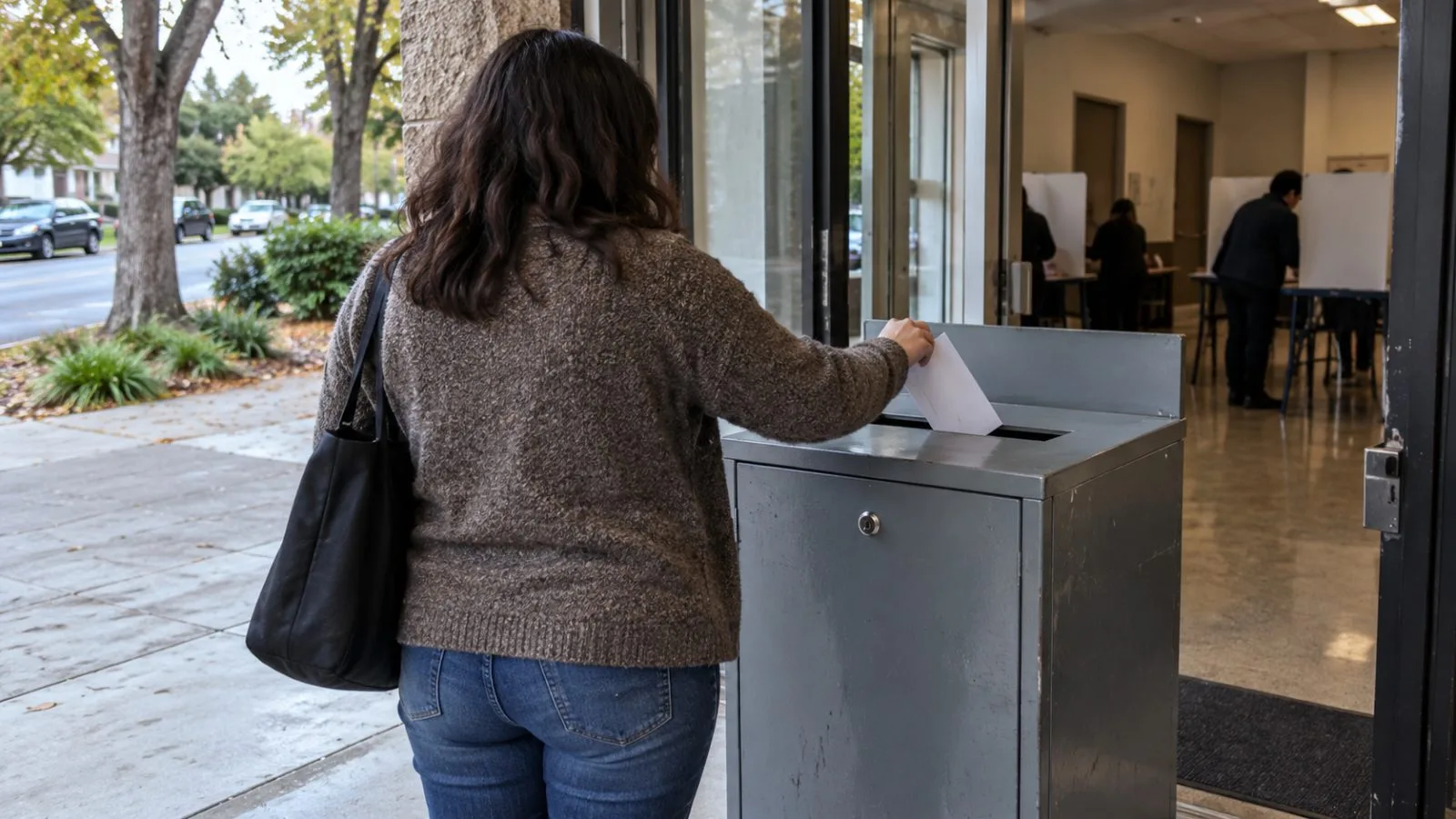
With U.S. voters due to choose a new Congress on Nov. 3, an August 2026 benchmark found errors in 38.7% of tested AI answers as more adults reported using AI for election tasks.
Forum AI counted at least one false claim in 10,205 of 26,398 responses across eight systems. Errors appeared in 41.2% of answers to voting-logistics questions, 36.4% of candidate answers and 38.5% of answers about everyday economic and social issues. The benchmark measured test responses, not how many voters encountered or acted on incorrect information.
One example involved Pennsylvania mail ballots. Forum AI found that Google’s Gemini 3.6 Flash gave Nov. 3 as the last day to request a ballot. The Pennsylvania Department of State lists Oct. 27, 2026, as the application deadline. A voter relying on the chatbot’s date could miss the ordinary deadline.
In surveys commissioned by the National Conference on Citizenship (NCoC) with Carter Center researchers, the share of adults reporting AI use for at least one of four election tasks rose from 28% on Oct. 1–4 to 40% on Oct. 15–18. Reported use to learn about candidates for Senate, House or governor increased from 14% to 25%. SSRS interviewed 1,033 adults in the first wave and 1,030 in the second; each sample had a margin of error of 3.4 percentage points.
The survey measured self-reported use, not answer accuracy. NCoC said the figures are approximate: some respondents counted AI summaries in search results, while others who reported using AI later gave no usable example of election-related use. In the later survey, 78% of all respondents said they had little or no trust in AI to provide unbiased candidate information. Forty percent said they trusted AI a great deal or quite a bit to give accurate voting information.
AFP reported that NewsGuard found Google’s AI Overview, Gemini and Microsoft Copilot repeated an unfounded allegation about Texas Democratic Senate candidate James Talarico when prompted. Graphika assessed with high confidence that videos behind the allegation were produced by the Russia-aligned Storm-1516 operation. PolitiFact rated the claim that a former student accused Talarico of sexual assault “Pants on Fire” and reported that the person identified in the video denied making the accusation. PolitiFact also cited Clemson researcher Darren Linvill’s assessment that the operation might seek to deepen partisanship and help Republican Ken Paxton; it noted a similar baseless attack on Tim Walz in 2024.
A Brennan Center for Justice study of six AI products, conducted from February to August 2026, found that chatbots generally rejected familiar election conspiracy theories but sometimes made factual mistakes and often failed to identify AI-generated media. The Nov. 3 federal general election includes all 435 House seats and roughly one-third of Senate seats. The Federal Election Commission (FEC) says election administration and voting rules are primarily handled by state and local authorities.