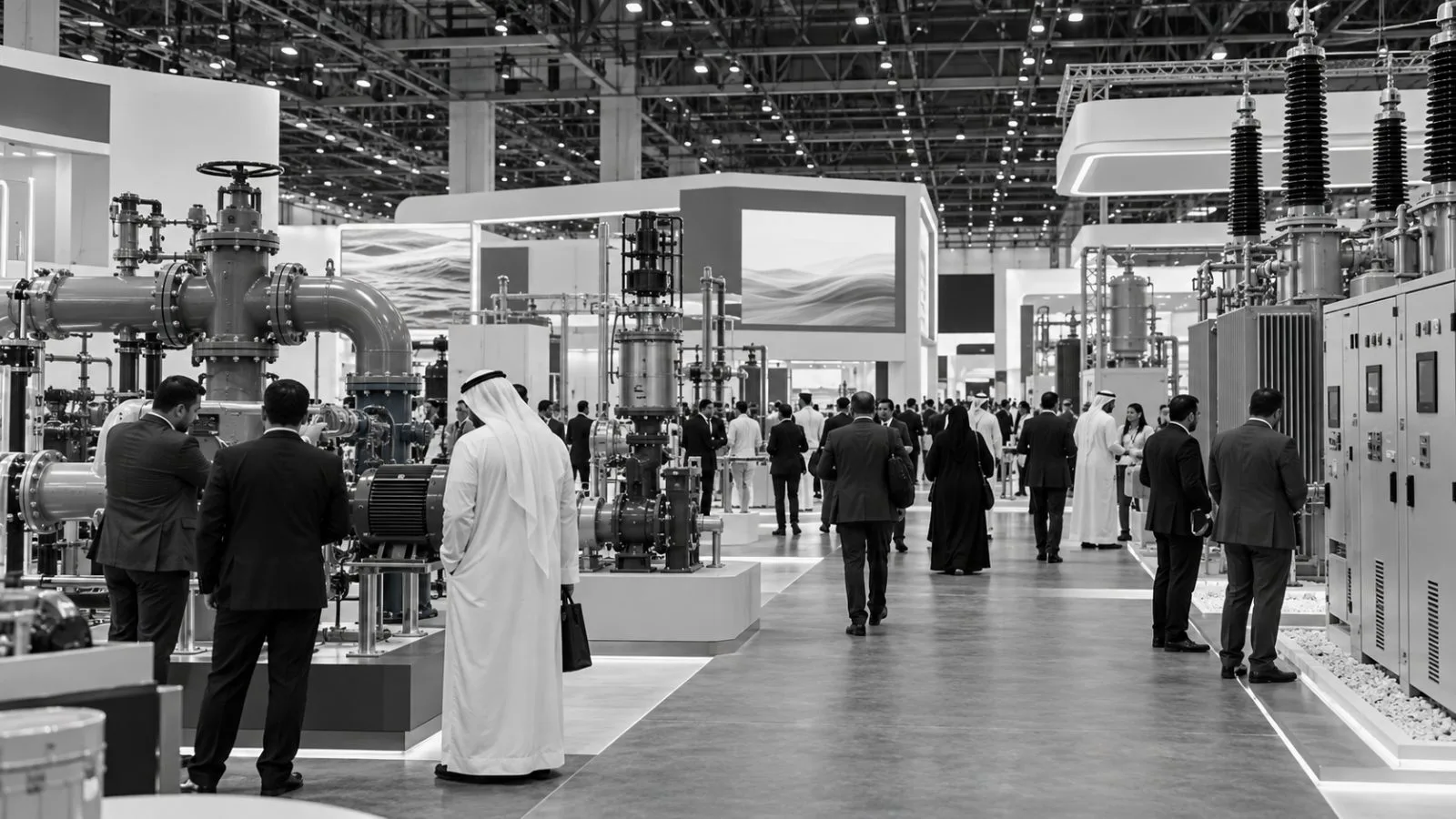
Dubai’s WETEX showcased AI tools for water networks and electricity grids as the International Energy Agency (IEA) projects data-center power use will double by 2030, raising pressure on infrastructure.
The Dubai Electricity and Water Authority (DEWA) organized the 28th Water, Energy, Technology and Environment Exhibition (WETEX) at Dubai World Trade Centre from Oct. 20-22. DEWA’s summary of first-day seminars said participants discussed rising energy and water demand from AI and data centers.
DEWA says Hydro Insight applies AI to water-network data to help speed responses. In a separate comparison, the authority reported that water transmission and distribution losses fell from 42.5% in 1989 to 4.4% in 2025, crediting a wider set of technologies and systems.
Lucy Electric says SYNAPS AI models the grid digitally and uses machine learning to identify, classify and locate faults. General Manager Charbel Zouein told The National that the system could flag a cable with a 90% chance of failing within two weeks. The National’s report carried a disclosure that it was produced with WETEX and the World Green Economy Summit.
Thermax says its EDGE Live service applies AI, machine learning and company-developed algorithms to asset data to forecast performance and flag deviations. A WETEX seminar listing for a presentation by Akhil Jugade of Thermax Limited described a membrane process that could concentrate salt to as much as 24% total dissolved solids, compared with 7% to 10% for conventional reverse osmosis. The listing presented potential energy savings of up to 40% and water recovery of up to 70% as business-case outcomes, not results from a named plant.
The IEA said data-center electricity demand rose 17% in 2025. It projects total use to double by 2030 and consumption at AI-focused data centers to triple, while citing tighter transformer supply chains and delays to grid connections and approvals. The agency said proven AI applications could reduce energy costs for energy-intensive industries by three to 10 percentage points, while large, concentrated data-center loads can require investment in power generation and grids and create affordability challenges.
DEWA says seawater reverse osmosis generally uses less energy than multi-stage flash distillation. Its goal is to produce all its desalinated water using clean energy and waste heat by 2030; the authority also cites limiting network losses and expanding water reuse as priorities.