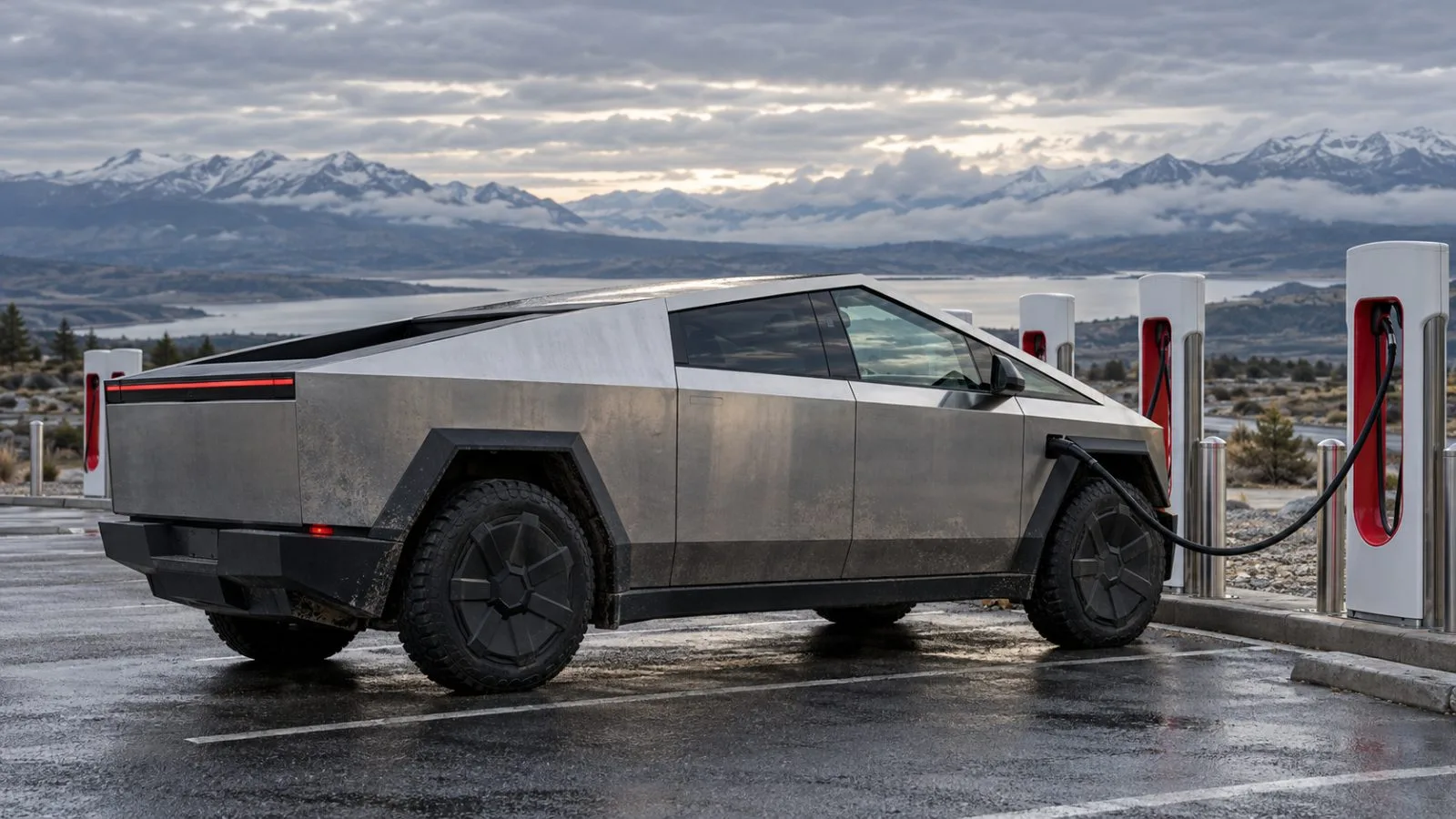
Cumulative deployments of about 8.1 million robotaxis by 2031 anchor ARK Invest's new Tesla model, which projects a $17.5 trillion market capitalization and assigns 80% of enterprise value to autonomous rides.
The Oct. 19 analysis puts Tesla shares near $4,400 in its base case and estimates $753 billion in annual net ride-hailing revenue. The 8.1 million figure counts vehicles deployed through 2031; it does not describe a fleet operating all at once. The 80% share applies to projected enterprise value, a separate measure from market capitalization.
The forecast depends on when autonomous driving becomes commercially viable and how widely Tesla can expand its service. ARK's simulation uses 32 inputs and identifies a slower robotaxi rollout, including possible regulatory delays, as its principal risk.
Across Tesla's businesses, ARK projects about $1.45 trillion in annual revenue for 2031 and $902 billion in earnings before interest, taxes, depreciation and amortization. The model lists $95 billion in revenue and $15 billion in earnings on that measure for 2025.
In the model, Tesla's accumulated AI infrastructure outlay reaches $225 billion at 2031 year-end, compared with roughly $7 billion at 2025 year-end. ARK also models cumulative sales of one million Optimus humanoid robots to external buyers by 2031 and about $212 billion in Optimus revenue. Those figures are projections, rather than current sales.
ARK bases its robotaxi cost estimates partly on high vehicle utilization, Tesla's vertical integration and its vision-only approach. At equal utilization, the firm estimates lower operating costs per mile for Tesla than for Waymo's next-generation robotaxi. It argues that lower fares could widen access to rides, while peak-hour demand from higher-income travelers could support higher prices.
ARK says Tesla expects Full Self-Driving (FSD) V15 late in 2026 and has described that version as a gating factor for scaling its robotaxi service. The software release and subsequent deployments are indicators for whether the rollout follows the model's assumptions.