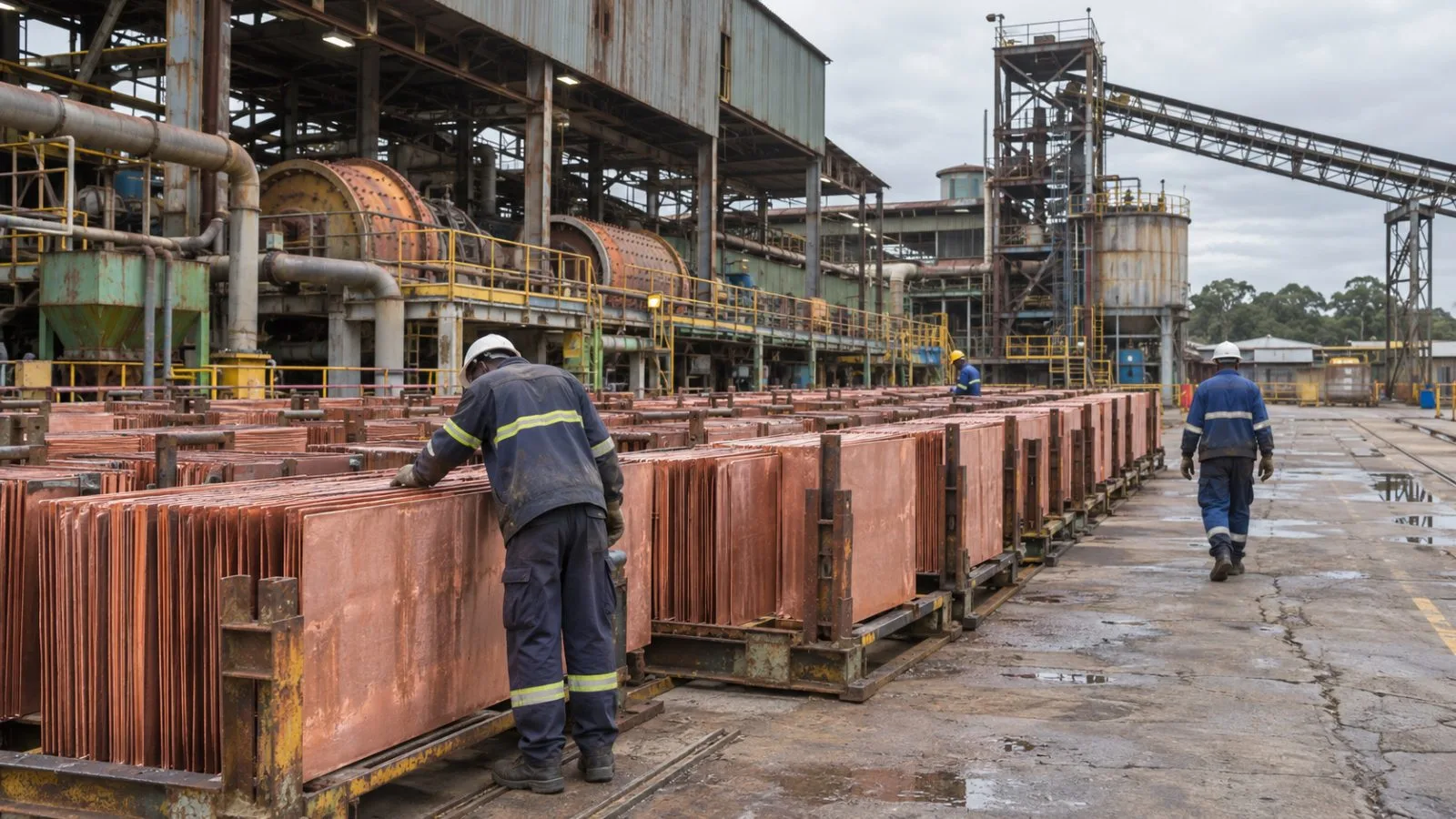
African mineral policy faces a test in turning resource supply into local industry, as a BusinessDay essay and regional strategy documents highlight cost, skills and infrastructure barriers.
The IEA’s 2026 outlook found that operating costs for refining projects beyond the dominant supplier averaged about 50% higher. Capital costs were 20% to more than 150% higher. The agency cited equipment, construction, feedstock and energy costs. This is a global comparison, not an estimate for African projects.
In its 2025 report, the IEA said Africa supplied around 75% of global manganese demand, 70% of cobalt demand and nearly 20% of copper demand. The continent accounted for less than 1% of the value generated by manufacturing clean-energy technologies and components, the report said.
In a Nov. 3 essay for BusinessDay, Hani Okoroafor argues that mineral projects should be judged by the capabilities they help build, including qualified domestic suppliers and technical skills. He proposes a “Minerals Sovereignty and Industrial Development Compact” to coordinate institutions and track wider economic activity.
The AU’s Africa’s Green Minerals Strategy calls for local processing, integrated value chains, job creation and economic diversification. The African Continental Free Trade Area (AfCFTA) aims to support industrial development through diversification and regional value chains. Trade under the agreement began Jan. 1, 2021.
Cross-border cooperation offers one example of the regional approach. Zambia’s Ministry of Commerce, Trade and Industry says the Democratic Republic of Congo and Zambia signed a cooperation agreement on an electric-battery and clean-energy value chain in April 2022. The ministry later cited a pre-feasibility study and a March 2023 agreement concerning special economic zones as preparatory steps.
The AU strategy identifies jobs and diversification as potential gains from developing mineral value chains. Okoroafor’s essay says communities bear immediate costs from extraction and calls for safeguards. He suggests measuring progress through qualified domestic suppliers, technical skills gained and broader economic activity.