Aignostics launched four research-only AI tools for pathology slides, pairing cell-classification research with software for tissue selection, but has not reported whether they reduce failed molecular tests.
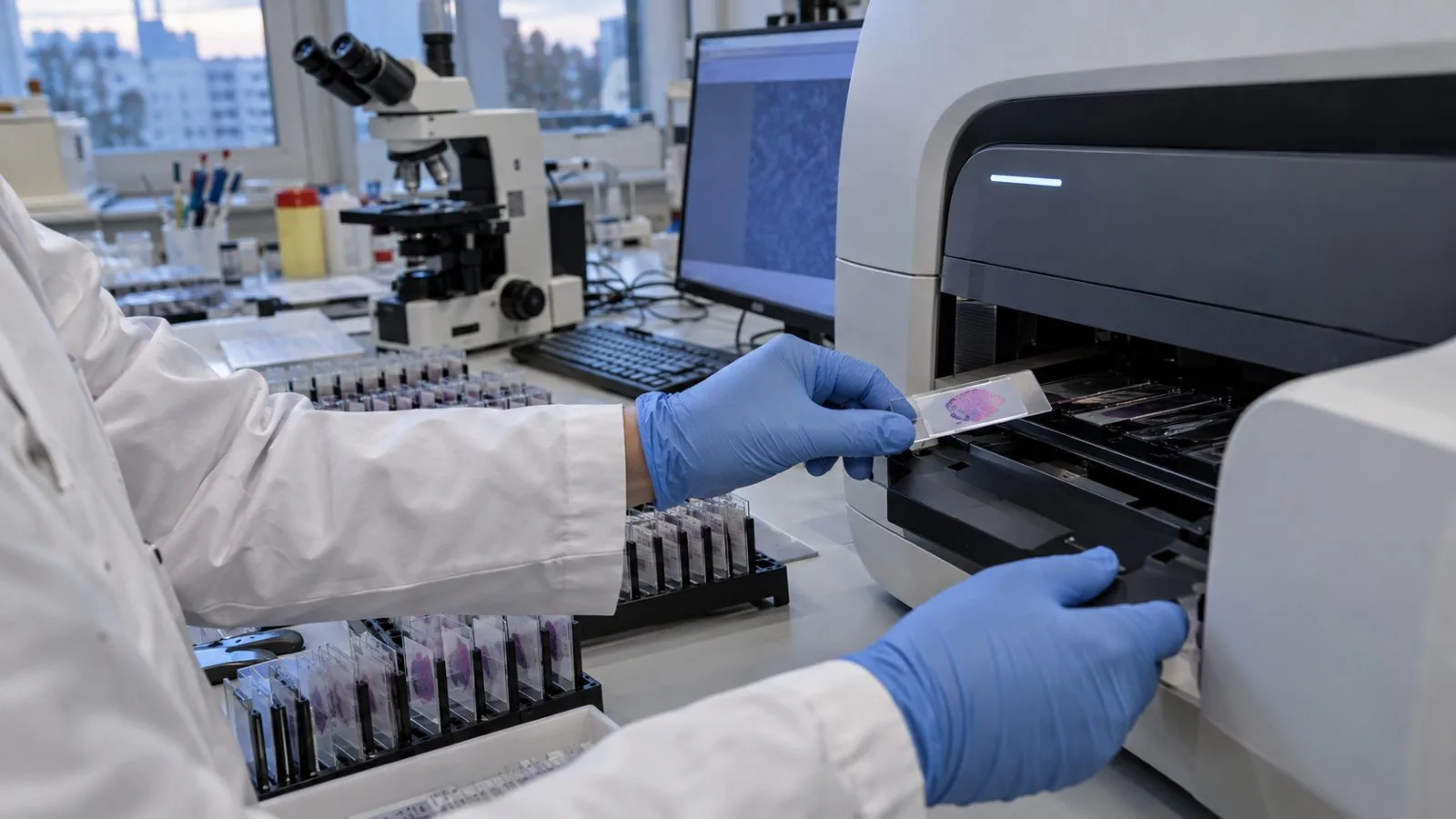
HETA Clinical analyzes whole-slide images stained with hematoxylin and eosin (H&E). Its products are HETA Quality Control for slide quality, HETA Tumor Detect for likely tumor regions, HETA Mitosis for mitotic counts and HETA Tumor Cellularity for estimating tumor content and marking tissue for molecular analysis. Aignostics labels each tool for research use only and says none is for diagnostic procedures.
The company attributes an estimate that 10% to 20% of molecular tests fail because tissue has too little tumor to pathologists it consulted. Aignostics did not identify those pathologists or give the number consulted or the method behind the estimate. It says inadequate samples can lead to repeat biopsies and delays. EconoTimes previously covered the research-only HETA product launch.
Aignostics identifies HETA, formerly Atlas H&E-TME, as the platform behind the products. In a separate generalizability evaluation, the preprint examined more than 1,500 cases spanning eight cancer types. The analysis drew on more than 200,000 pathologist annotations, material from more than 25 sources and slides scanned on at least eight scanner models.
A different test assessed cell classification using 30 whole-slide images from three cancer indications. HETA scored 0.74 on macro F1, while pathologists averaged 0.71 against a consensus informed by immunohistochemistry. These evaluations measured model performance; they did not establish whether the HETA Clinical products reduce molecular-test failures.
Aignostics says it plans additional products and integrations with image-management systems, but gave no schedule.