The International Civil Aviation Organization (ICAO) is considering a proposal to make air traffic flow management a mandatory supporting service, as weather and capacity constraints continue to generate costly delays.
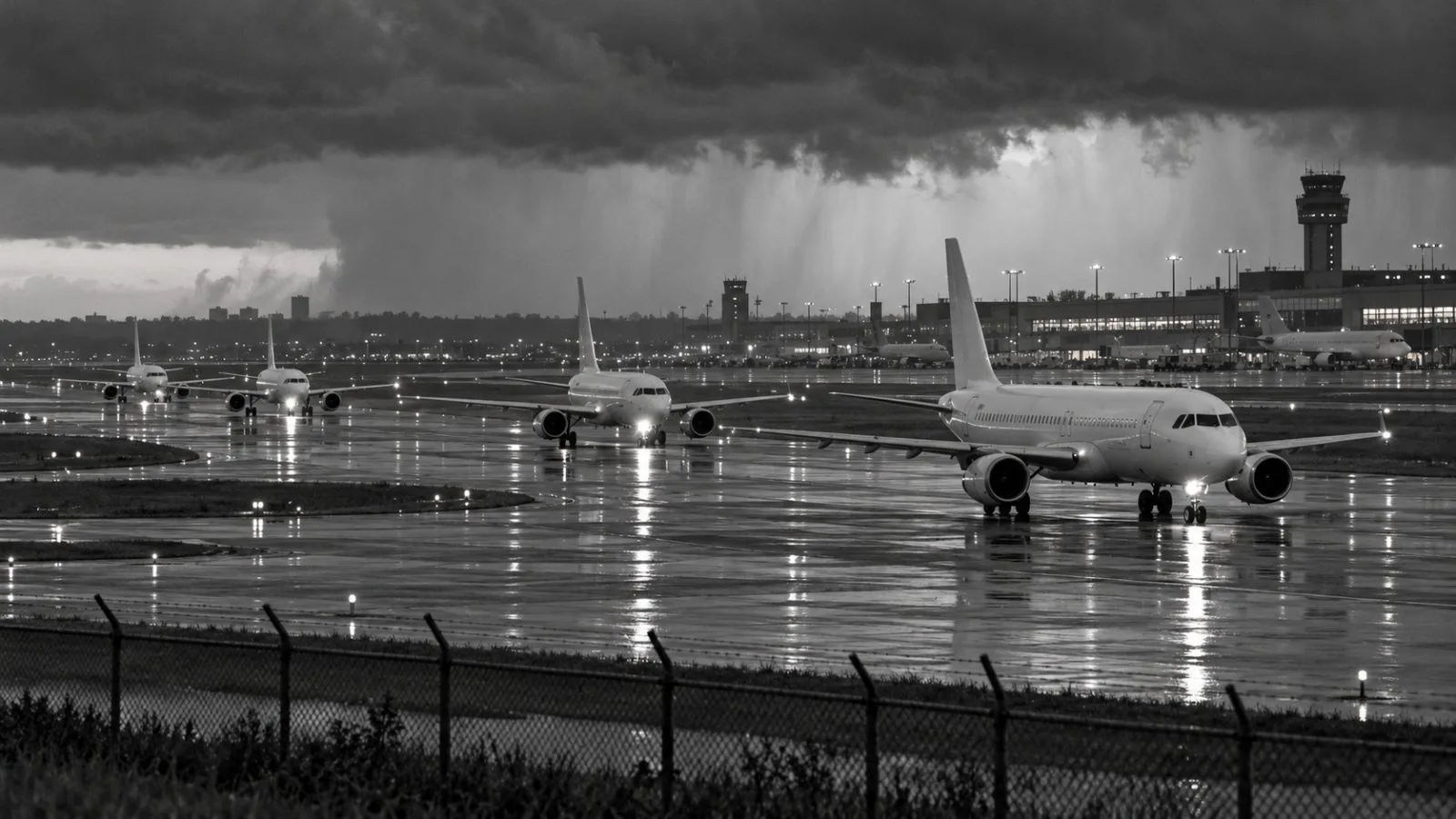
Air traffic flow management (ATFM) aligns expected demand with available airport and airspace capacity. The Federal Aviation Administration (FAA) says thunderstorms can lead controllers to place arriving aircraft in holding patterns until landing is possible. It also says departures may be held on the ground to limit the number of aircraft entering weather-affected airspace.
Proposed amendments would establish ATFM as a mandatory supporting service and encourage coordination across borders. ICAO circulated the proposals to states and international organizations for consultation. They are not yet in force; November 2030 is the target applicability date.
EUROCONTROL says its weather and capacity measures avoided about 3.1 million minutes of en-route delay between May 1 and Aug. 31, 2026. It estimates savings for operational actors at about €400 million, using an average cost of €130 per minute of ATFM delay. The agency also reported a 14% increase in network stability on challenging days.
Weather and capacity constraints still account for most en-route ATFM delays in EUROCONTROL’s Summer 2026 figures. The agency attributed 43% to severe convective weather and 49% to capacity and staffing. Those shares cover en-route flow-management delays alone, not disruptions across all flights. EUROCONTROL introduced its weather and capacity procedures in summer 2025 after high weather-related delays in summer 2024.
A paper from the Airports Authority of India submitted to an ICAO working group reported 392,603 air-delay minutes for 2025 with ATFM measures and 641,073 minutes in a no-measures comparison, a difference of 248,470 minutes. It also reported 15,650.288 tonnes of fuel savings and 49,454.911 tonnes less carbon dioxide emissions.
EUROCONTROL’s savings estimate applies to operational actors collectively. The FAA says weather-related diversions can delay passengers and add costs for airlines. ICAO projects air traffic will reach 12.4 billion passengers by 2050; the proposed provisions have a target applicability date of November 2030.