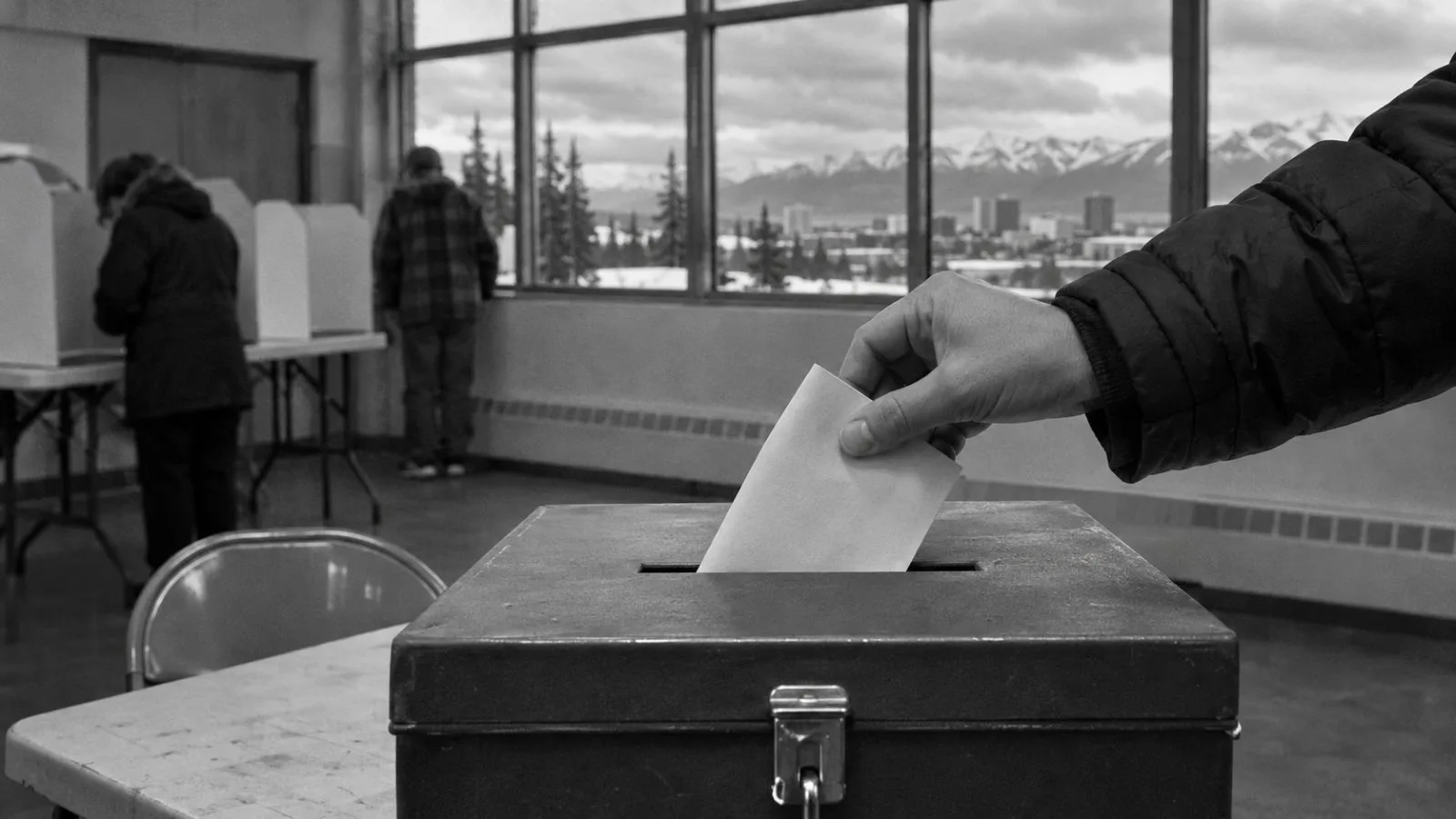
Alaska voters rejected a ballot measure to repeal the state’s nonpartisan primary and ranked-choice election rules, an Associated Press call showed, keeping in place a system that shapes this year’s U.S. Senate race.
Candidates from all parties appear on one primary ballot. The four highest vote totals determine who advances to the general election, NPR reported. Voters then rank candidates; if no one wins a majority, the lowest finisher is eliminated and ballots are reassigned based on voters’ next preferences still in the race.
Voters approved the system in 2020, NPR reported, and a repeal measure narrowly failed in 2024. The latest result marks a second defeat for efforts to end the rules.
Critics argued the system could confuse voters or be manipulated. They pointed to the Senate ballot, which included a Republican incumbent and an independent candidate both named Dan Sullivan. Opponents alleged Democrats recruited the independent to draw votes away from the incumbent. Democrats denied recruiting him, and the independent defended his candidacy, NPR reported. Supporters said voters could rank both candidates.
The two-candidate dispute also underlies a Justice Department challenge to certification of the Senate result. The Alaska Division of Elections lists Nov. 18 as the date for ranked-choice results.