Amnesty International called for targeted sanctions against directly implicated Israeli officials and a comprehensive embargo on arms and security equipment on Oct. 19, saying settler violence during the West Bank olive harvest is helping force Palestinians from their land.
The group also urged governments to ban trade with Israeli settlements in the West Bank. Amnesty described the violence as part of a state-driven effort to displace Palestinians.
Amnesty cited attacks near Abu Falah and Taybeh. It said U.S. photojournalist Heidi Levine was injured on Oct. 16 while covering Palestinian olive farmers near Abu Falah. The next day, masked settlers attacked a group near Taybeh that included European diplomats and a French mayor, the group said.
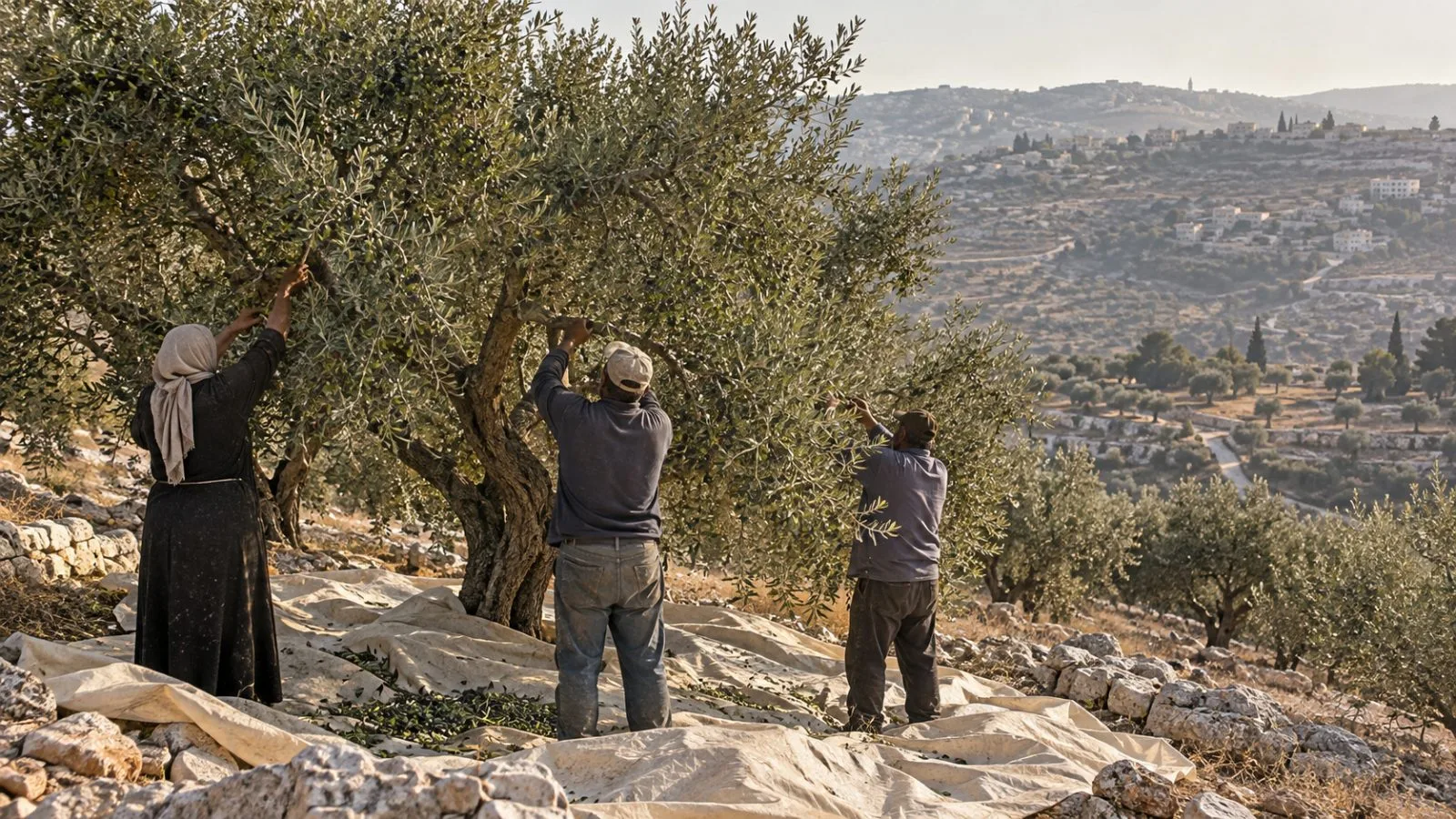
The U.N. Office for the Coordination of Humanitarian Affairs (OCHA) recorded 199 settler attacks linked to the harvest from Sept. 1 through Oct. 12. For the same period, it recorded one Palestinian death and 124 injuries: settlers caused 92 injuries, while Israeli forces caused 32 in the context of settler attacks. More than 2,500 trees and saplings were damaged. OCHA’s figures were also covered in an earlier tally of harvest-related attacks.
OCHA estimates the harvest supports 80,000 to 100,000 Palestinian families and says restricted access, violence and damage to trees threaten farm income. Its comparison lists 33 harvest-related attacks in 2020 and 185 in 2025. Amnesty argues that settlement expansion and support for settlers advance annexation, while Palestinians face displacement and economic loss.
Amnesty’s June report, which described a pattern as “ethnic cleansing,” examined the forcible displacement of Bedouin and herding communities in Area C, principally during 2023-2025. It did not examine the October harvest attacks. In response to that report, the Israel Defense Forces spokesperson’s unit said its forces respond to settler attacks and investigate cases in which soldiers may have failed to intervene.
Israel Police said an operation prompted by weekend violence led to 10 arrests on Oct. 19. Police said the operation also targeted suspected violations of a closed military zone order and illegal construction. The arrests in the weekend violence investigation were announced as the harvest continued.