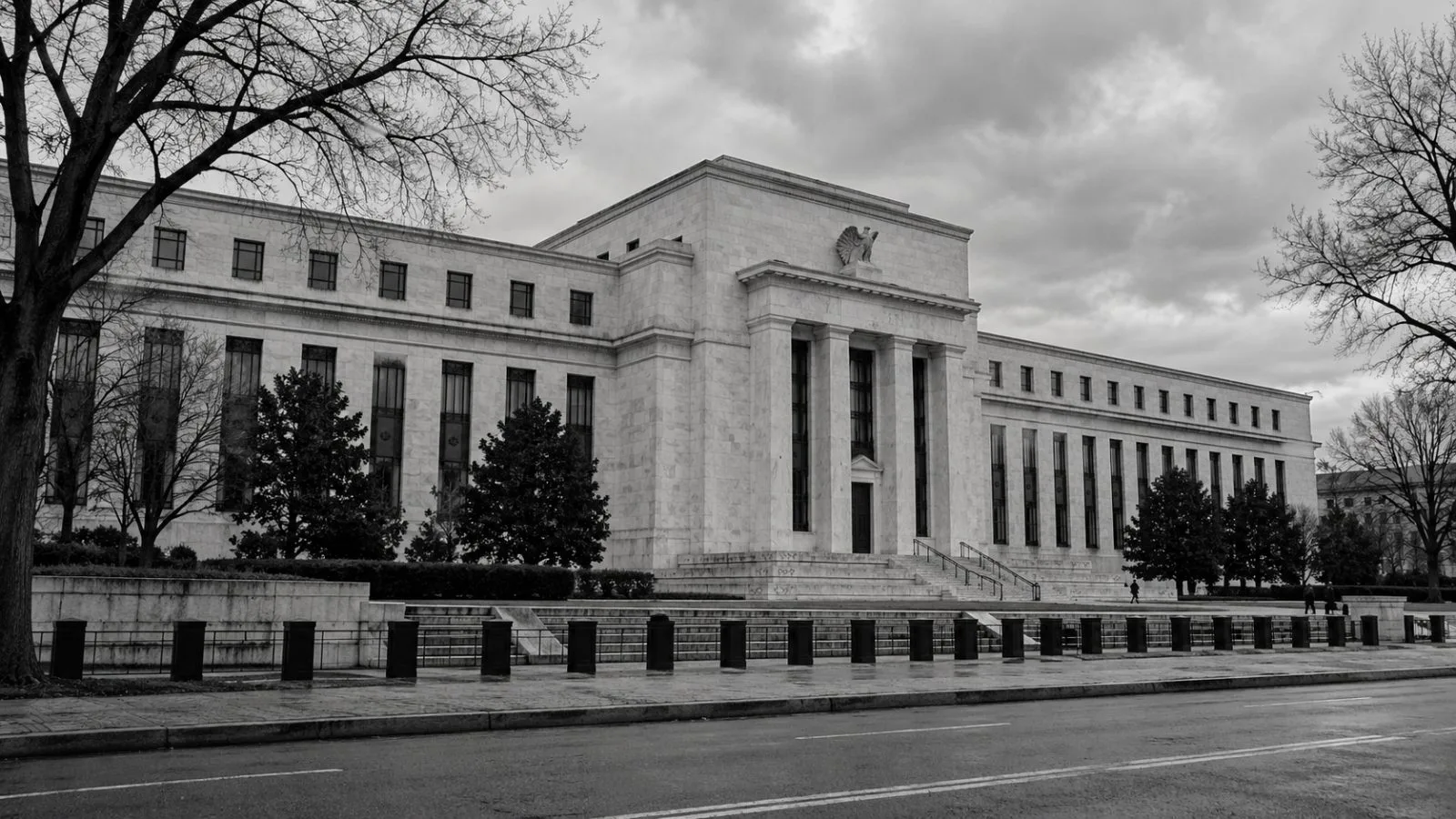
India’s benchmark indexes closed lower on Oct. 28 before the Federal Reserve kept rates steady, while analysts quoted by Mint pointed to oil, Treasury yields and currency moves as market pressures.
The Federal Open Market Committee (FOMC) voted 10-2 to leave its federal funds target range at 3.75% to 4%. Federal Reserve Gov. Lisa D. Cook and Cleveland Fed President Beth M. Hammack favored a quarter-point increase. The Fed said economic activity was expanding at a strong pace and that “inflation remains elevated.” It last raised the range on Sept. 16.
The Indian market’s declines came before the Fed’s announcement. The National Stock Exchange of India (NSE) finishes regular trading at 3:30 p.m. IST (6 a.m. EDT); the Fed issued its decision at 2 p.m. EDT (18:00 UTC). Moneycontrol reported that the Sensex ended at 73,246.03, down 352.64 points, or 0.48%, while the Nifty 50 settled at 22,698.85, down 50.90 points, or 0.22%.
Oil and bond figures came from separate points in the day. Reuters reported Brent futures at $115.43 a barrel at 1:46 p.m. EDT. After the Fed announcement, Reuters put the 10-year Treasury yield at 5.047%, up five basis points. Moneycontrol reported that the rupee closed at ₹95.23 per U.S. dollar, 11 paise weaker than its previous close.
India’s Ministry of Petroleum and Natural Gas told Parliament that crude oil import dependence was about 88% of petroleum, oil and lubricants consumption in each of fiscal years 2023-24, 2024-25 and 2025-26. G Chokkalingam, founder and head of research at Equinomics Research, estimated to Mint that the monthly oil import bill could be around $15 billion to $16 billion at prices prevailing when he spoke. V K Vijayakumar, chief investment strategist at Geojit Investments, told Mint that markets had already priced in the pause and that value buying was emerging in some market segments. Mint also cited analysts who pointed to foreign investor flows.
The Fed did not set a December rate path. It said additional information would guide future policy decisions as the committee pursues its 2% inflation goal. The next scheduled FOMC meeting is Dec. 8-9.