A structural study published Wednesday, Oct. 21, in Nature shows how Andes virus grips a human cell receptor, identifying a molecular contact researchers say may guide future antiviral work.
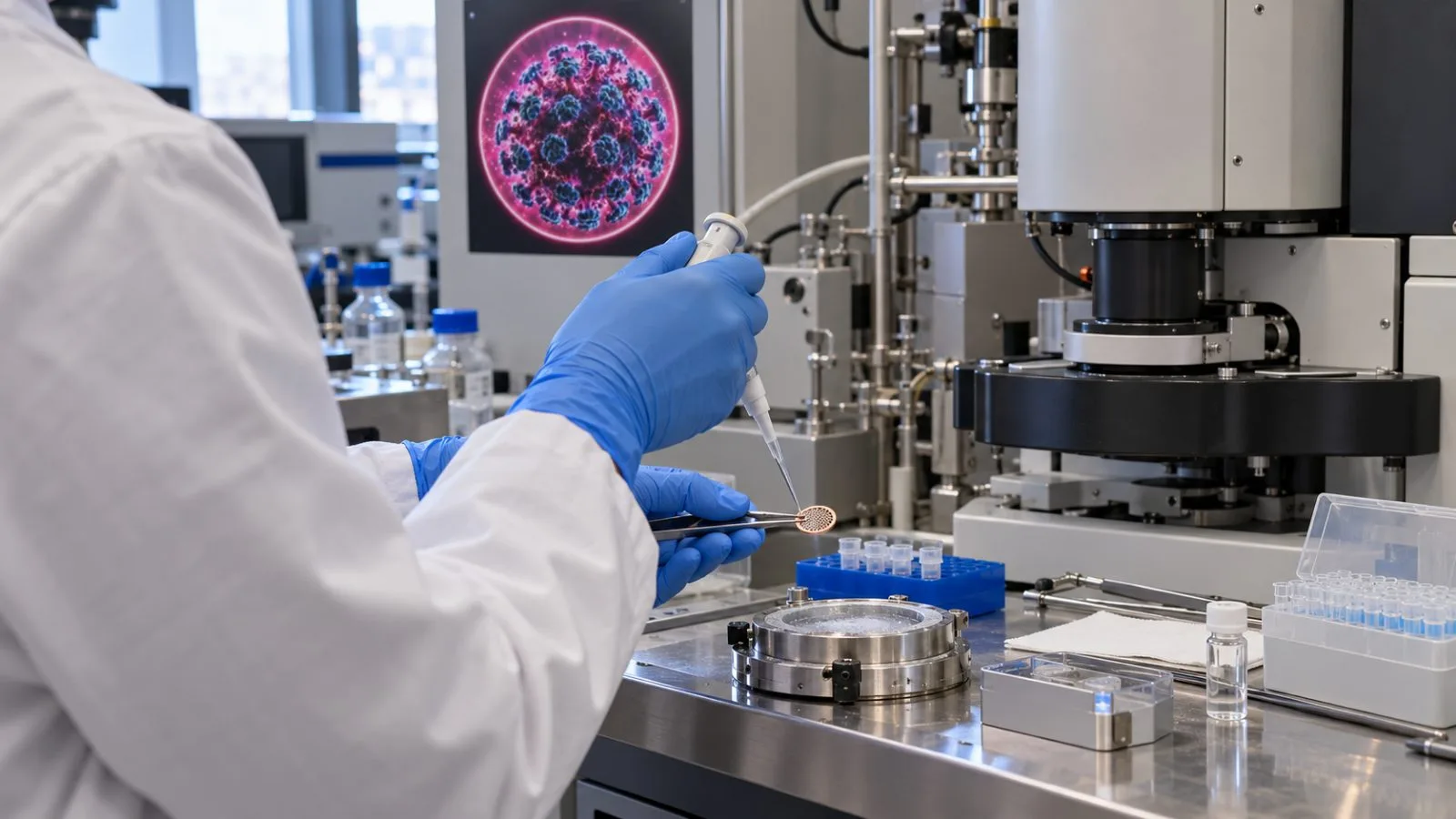
Using cryo-electron microscopy, the team mapped the virus-receptor complex at 2.6 angstroms. The outermost part of protocadherin-1 (PCDH1), called EC1, docks inside a cavity formed by four Gn protomers in the virus’s assembled spike. PCDH1 is needed for Andes virus to infect human endothelial cells, among the main targets of hantavirus infection.
The contact site takes shape when the spike’s components assemble. That helps explain why PCDH1 binds intact viral particles or assembled spike tetramers, but not individual soluble glycoproteins. The researchers also assessed four neutralizing antibodies: ANDV-5 and MIB22 block the receptor’s binding site, while ADI-65534 and ANDV-34 hinder PCDH1 from reaching it through steric interference.
The paper reports structural and laboratory work, not a clinical treatment trial. It also says no medical countermeasures have been approved by the U.S. Food and Drug Administration or European Medicines Agency to prevent or treat hantavirus infection. Kartik Chandran, a co-corresponding author and professor of microbiology and immunology at Albert Einstein College of Medicine, said, “We reveal a new way in which a virus can capture its receptor during infection.”
The paper appeared after the M/V Hondius cruise-ship outbreak. The World Health Organization’s final count was 13 cases, including three deaths; 12 were confirmed and one was probable. WHO declared the outbreak over July 2, after people identified as contacts completed follow-up without further cases. The agency said more than 650 contacts were monitored in 33 countries and territories.
WHO also described a research effort involving 21 countries. It is intended to examine Andes virus transmission, incubation, immune responses, viral kinetics and factors associated with severe disease, and to support development of diagnostics, treatments and vaccines for future outbreaks. WHO has not announced a scheduled date for a decision or publication from that work.