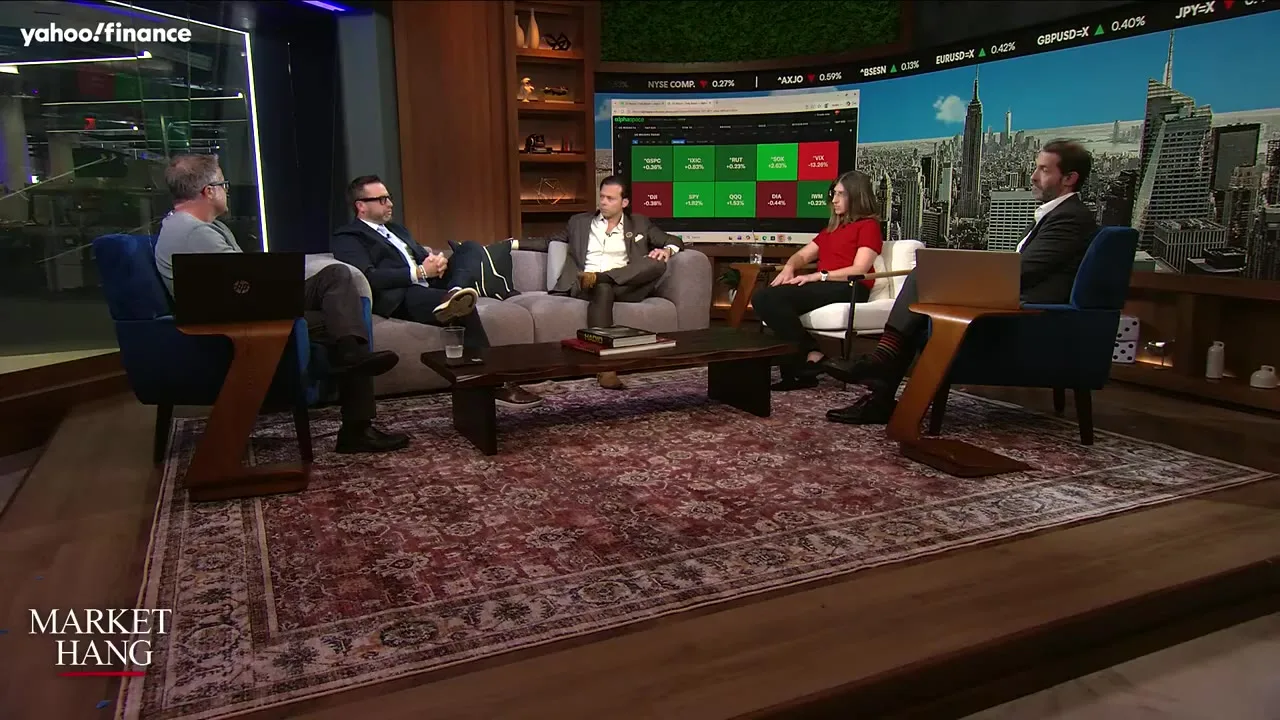
Apple’s restraint on artificial intelligence spending offered shelter from concerns about rivals’ costs but raised questions about its next product, according to Yahoo Finance’s Market Hang, published Nov. 3.
The discussion framed the company’s position as a trade-off between avoiding costly investments with uncertain returns and developing products that keep customers inside its system. It offered competing views on how long that position could last.
Apple’s valuation was an early point of contention. Its premium to other large technology companies was questioned alongside the possibility that investors were paying more for a business less exposed to the spending demands of AI.
The discussion also questioned whether a price-to-earnings ratio, which compares a share price with earnings for each share, fully captured Apple’s value. Cash generation offered another way to assess the business.
The argument then turned to whether Apple had delayed its entry into the AI race or effectively stepped aside. Avoiding heavy spending was presented as useful while the returns on competing companies’ investments remained uncertain.
That left a separate question about what Apple would do with the time and financial flexibility its approach provided. Criticism focused on whether its product efforts offered a convincing direction beyond the iPhone.
A competing view held that dependable execution could suit a company with an established base of iPhone and Mac customers. Its existing products were described as purchases customers continued to make without needing a major new offering.
Component costs complicated the argument that Apple could stand apart from AI spending. Demand for memory chips elsewhere in the technology industry was described as raising costs for the components Apple also needed.
The discussion then shifted from Apple’s current position to its next priorities. The choices included buying into AI, developing another services business, charging AI companies for access to the iPhone and concentrating on hardware.
The hardware argument centred on developing something beyond another version of the iPhone. Rival efforts to create devices offering a different route to digital services were presented as a potential challenge to Apple’s relationship with customers.
Another argument favoured putting AI inside Apple’s existing products. Customer familiarity and connections between devices and services were presented as reasons users might prefer new capabilities on phones they already owned.
These were proposals raised in discussion, rather than commitments announced by Apple. No company representative’s response appeared in the supplied remarks, which left spending plans, product timing and the choice between building and buying AI capabilities unresolved.