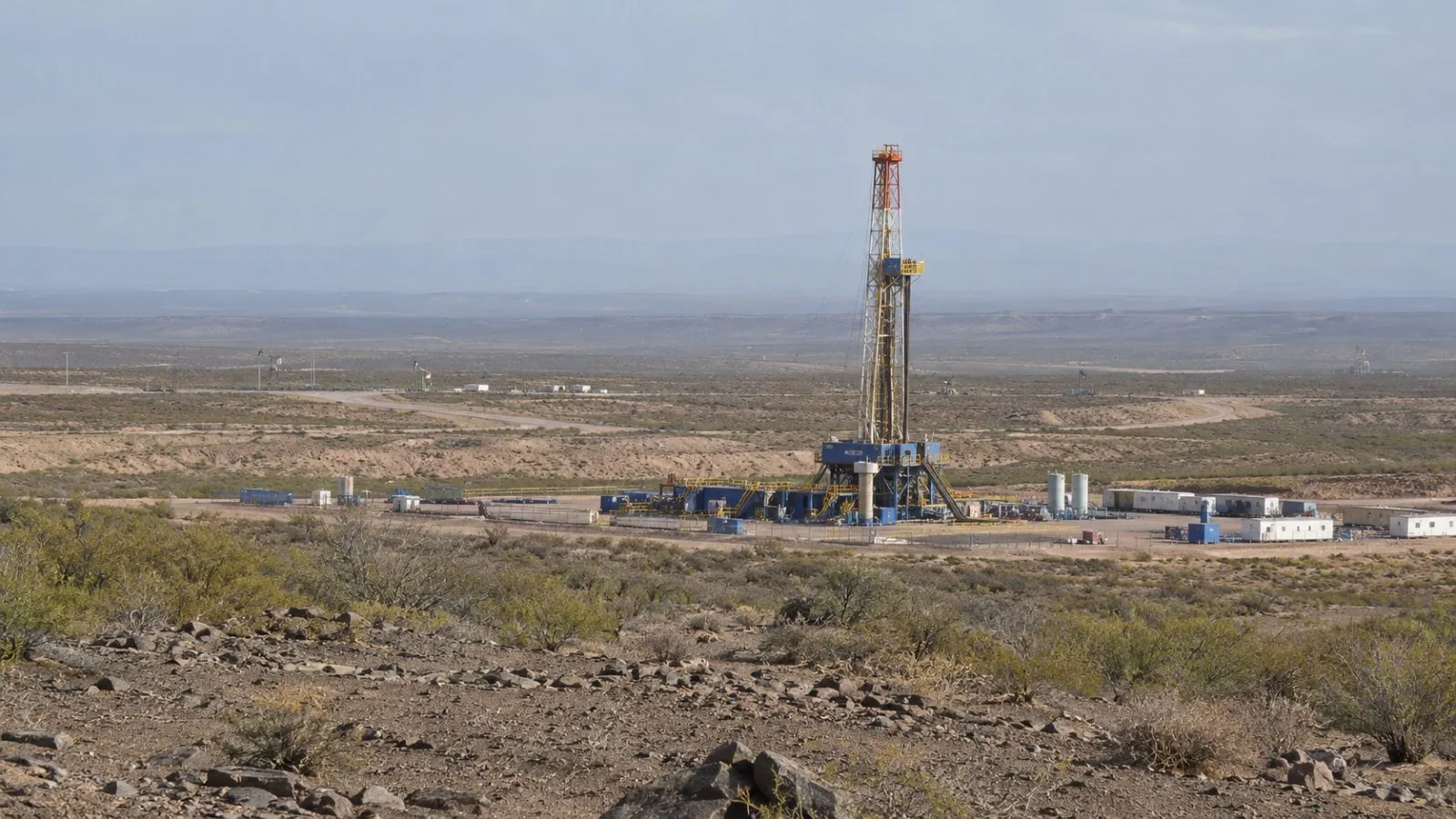
Argentina’s energy exports climbed 53.6% through September, while a Santander Argentina banker expects companies and provinces to issue about $9 billion in dollar bonds in 2027.
Mariano Urquiola, Santander Argentina’s head of Corporate and Investment Banking, gave the estimate to Bloomberg. The outlet reported that energy firms are expected to lead the combined sales, which may be concentrated in the first half of the year ahead of Argentina’s presidential election.
The Instituto Nacional de Estadística y Censos (INDEC) reported $12.452 billion in energy exports from January through September 2026. September exports totaled $1.781 billion, up 89.1% from a year earlier.
Borrowing has also increased in the sector. The Banco Central de la República Argentina (BCRA) said private external financial debt in oil and gas extraction rose $1.301 billion in the second quarter of 2026. Debt securities accounted for 80% of the increase, with proceeds intended to finance repatriations of foreign direct investment.
Bloomberg reported that companies and provinces had raised more than $11 billion in 2026 as of Nov. 17 and nearly $30 billion since the start of 2024, based on data it compiled. The $11 billion figure is year to date, while Urquiola’s estimate covers all of 2027.
Argentina’s Ministry of Economy separately projects $24.9 billion in Treasury foreign-currency financing needs for 2027. Its July plan includes $5 billion in local bond issuance among the funding sources; those are government needs, separate from the company and provincial estimate.
Bloomberg said investors have shown interest in companies investing in Vaca Muerta, citing their financial strength and rising energy shipments. Urquiola told the outlet that some energy borrowers could still obtain financing at yields below 10%, and that local dollar-linked corporate sales may grow as offshore issuance slows.
Pampa Energía Chief Financial Officer Adolfo Zuberbuhler urged issuers to arrange financing early, Bloomberg reported. He also warned that a rush of borrowers before the election could make it harder for other companies to access markets.
The current mix of company and provincial borrowers differs from 2016–17, when the federal government led nearly $60 billion in bond sales, Bloomberg reported. The outlet said issuance weakened after a financial crisis and an International Monetary Fund bailout, then remained low from 2020 through 2023.
INDEC’s calendar lists Thursday, Nov. 19, for its October trade report, the next scheduled update on exports.