Arkansas soybean acreage climbed as rice plantings fell in 2026, while a university estimate put added farm costs at $343.18 million ahead of the state's Nov. 3 Senate election.
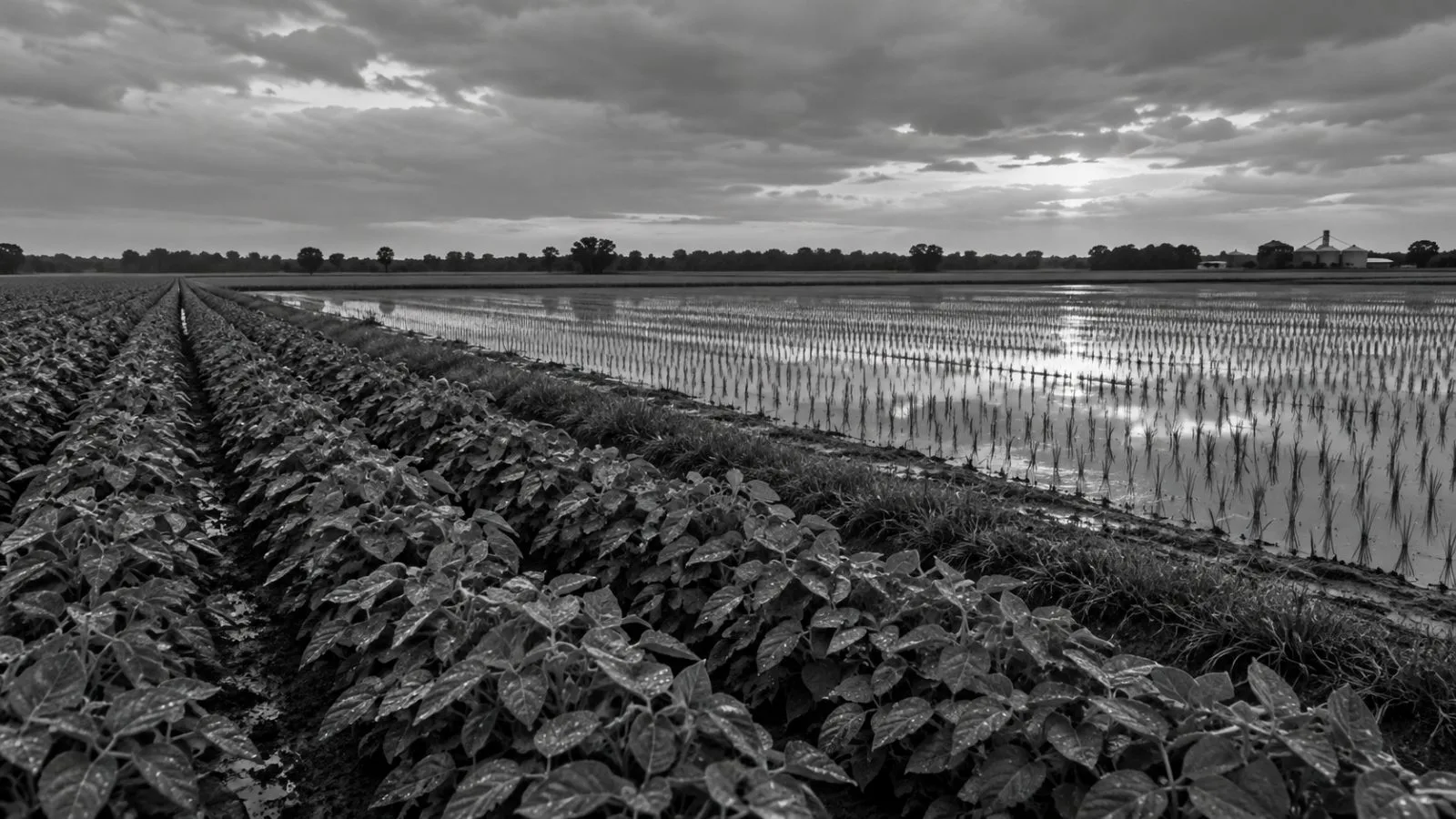
The U.S. Department of Agriculture's National Agricultural Statistics Service (NASS) recorded 3.45 million soybean acres in Arkansas in 2026, up from 2.59 million in 2025. Rice acreage came to 901,000, compared with 1.284 million the year before.
The University of Arkansas Division of Agriculture estimated that fuel and fertilizer price increases would add $343.18 million to Arkansas farm costs this year. The statewide figure applies estimated per-acre changes to planted acreage, making it a modeled projection. The analysis put combined diesel and urea cost increases at $118.69 per rice acre and $34.22 per soybean acre. It attributed the price pressure to shipping disruptions associated with the Iran conflict.
Farm diesel averaged $4.22 per gallon from March 1 through Sept. 30, 72% above the $2.46-per-gallon assumption in 2026 crop budgets. The analysis assigned soybeans no urea-related costs because the crop fixes nitrogen, helping explain its lower estimated per-acre increase. In an April outlook, USDA's Economic Research Service pointed to weak long-grain rice prices, along with higher fertilizer and diesel costs, as possible considerations in planting decisions.
The farm economy is part of Democratic candidate Hallie Shoffner's challenge to Republican Sen. Tom Cotton. Shoffner says her family shut down its farm after the 2024 season; her campaign links that decision to rising costs, weak markets and tariffs. Her platform calls for crop diversification, regional food systems, and local processing and distribution.
National surveys describe farmers' concerns but do not measure how Arkansas voters will respond in the Senate race. An April survey commissioned by Amato Advisors and conducted by Farm Journal placed 39% of 974 farmers and ranchers in its “persuadable farmers” category. It included respondents considering another party, an independent or third-party candidate, not voting, or who were undecided. Arkansas was the primary farm location for 0.21% of respondents. In a separate September poll by Purdue University and CME Group, 52% of 400 farmers said higher input costs were their leading concern.
U.S. Courts data showed 292 Chapter 12 farm bankruptcy filings nationwide through the first three quarters of 2026, nearly 19% above the 246 filings in the same period of 2025. Arkansas had 32 filings, including 12 in the third quarter. Harrison Pittman, director of the National Agricultural Law Center, cautioned in an Oct. 22 University of Arkansas discussion that those figures omit some farm distress because operations may file under other bankruptcy chapters. The center says Chapter 12 was introduced in 1986 during the farm crisis of the 1980s.
The U.S. Department of Agriculture announced its $8 billion one-time Harvest Fuel Relief program on Oct. 19 and said Title I commodity payment rates would be released in November. Arkansas voters will choose between Shoffner and Cotton on Nov. 3.