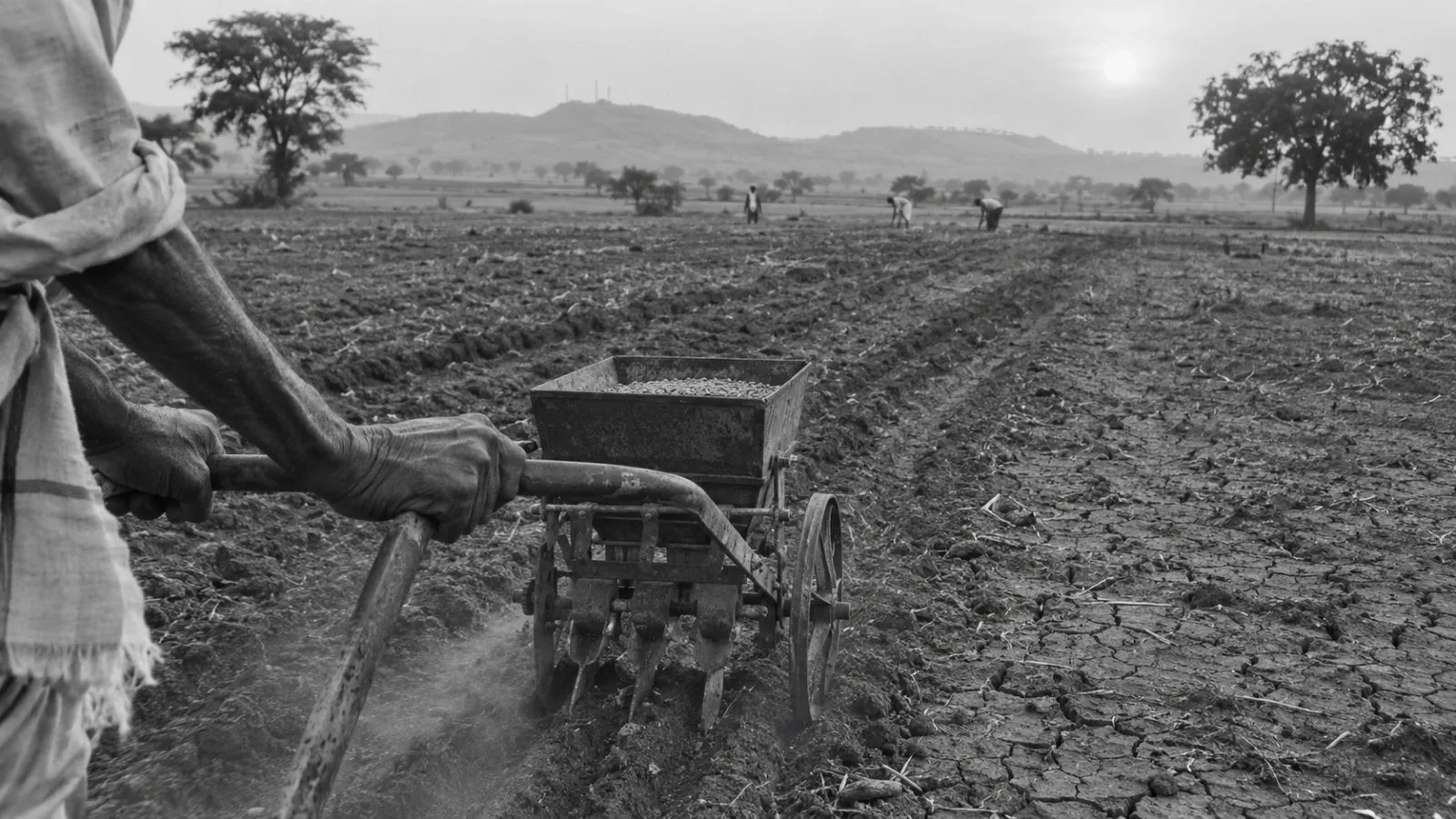
India’s wheat planting is falling sharply after a weak monsoon reduced available soil moisture and irrigation, raising the risk of tighter supplies and higher food costs later in the season.
The Agriculture Ministry said farmers had planted wheat on 50.07 lakh hectares, or 5.007 million hectares, by Nov. 13. That was 15.28% below the 59.10 lakh hectares recorded a year earlier. Total winter-crop, or rabi, sowing stood at 178.25 lakh hectares, down 11.34% from the same point last year.
A Reuters survey of 10 industry officials indicated that wheat acreage for the 2026-27 season could decline 6% to about 31.58 million hectares. Reuters described that estimate as the steepest annual fall since 2000-01 and the lowest planted area in four years. The figure is an industry projection rather than an official final forecast.
The India Meteorological Department recorded 759.4 millimeters of rain from June through September, equal to 87% of the long-period average. Northwest India received 553.0 millimeters, or 94% of its average.
Wheat generally needs several irrigation rounds after planting. Reuters reported that farmers in areas with limited water were considering chickpeas and rapeseed, which require less water and could offer better returns. “We don't have enough water even to sow the crop,” farmer Vilas Bhutekar of Maharashtra’s Jalna district told Reuters.
The government set wheat’s minimum support price for the 2027-28 marketing season at 2,610 rupees per quintal, up from 2,585 rupees. Reuters reported that the limited increase reduced the incentive to expand wheat acreage.
The reported shift to alternative crops has not yet appeared in national sowing totals. Ministry data showed chickpea acreage down 21.59% and rapeseed-mustard acreage down 8.45% from a year earlier as of Nov. 13.
Reuters reported that reduced wheat acreage, combined with possible yield losses from delayed planting, could tighten supplies and add pressure to food prices. The Agriculture Ministry’s weekly sowing releases will offer the next indication, while harvested area and yields will become clearer during the March-April harvest.