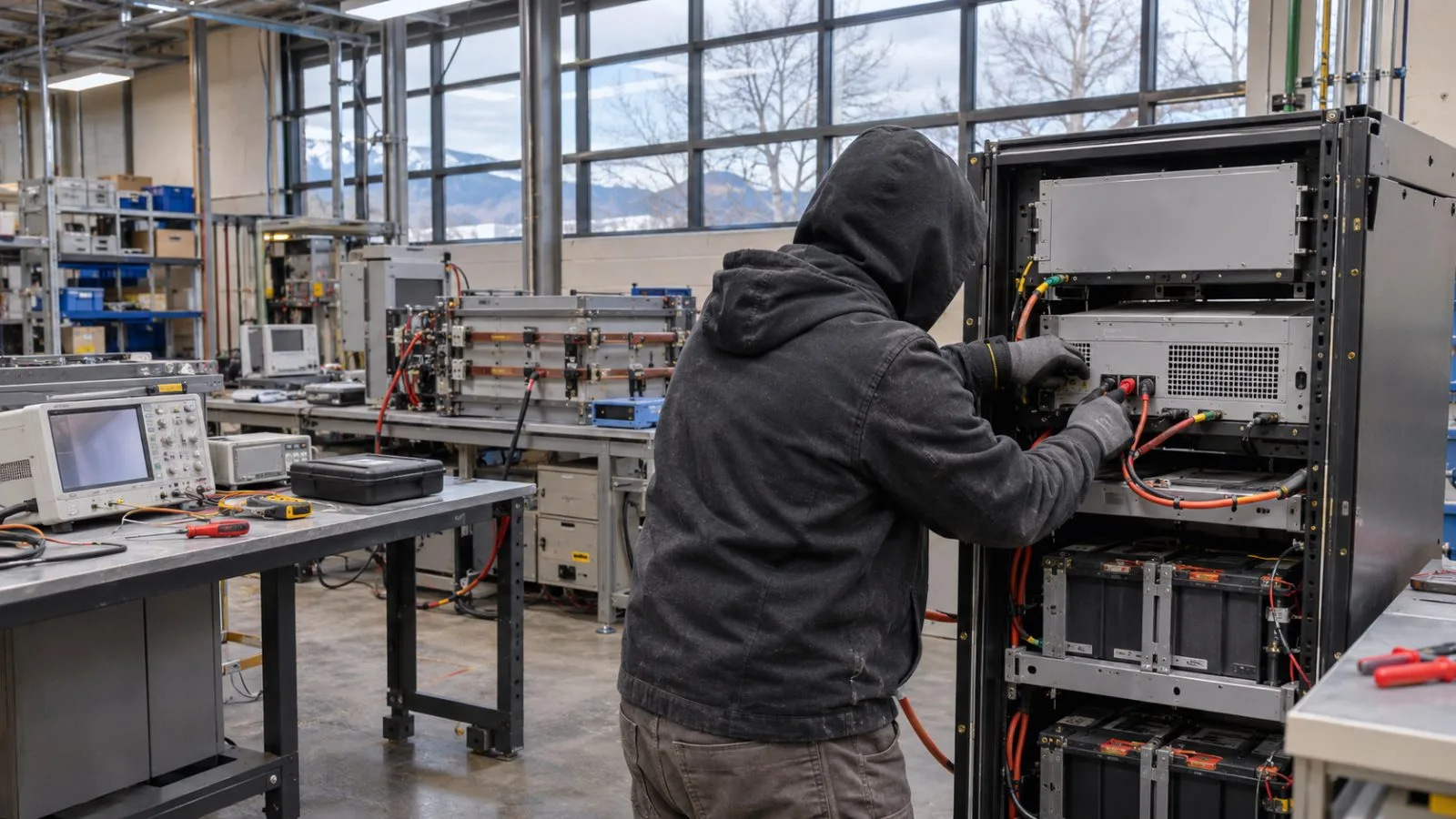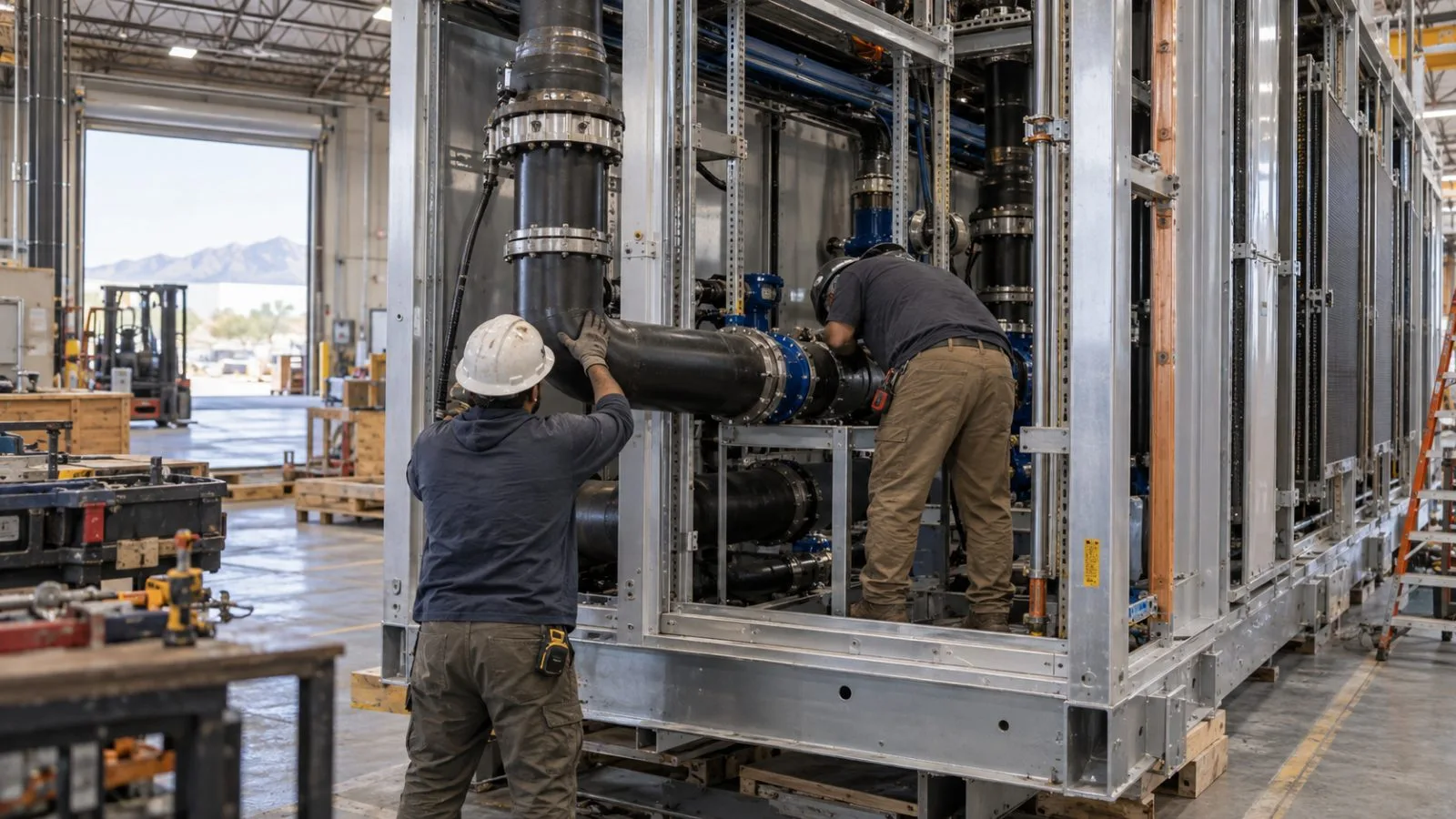
Armada and Johnson Controls began continuous production at a Dublin site on Nov. 11, adding a European manufacturing base for modular AI data centers as the partners move toward customer deliveries and a broader 2027 capacity goal.
The operation has completed a Leviathan unit described as a multi-megawatt-scale modular data center. The first system underwent engineering, integration and testing at the Dublin operation before heading to Fossefall in Norway. Fossefall ordered five systems with a combined capacity of more than nine megawatts, with the full order scheduled for delivery by the first quarter of 2027.
Galleon Forge Two spans 90,000 square feet and is supported by about 700 Johnson Controls engineers, technicians and other skilled workers, Armada said. Dublin is the second Galleon Forge operation at a Johnson Controls facility. The earlier site, in Gilbert, Arizona, is expected to begin continuous production in early 2027.
The partners are targeting at least 500 megawatts of capacity in 2027. Dublin’s launch gives the previously announced 2027 capacity goal a production site and an initial customer, though the announcement does not define how it measures capacity.
Armada says customers own the infrastructure and retain control of its computing, power and cooling through the company’s platform, without relying on an outside cloud provider. The companies say their approach is intended to support local jobs and supply chains while keeping capacity under local control. Johnson Controls says Leviathan incorporates its thermal-management technology. Its wider portfolio spans coolant distribution units, chillers and building controls; the company describes its zero-water cooling technologies as designed to reduce energy use and noise.
Johnson Controls framed the project around AI’s demand for greater scale, density and speed. Fossefall CEO Øyvind L. Vesterdal said Europe needs more advanced computing infrastructure and that projects should move toward construction. The companies expect continuous production to begin at the Gilbert site in early 2027.