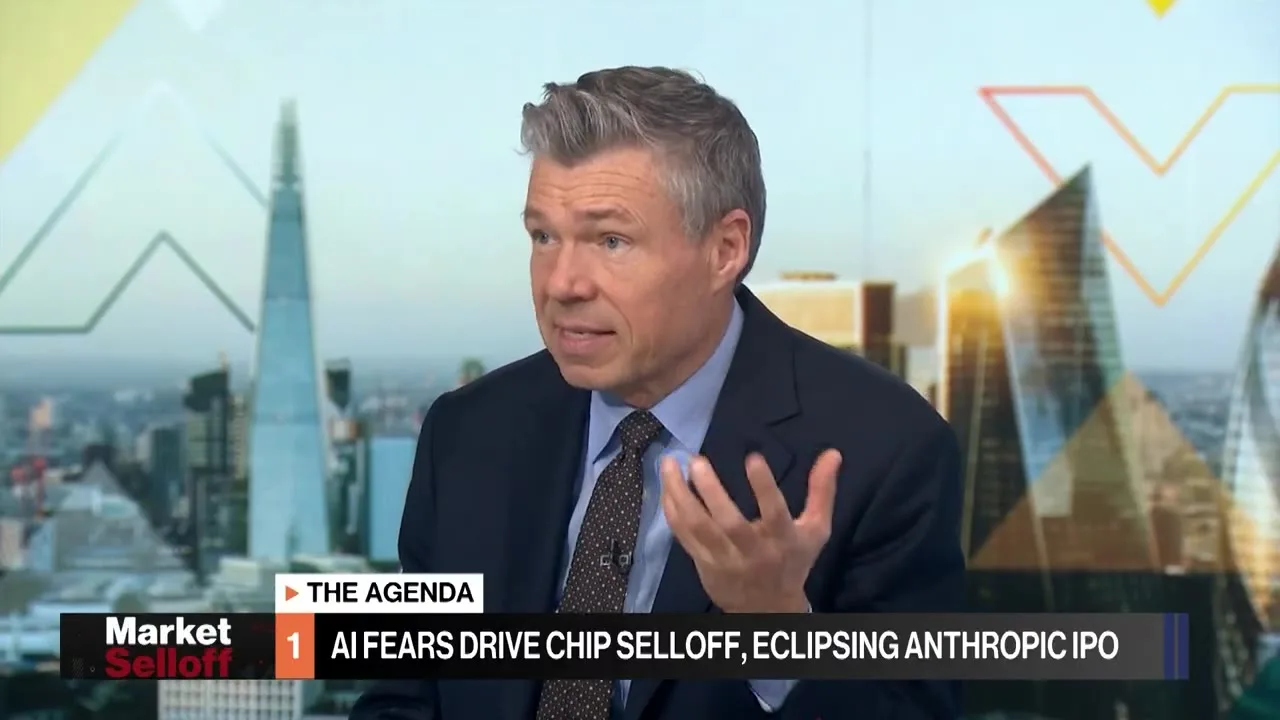
Asian chip stocks fell 3.4% on Nov. 20 and headed for their worst week since March 2020 as a technology selloff spread after Anthropic’s initial public offering, Bloomberg Television reported.
Stoxx 50 futures fell 1.7%, while U.S. futures also declined. The Taiwan Weighted Index was set for its worst week since the early 1990s, and the S&P 500 and Nasdaq had each lost more than 2%.
Anthropic, founded six years ago, was valued at more than $1.77 trillion after its shares rose 17% on their first trading day. The gain did not lift the wider artificial-intelligence trade, and the stock was lower in early dealings on its second day.
Matt Bloxham, a Bloomberg Intelligence analyst, said the IPO had become a successful listing while the broader AI sector sold off. He said investors were trading different parts of the AI supply chain for the first time, while questions remained about whether chip and data-center valuations were justified.
Anthropic’s filing included $900 billion of forward computing commitments extending into the mid-2040s. Bloxham said the market was signaling that Anthropic could succeed only if it adapted its business model to use less computing capacity.
“That less compute part is being expressed in a selloff of semis and chip stocks,” Bloxham said. He added that enterprise demand for AI computing was still expected to grow over the medium to long term, but the spending path would be uneven.
Government bond yields fell in some areas as bonds attracted demand as a haven, even as Federal Reserve officials kept a firm tone on inflation. Copper and oil prices also declined.
Walmart raised its guidance and benefited from wealthier shoppers trading down, but its chief executive said diesel prices had to fall because they were feeding inflation across the economy. Diesel costs affect transport and many other goods.
Talks between Britain and the European Union in Brussels were also due to cover food trade and youth-mobility arrangements. London wanted future access to an EU youth programme, while wider questions about Chinese goods, customs arrangements and the single market remained unresolved.