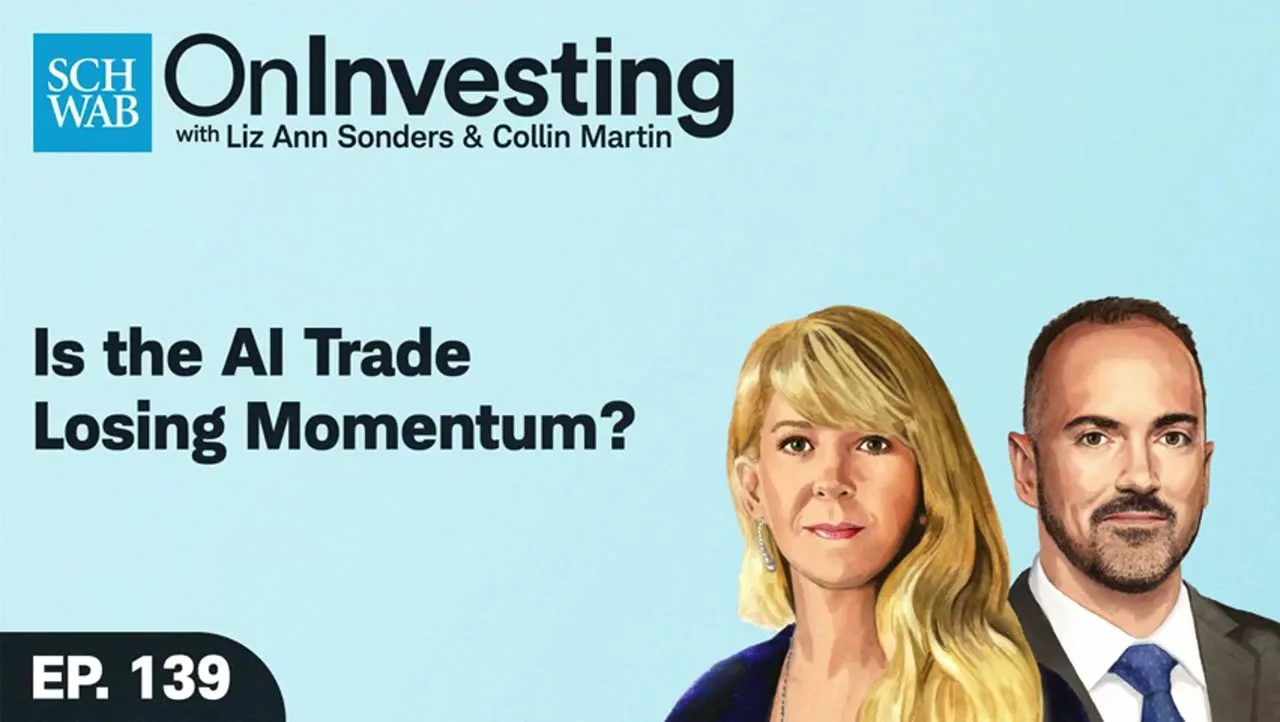
Nvidia and Micron are expected to account for about 35% of S&P 500 earnings growth in 2026, while Nvidia alone could approach half of next year’s earnings, Charles Schwab’s Liz Ann Sonders said.
Sonders and Collin Martin made the comments on Schwab Network’s “On Investing” podcast, published Nov. 20. They said Nvidia’s latest results eased concerns about slowing artificial-intelligence spending, but the stock’s size has increased the market’s exposure to any earnings setback.
Nvidia’s earnings report on Nov. 17 offered reassurance that the company could maintain capital spending and revenue growth, Sonders said. She added that artificial-intelligence capital spending, a major economic driver, showed no signs of slowing at that stage.
But Nvidia and Micron together represented about 35% of expected S&P 500 earnings growth for calendar 2026, based on data Sonders had seen. For calendar 2027, Nvidia was close to 50% of expected S&P 500 earnings, based on analyst consensus estimates.
Nvidia had ranked among the biggest contributors to S&P 500 returns for much of the past two years. Its weak share-price performance has since pushed it to last place among the 10 largest technology stocks tied to artificial intelligence, Sonders said.
Apple has overtaken Nvidia as the most highly valued stock and the largest contributor to S&P 500 returns this year. Micron is the second-largest contributor and has the fourth-best share-price performance. Sonders said a company’s size can lift its contribution when its shares rise and hurt it when they fall.
Martin said investors were focused on whether Nvidia could maintain its growth rather than simply on the strength of its latest earnings. “Expectations matter so much,” he said, adding that the market would judge whether future growth remained intact.
The discussion then turned to borrowing costs for artificial-intelligence data centers. Martin said higher Treasury yields and wider spreads on corporate debt had made financing more expensive for companies building that capacity.
The 10-year Treasury yield had moved above 5%, Martin said. He linked longer-term yields to expectations for monetary policy and said he expected the Federal Reserve to raise rates at its December meeting and again in early 2027.
Martin said officials’ comments supported that view, though he did not expect a 50-basis-point increase in December. Christopher Waller had said a monthly Consumer Price Index increase of 0.3% or more could require such a move, but Martin said other officials had not shown much support for it.
Dallas Fed President Lorie Logan had supported two rate increases while saying the pace might need to quicken if inflation stayed elevated, Martin said. He described the current risk as more rate increases rather than fewer, while acknowledging that expectations could change with the data.