


 Blue Origin New Glenn Rocket Explodes During Launch Pad Test, Delaying Space Ambitions
  Eli Lilly’s Inluriyo Gains FDA Approval for Advanced Breast Cancer Treatment
  Trump and Merck KGaA Partner to Slash IVF Drug Costs and Expand Fertility Coverage
  Neuralink Plans High-Volume Brain Implant Production and Fully Automated Surgery by 2026
  Trump Administration Releases New UFO Files and Apollo Mission Records
  Trump Signs Executive Order to Boost AI Research in Childhood Cancer
  Blue Origin’s New Glenn Achieves Breakthrough Success With First NASA Mission
  NASA's Artemis II Mission: First Crewed Lunar Journey Since Apollo
  Tabletop particle accelerator could transform medicine and materials science
  FDA Pilot Program Eases Rules for Nicotine Pouch Makers
  SpaceX Delays Starship V3 Launch Ahead of Potential Record IPO


 Add as a preferred source on Google
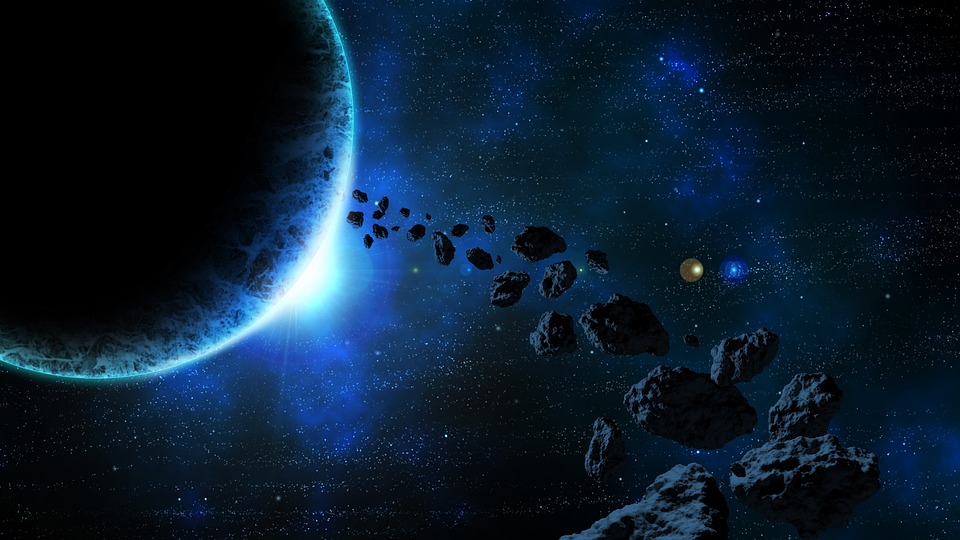
Many asteroids have been spotted by space agencies all over the world passing by the Earth’s orbit. Now, experts have predicted what kind of natural disaster that could occur should a giant asteroid hit the planet.
A certain asteroid referred to as 101955 Bennu or 1999 RQ36 was classified by NASA as a “Potentially Hazardous Object” or PHO. The space rock is also the second-highest on the Palermo Technical Impact Hazard Scale. Many astronomers have already warned the agency to act or come up with a course of action should RQ36 make an unannounced visit to Earth as the impact from the asteroid would bring on natural disasters of a global scale.
A study conducted by Dr. Maria Eugenia Sansaturio, there is a chance of RQ36 striking Earth in the future. Back in 2010, Dr. Sansaturio explained to Universe Today that while the chances of an impact by RQ36 in a realistic setting are one in 1,000, what is concerning about the probability is more than half a chance of an impact might take place in the year 2182.
According to experts who explained the possible effects, the Earth would only lose some negligible mass, and thus no extreme damage would be caused. Still, there is some damage that will occur, but it will mostly happen where it decides to hit. The crater RQ36 would leave would measure up to 2.87 miles in diameter and 1,200 meters deep. The impact would at first, trigger an earthquake that is 6.7 in magnitude on the Richter scale.
If ever Bennu would hit the ocean, however, it would trigger a tsunami wave 92, which measures 183-feet, will be the effect and reach up to 31 miles from the impact site. People and animals may be safe if they are 300 miles from the shore, but there would still be some seismic activity occurring in the cities.
But asteroids like Bennu may not be the only thing we should be worried about. Metro reports that asteroids and comets coming from Jupiter may be hurtling towards the planet as well. According to Dr. Kevin Grazier, former NASA physicist, Jupiter may not be helpful in deflecting asteroids and comets after all.
Grazier ran simulations on this theory and in a paper he published back in 2007, it revealed that according to their simulations, Jupiter is responsible for most of the asteroids that have been approaching Earth. He advised that scientists should keep track of what is happening a little far away from the gas giant’s orbit.







