


 Eli Lilly’s Inluriyo Gains FDA Approval for Advanced Breast Cancer Treatment
  Jared Isaacman Confirmed as NASA Administrator, Becomes 15th Leader of U.S. Space Agency
  Blue Origin New Glenn Rocket Explodes During Launch Pad Test, Delaying Space Ambitions
  Is space worth the cost? Accounting experts say its value can’t be found in spreadsheets
  SpaceX Pivots Toward Moon City as Musk Reframes Long-Term Space Vision
  Trump Administration to Launch Autism Initiatives Targeting Acetaminophen Use and New Treatment Options
  FDA Adds Fatal Risk Warning to J&J and Legend Biotech’s Carvykti Cancer Therapy
  China vs. NASA: The New Moon Race and What's at Stake by 2030
  Blue Origin’s New Glenn Achieves Breakthrough Success With First NASA Mission
  Tabletop particle accelerator could transform medicine and materials science
  SpaceX Prioritizes Moon Mission Before Mars as Starship Development Accelerates
  Neuralink Plans High-Volume Brain Implant Production and Fully Automated Surgery by 2026


 Add as a preferred source on Google
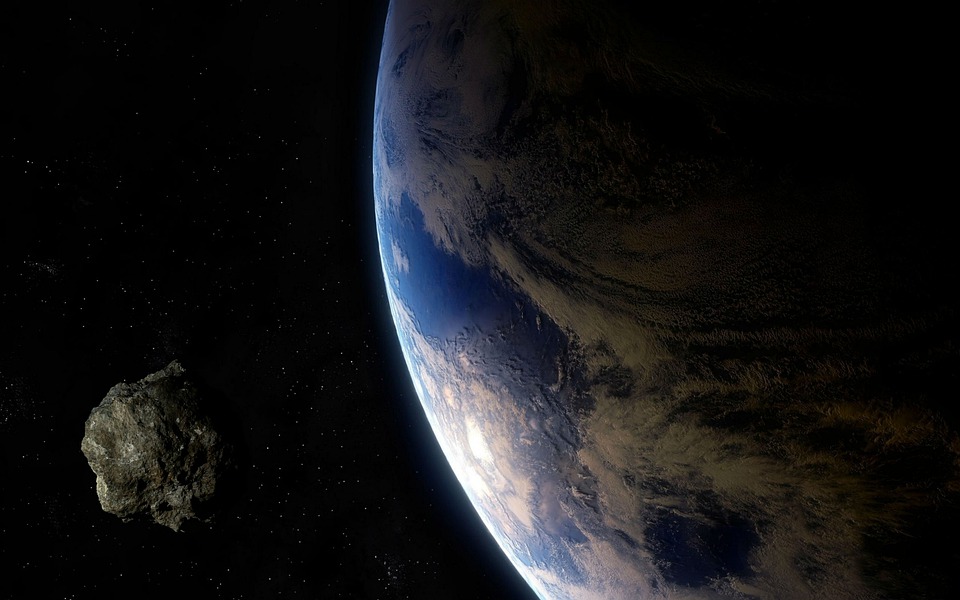
The asteroid trackers at NASA spotted another space rock headed in the Earth’s direction. The agency predicted that it would be approaching the planet today.
Express reports that an asteroid formally referred to as 2020 BP, is approaching the planet’s orbit at a speed of over 37,356 miles per hour. NASA said that it will be on a close approach trajectory as it passes by the Earth today, on the 21st of January. Aside from BP being classified as a Near-Earth Object or NEO, NASA has also classified this asteroid as an Apollo-type asteroid as it is flying on an orbit that tends to cross paths with the Earth’s own orbit as well.
BP is estimated to measure around 68.89 feet to 154 feet in diameter. This asteroid is still fairly small compared to other asteroids, but if in the event that it makes an unannounced visit, it can burn up on entry into the atmosphere. However, it can still pack quite a punch if it ever does make it through the Earth’s atmosphere, based on the 2013 Chelyabinsk incident, which saw an asteroid strike the country, injuring over 1,000 people as it exploded. While it only measured around 65.6 feet in diameter, the blast was 10 times more powerful than the atomic bomb that was dropped in Hiroshima.
Fortunately, BP is not going to pose a threat now nor anytime soon as the closest it will get to the Earth would be within 0.00944 astronomical units. In human terms, the asteroid will get as far as 1.41 million kilometers.
Meanwhile, a group of astronomers in China may have discovered an unusual type of black hole. Stellar black holes usually have a mass 10 times more than the Sun, but the group of astronomers discovered what may be a black hole with 70 solar masses than that of the Sun. This led other astronomers to analyze this claim as if it is true, then it would change the view of how stars are formed. Upon further analysis, astronomers from the University of Potsdam and the University of Erlangen-Nurnberg say that the discovery may not be of a black hole, but it may be more of a neutron star or an ordinary star.







