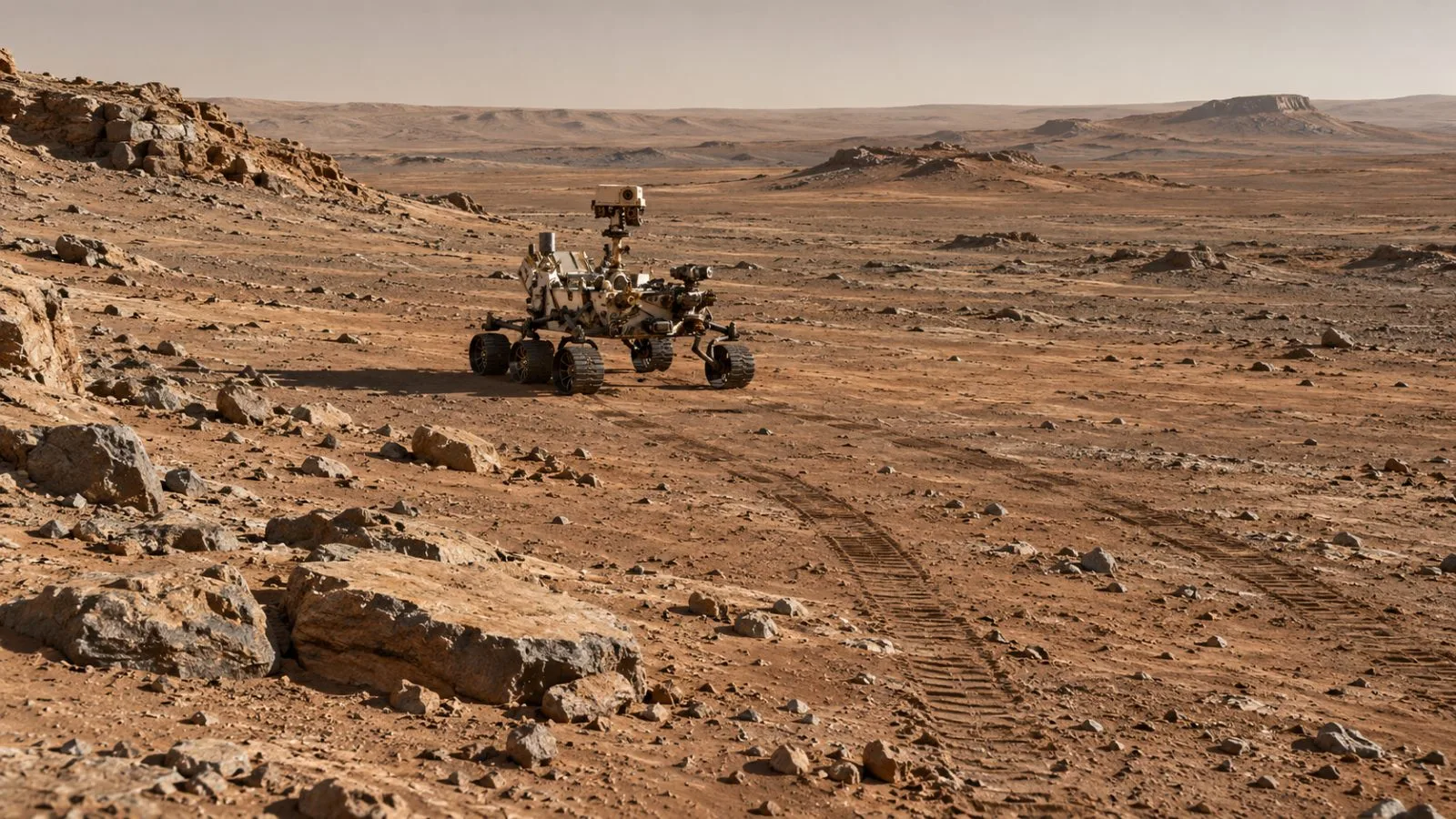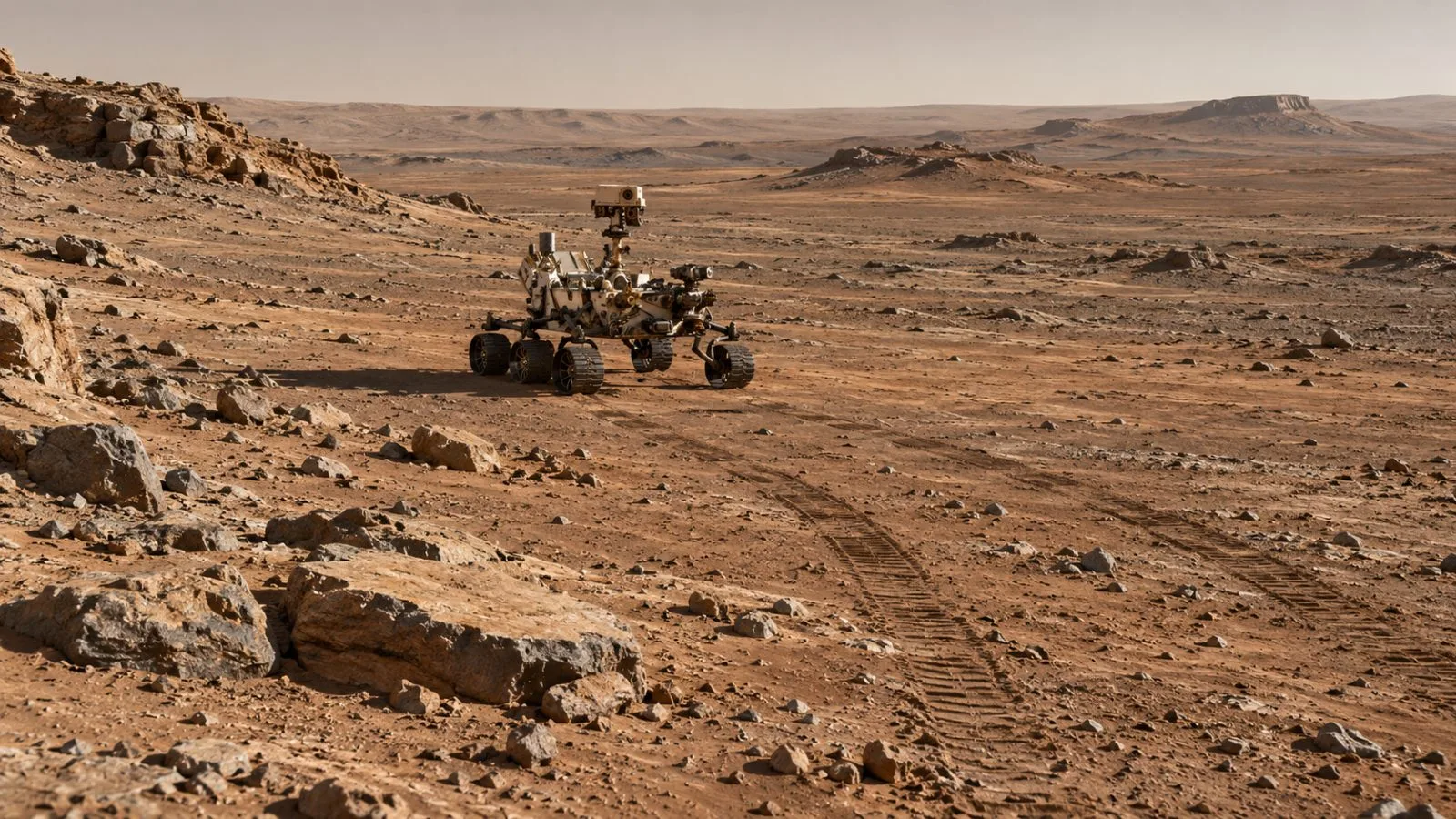
NASA's Perseverance rover has found bright rocks rich in hydrated silica near Jezero crater, giving researchers a target to study ancient Martian water environments and the mineral's ability to preserve signs of past life.
Newly downlinked readings from SuperCam, Perseverance's remote-analysis instrument, indicate the rocks are not igneous and are rich in hydrated silica, NASA said in a Nov. 16 mission update. The data describe the rocks' composition, but the update does not identify how they formed.
Idubi is in the Lac de Charmes region outside Jezero crater. NASA's Sept. 28 update said rocks in the region are among the oldest Perseverance has encountered. The same Sept. 28 NASA update said hundreds of light-toned boulders had been spotted at Idubi from a distance.
On Earth, hydrated silica can form in hydrothermal and groundwater systems as well as soil-forming (pedogenic) systems. NASA says some environments of these kinds could support life, and silica can preserve microfossils. Those properties make the mineral relevant to studying Mars' past; NASA's update does not report fossils or other signs of life at Idubi.
Perseverance is carrying out a detailed close-range science campaign to collect more chemical and mineral information about the rocks. NASA said earlier silica-rich rocks on Jezero's inner rim were too small for the rover's proximity instruments to make the high-resolution measurements researchers needed. The Idubi rocks are a larger target for that work.
Perseverance's left Mastcam-Z camera and SHERLOC WATSON camera photographed the bright rocks on Oct. 29, 2026, during Sol 2023. NASA's update includes a Mastcam-Z view and a WATSON close-up from that Martian day.
NASA has also described a separate dark rock at Tinga, near the southern edge of the Idubi channel. Its update says the rock may belong to a nearby olivine-bearing unit or may be breccia altered by heat; EconoTimes previously covered the two possible origins for the dark rock.
The Nov. 16 update does not say whether the silica-rich rocks will be sampled or when results from the current study are expected.