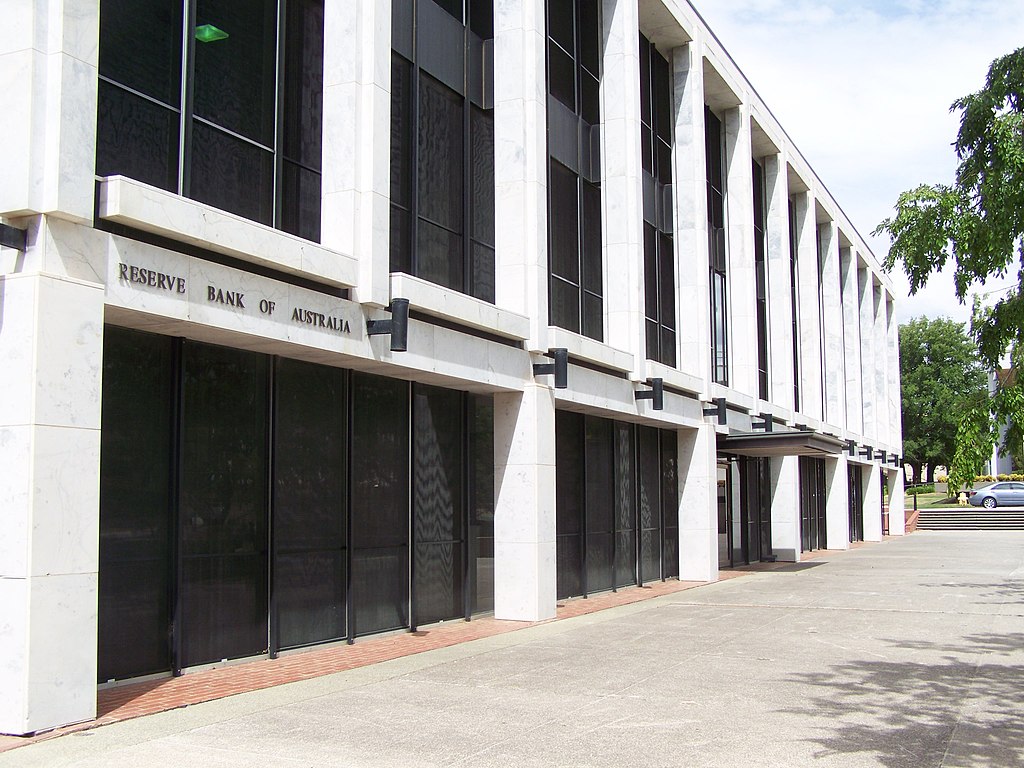
Australia’s economy expanded faster than expected in the second quarter, adding to expectations that the Reserve Bank of Australia could raise interest rates again as persistent inflation and resilient economic activity keep price pressures elevated.
Gross domestic product rose 0.4% in the June quarter, accelerating from a revised 0.3% increase during the March quarter, according to data released Wednesday by the Australian Bureau of Statistics. Economists had forecast quarterly GDP growth of 0.3%.
On an annual basis, Australia’s GDP increased 2.1%, easing from 2.5% growth in the first quarter but comfortably exceeding expectations for a 1.8% expansion.
The stronger-than-anticipated Australian GDP figures could complicate the RBA’s efforts to contain inflation without putting excessive pressure on domestic demand. The central bank has already raised interest rates three times this year in response to elevated inflation.
Capital Economics said the combination of stronger growth and inflation could prompt another RBA rate hike, potentially as soon as September.
Household consumption increased 0.4% during the quarter, although spending remained subdued across most categories. Private business investment declined following a substantial increase in the previous quarter, but the contraction was less severe than the RBA had anticipated.
Trade activity delivered mixed signals. Goods imports climbed 2.4%, driven mainly by purchases of cars and aircraft. Services imports dropped 4.9% as the Middle East conflict disrupted international travel. Exports increased 0.8%, supported by stronger coal production.
The Australian dollar showed little immediate reaction to the GDP report, with the AUD/USD exchange rate trading around 0.714 by 03:36 GMT.
Despite the stronger headline growth figures, signs of weakness remain. Capital Economics noted that Australia’s labour market is gradually loosening, while revised figures indicate the housing downturn has intensified.
Still, analysts said the economy continues to expand close to its trend rate, while recent monthly household spending figures point to a possible acceleration in consumption.
The combination of resilient economic growth, persistent inflation and improving consumer spending has strengthened expectations that the RBA could deliver another interest rate increase as early as September.