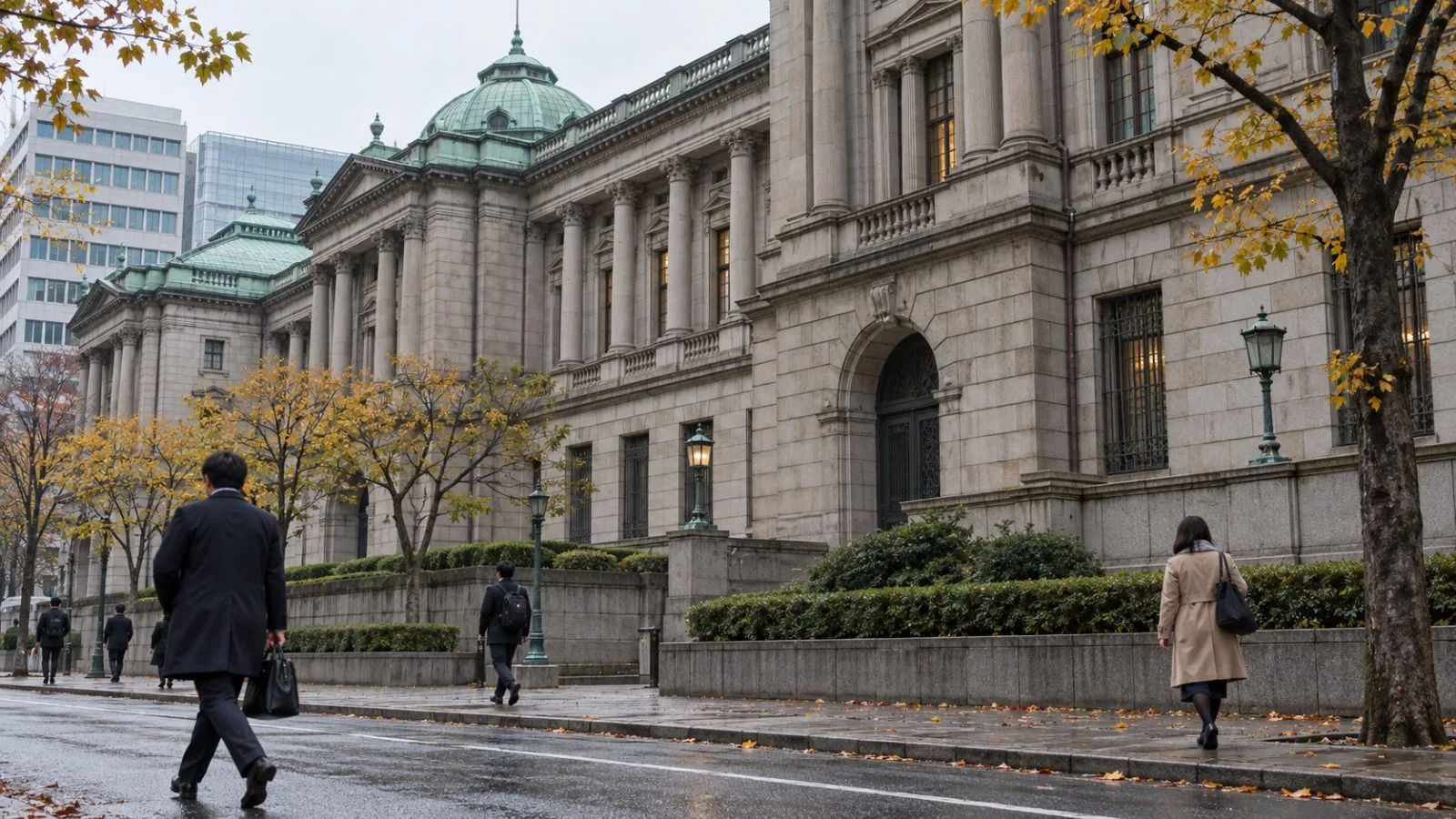
The Bank of Japan (BOJ) lifted its median fiscal 2027 consumer price index (CPI) forecast to 2.6% and kept its overnight call-rate guideline around 1.25% on Friday, Oct. 30, amid upside price risks.
The BOJ’s Policy Board voted 8-1 to keep the guideline for the uncollateralized overnight call rate around 1.25%. Board member Hajime Takata dissented, proposing a level of about 1.5%.
In its October outlook, the BOJ assessed underlying inflation as broadly in line with its 2% target and projected it would stay near that mark. It said it would continue raising the policy rate, with the timing and pace depending on economic activity, prices and financial conditions. The report said risks to prices lean upward.
The BOJ’s median projection for fiscal 2027 CPI excluding fresh food is 2.6%, up from 2.4% in July. The fiscal year ends in March 2028. The forecast does not include a proposed consumption-tax reduction for food and beverages; under the BOJ’s stated assumption, that change would lower the fiscal 2027 year-over-year rate for CPI excluding fresh food by about 1.3 percentage points.
The bank linked price pressures to wage increases passing through to prices, higher crude-oil prices, demand for AI-related goods and yen depreciation. It said labor shortages support moderate wage and price increases. Higher energy and raw-material prices could weigh on corporate profits and household real income.
Preliminary October data from Japan’s Statistics Bureau showed prices in Tokyo’s 23 wards rose 2.6% year over year excluding fresh food, down from 2.7% in September. The measure excluding both fresh food and energy also rose 2.6% year over year. These Tokyo readings are regional figures and describe different measures from the BOJ’s assessment of underlying inflation.
The BOJ also unanimously approved increasing its annual exchange-traded fund sales pace, measured at book value, to about ¥860 billion from about ¥330 billion starting in January 2027. The bank said the new pace represents about 0.1% of market trading value, compared with about 0.05% previously.
EconoTimes previously reported expectations for an October rate hold. The BOJ’s next policy meeting is scheduled for Dec. 17-18.