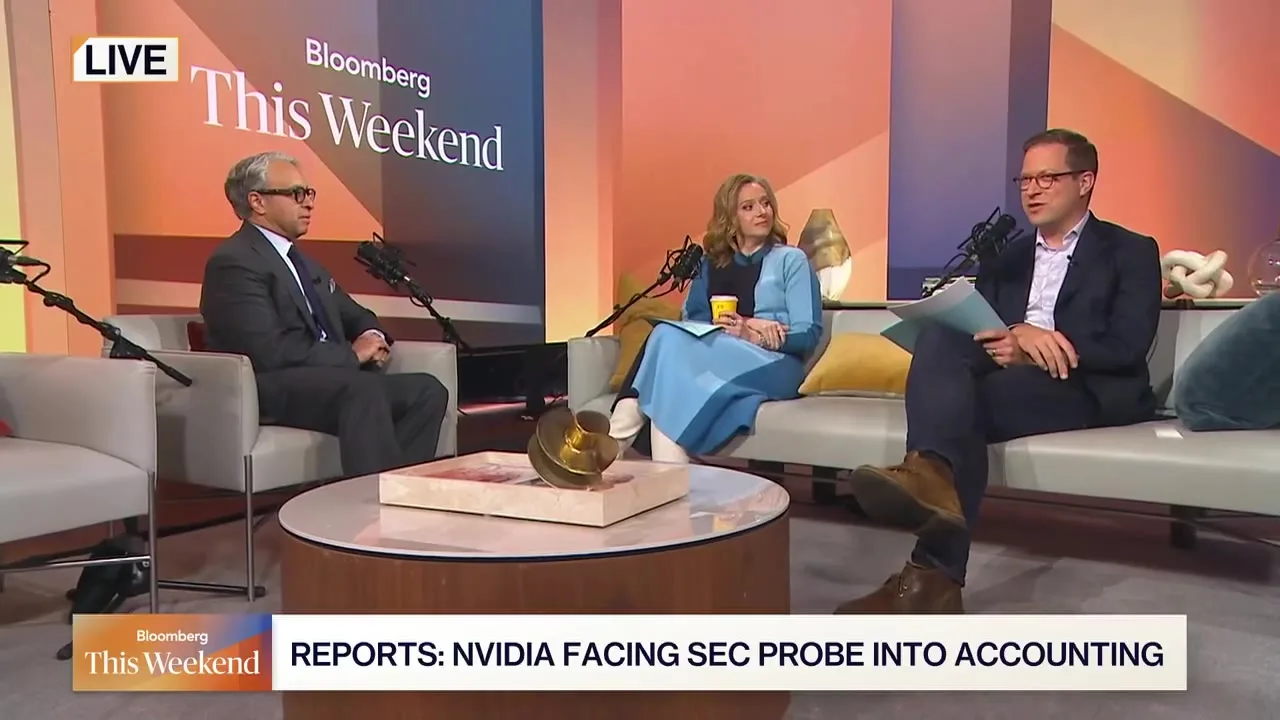
Nvidia’s board faces questions about its ability to oversee a company that has grown from $40 billion to $4 trillion, Gautam Mukunda said. He is an executive fellow at the Yale School of Management and a Bloomberg Opinion columnist.
The company’s rapid growth has left the board with challenges it may be less prepared to handle, Mukunda said in an interview on Bloomberg Television’s “Nvidia Board Faces a Governance Reckoning,” published Nov. 22, 2026.
Mukunda said board members had access to information unavailable to the public about what people at Nvidia knew. He said their position that Jensen Huang would not return indicated they were unhappy with what they were learning from their investigation.
The transcript did not establish the findings of the investigation or what Nvidia’s board knew. Mukunda said the situation raised national security questions and the possibility of shareholder lawsuits.
He described potential claims under different scenarios, including one in which Huang had done nothing wrong and another in which Nvidia had violated export controls. He did not say either scenario had been established.
Mukunda said Nvidia’s management structure concentrated power around Huang, who had 60 people reporting directly to him. That structure left fewer senior managers with the standing to challenge his decisions, he said.
He said Huang’s close involvement in decisions had worked well for Nvidia for a time. But Mukunda questioned whether a board whose members had benefited financially from the company’s success could exercise independence.
He said companies needed to rethink how much authority and privilege they gave chief executives. Nvidia had avoided some practices associated with concentrated control, he said, because Huang did not have special voting shares.
Mukunda said the issue extended beyond board rules to attitudes among Silicon Valley leaders. Executives needed people around them who could challenge their decisions, he said.
On U.S. technology exports to China, Mukunda said Huang had argued that sales of American chips would keep Chinese companies dependent on U.S. technology while generating American profits.
Mukunda questioned whether that dependence would last, saying China could develop its own technology. He also said the case for exports was harder to reconcile with the view that artificial intelligence could transform the world.