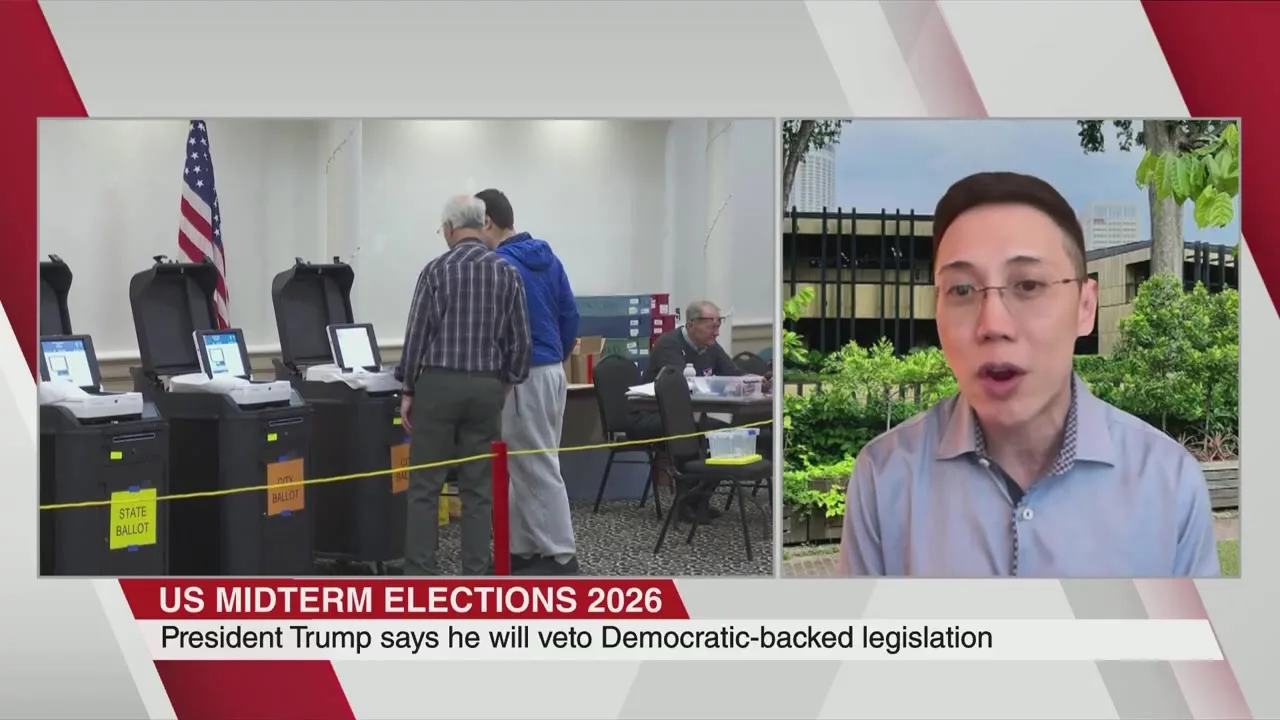
In an analysis published by Economist Writing Every Day, James Bailey argued that Democratic gains in the U.S. midterms could affect trade and data-center policy, while President Trump’s veto authority may constrain changes requiring new laws.
Bailey had forecast a Democratic wave that would surpass the Republicans’ 2022 performance, but said he had not anticipated an outcome large enough for Kalshi’s “mega tsunami” label. He described the threshold as Democrats holding at least 240 House seats and 54 Senate seats.
Bailey cited Wall Street Journal polling to support his view that the economy and prices were central to voters. He also pointed to Polymarket odds of a U.S. invasion of Iran this year falling 5%. Bailey said odds of John Ossoff and Ron Desantis becoming president in 2028 rose, while those for JD Vance and Gavin Newsom fell.
On economic policy, Bailey expects lawmakers to revisit tariff rates and reconsider authority previously delegated to presidents. He also said Federal Reserve board members may feel freer to raise interest rates if they consider an increase warranted.
Bailey said state-level election results could make data centers harder to build, potentially hurting companies involved in their construction. He added that frontier labs may have less room to spend on advancing their work. The possible effects he described span data-center construction and spending by frontier labs.
Bailey framed the broader outcome as a return to divided government and gridlock. He argued that President Trump’s veto authority could narrow the scope of policy changes requiring new legislation over the next two years.
EconoTimes previously covered Polymarket odds of a Democratic sweep before the election.