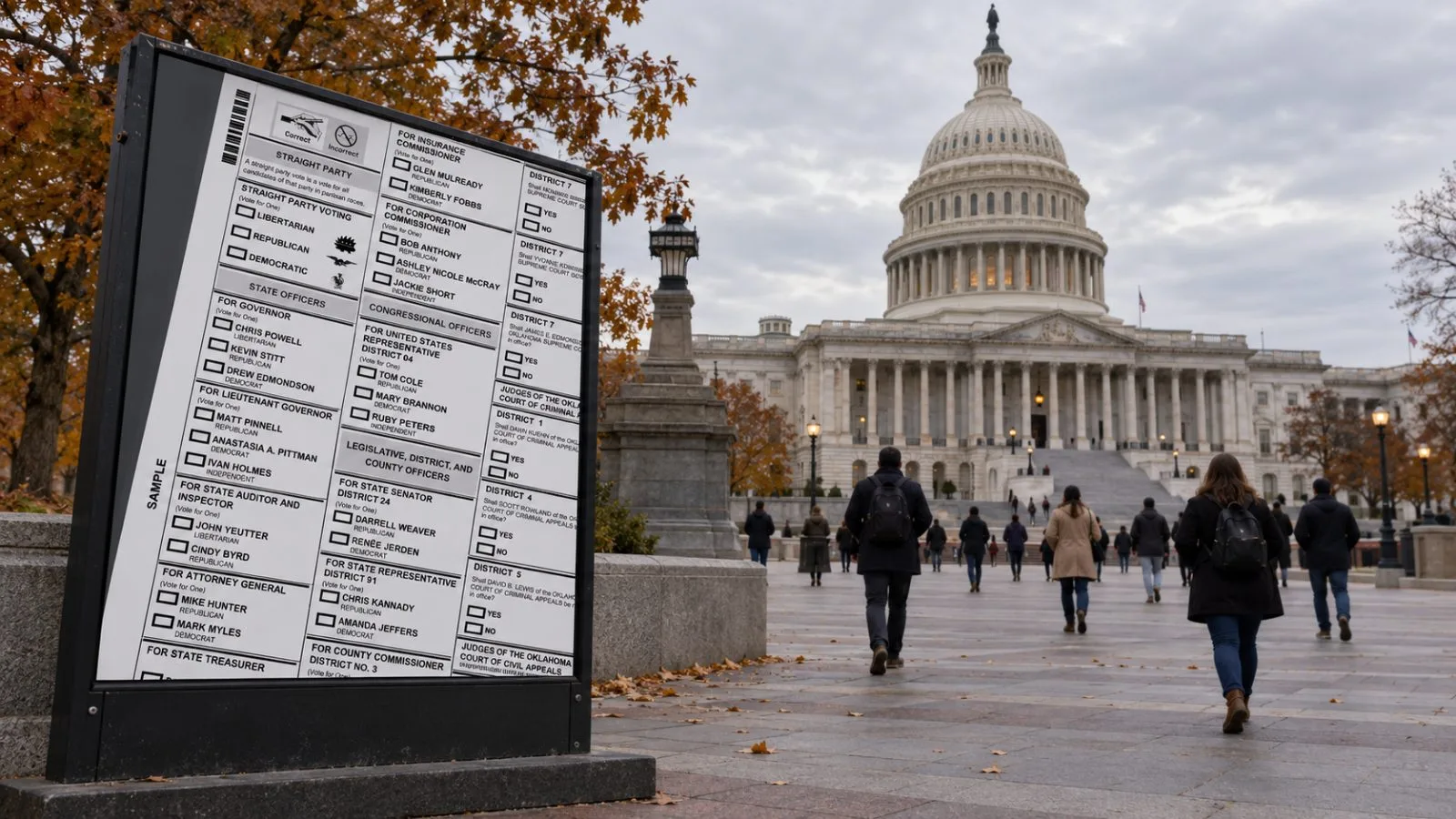
A Polymarket contract implied a 72% chance of Democrats winning both chambers on Oct. 30, offering a snapshot of election expectations ahead of the U.S. midterm vote on Nov. 3.
The page showed a 94% price for a Democratic House win. FP Markets, in an Oct. 29 release, had cited 67% for a sweep and 93% for the House. The figures come from different dates, and Polymarket prices can shift with trading activity.
The election will determine which party holds a majority in each chamber for the next two years, though control could be split. Voters will choose all 435 House members and 35 senators.
The House Clerk listed 218 Republicans, 214 Democrats, one independent and two vacancies as of Oct. 19. With 218 seats needed for a majority, Democrats would need a net gain of four to take control of the House.
Republicans held 53 Senate seats, while Democrats held 45 and two independents caucused with them. The Associated Press said Democrats need four additional seats to retake the chamber.
Aaron Hill, FP Markets’ chief market analyst, said divided control could limit policy changes and ease pressure on longer-dated bond yields. He said a Democratic sweep could bring corporate taxes and regulation back into focus, posing a risk to stocks.
FP Markets’ release also promoted its contracts for difference, or CFDs, covering U.S. stock indexes, major dollar currency pairs, gold and oil.
J.P. Morgan Asset Management’s review found that the S&P 500 recorded a positive return in each 12-month period following a midterm election in its data dating back to 1950; the average gain was about 15%. The firm cautioned that economic conditions varied across those cycles.
The next decision point is Tuesday, Nov. 3, when voters go to the polls.