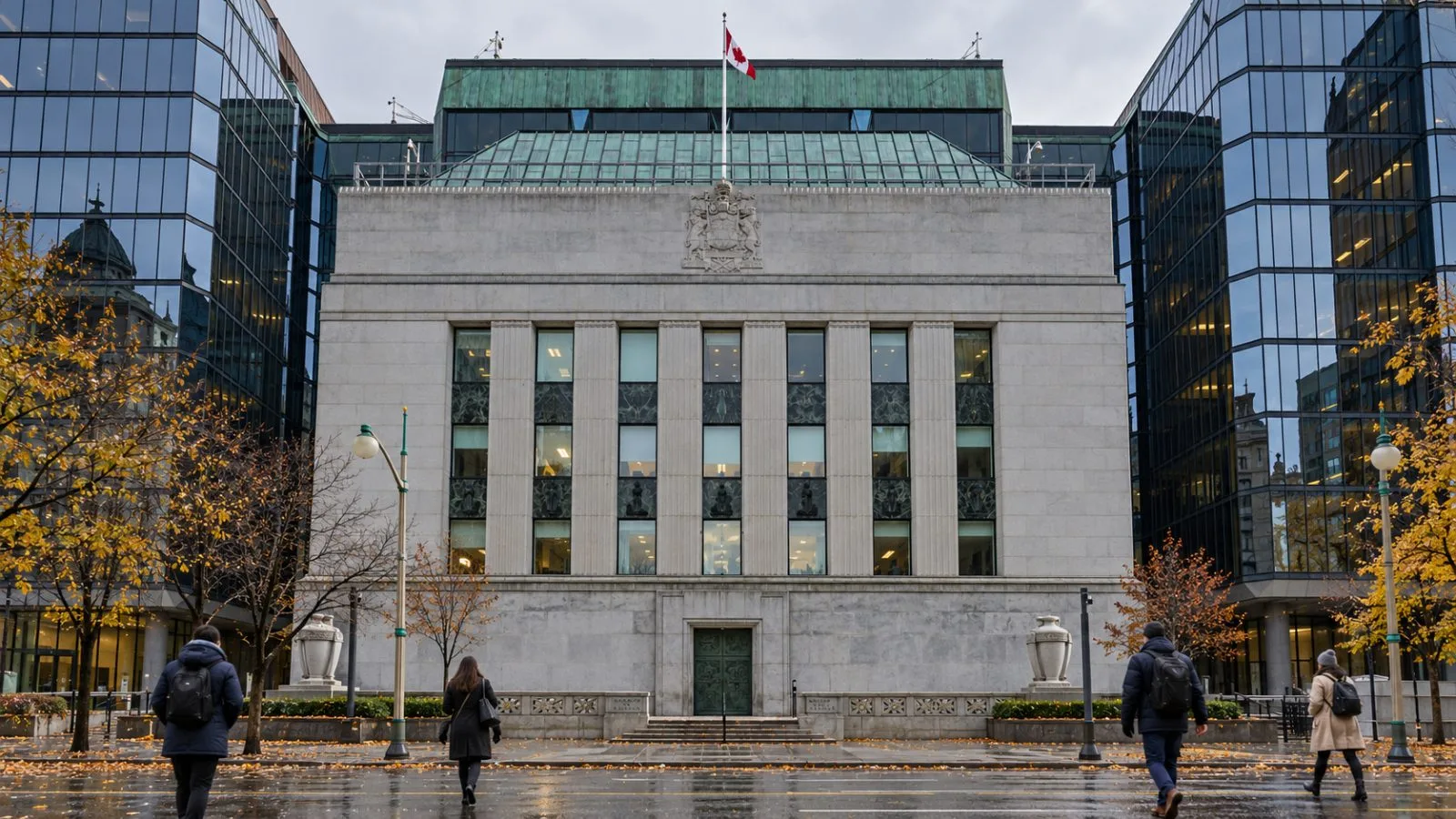
Canadian companies questioned after U.S. trade talks failed on Aug. 21 reported weaker outlooks and higher inflation expectations, adding a concern ahead of the Bank of Canada's Oct. 28 rate decision.
The Bank of Canada's third-quarter Business Outlook Survey, published Oct. 19, draws on interviews conducted from Aug. 6 to Sept. 2. The bank had completed about three-quarters of them before the negotiations failed. For the quarter as a whole, business sentiment improved and inflation expectations eased from the previous quarter.
Later responses showed a setback. Firms expected weaker export sales and were less confident about their overall prospects. The bank said new U.S. tariffs and Canadian counter-tariffs weighed on outlooks, while inflation expectations rose alongside higher oil prices and the new tariffs.
The shift erased part of the quarter's earlier improvement, although sentiment remained stronger than during the worst of the trade tensions in 2025. The timing of the interviews is central to the result: most captured firms' views before the latest disruption.
Customers may bear some of the added costs. About half the surveyed firms planned to pass on at least some increases associated with tariffs and the Middle East conflict. Separately, firms that had already passed on costs, especially those serving consumers, expected to continue passing on earlier increases over the next 12 months.
The bank said firms were seeking to rebuild margins squeezed by previous cost increases, while competition limited some price increases. Among the most recently surveyed firms, more reported higher costs from trade tensions than higher selling prices.
Across the full survey, hiring plans remained subdued, with most businesses expecting no change in staffing. Many said their current workforces could meet anticipated demand, and some expected automation to help them handle more sales without adding employees.
Statistics Canada reported that consumer prices rose 3.1% in September from a year earlier, compared with 3.0% in August, as earlier coverage of the inflation increase detailed. Gasoline accounted for much of the pickup. That reading measures price changes already recorded; the business survey measures what firms expect ahead.
On Sept. 2, the Bank of Canada left its target for the overnight rate unchanged at 2.25%. Its next rate announcement, accompanied by a Monetary Policy Report, is scheduled for 9:45 a.m. ET on Oct. 28.