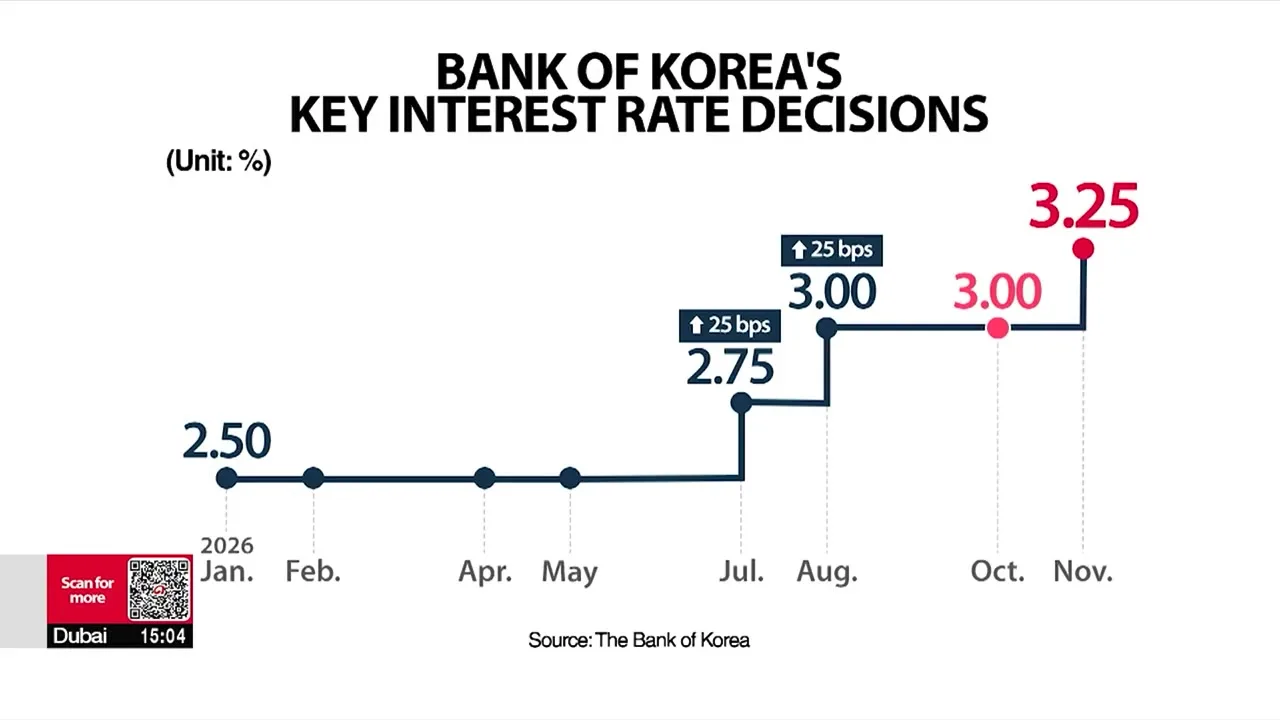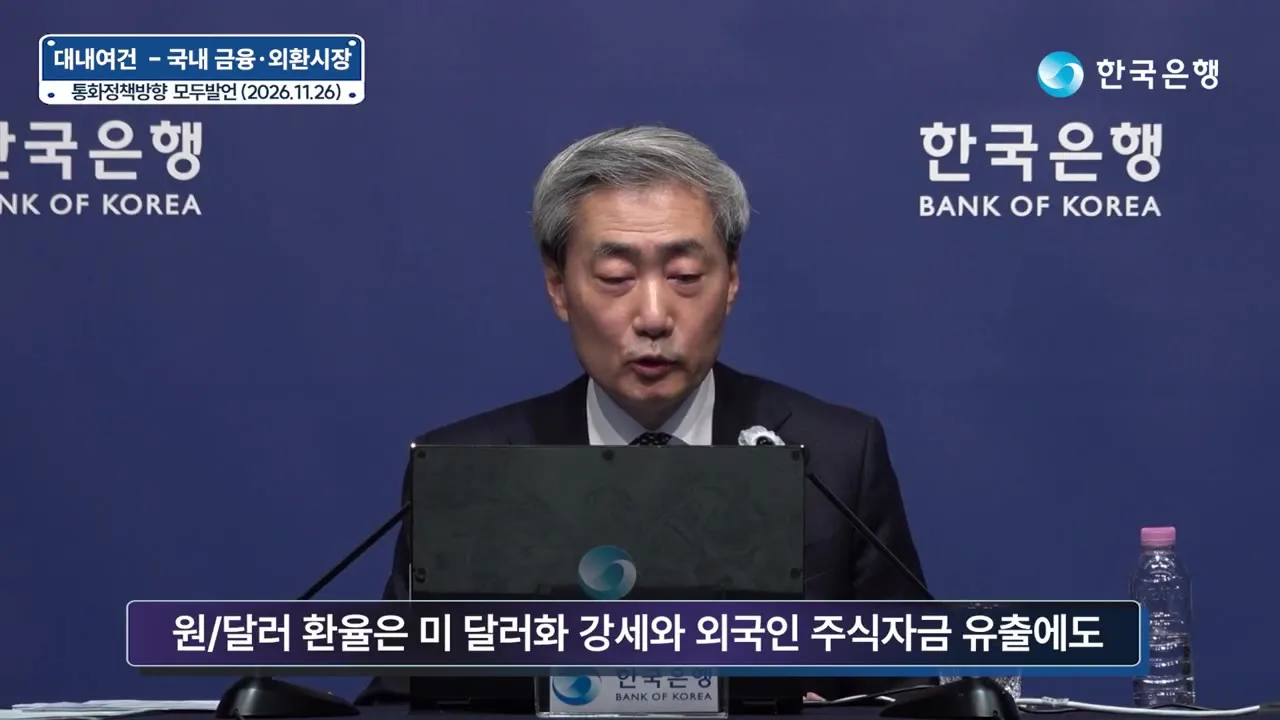
The Bank of Korea raised its policy rate by 25 basis points to 3.25% from 3%, citing stronger growth, inflation expected to remain above target and financial-stability risks. The bank’s governor said in opening remarks to the Monetary Policy Board meeting published Nov. 26.
The governor said the board judged that a quarter-point increase was appropriate as growth had strengthened and price rises were likely to stay above the target for a considerable period. Board members Hwang Geon-il and Lee Soo-young dissented, saying it would be preferable to keep the rate at 3%.
The bank raised its growth forecasts for this year and next to 3.9% and 4.1%, respectively, well above its August projections, and forecast growth of 3% in 2028. It said continued investment in artificial-intelligence infrastructure should support exports and investment, with the gains gradually reaching household income and consumption.
Consumer price inflation was forecast at 2.7% this year and 2.4% next year. Core inflation was projected at 2.6% in both years, above the previous 2.5% forecasts. The bank said prolonged high oil prices were increasing cost pressures and that stronger growth would gradually add demand pressure.
Inflation is expected to remain above the target through next year before moving closer to the target in 2028 as the effects of tighter monetary policy take hold. The governor said the bank would keep responding until it was confident inflation was converging steadily to the target, while deciding the timing of any further increase after reviewing growth and inflation paths.
The bank said the domestic economy was expanding rapidly on strong semiconductor activity and improving conditions in information technology. Third-quarter and fourth-quarter growth exceeded earlier expectations, while exports and investment remained firm after October even as consumption weakened somewhat.
Consumer and core prices rose in the upper 2% range in October, driven by personal services and prices. Stock markets fell sharply amid concern about slower global artificial-intelligence investment, while government bond yields declined with those in major economies. The won-dollar exchange rate was broadly stable despite a stronger U.S. dollar and foreign equity outflows, helped by a large current-account surplus.
Metropolitan housing prices rose more slowly as some expensive districts declined, but prices continued to climb rapidly in Seoul’s mid-priced areas and parts of Gyeonggi province. Household lending growth also widened as both housing-related and other loans increased.
The bank said short-term funding and credit markets remained broadly stable despite greater stock-market volatility. It said rising household lending, still-high expectations for metropolitan housing prices and the prospect of further tightening by major central banks could affect inflation and financial stability through exchange rates.
The bank also raised the interest rate on its lending support programme to 1.5% from 1.25%, in line with the change in its policy stance.