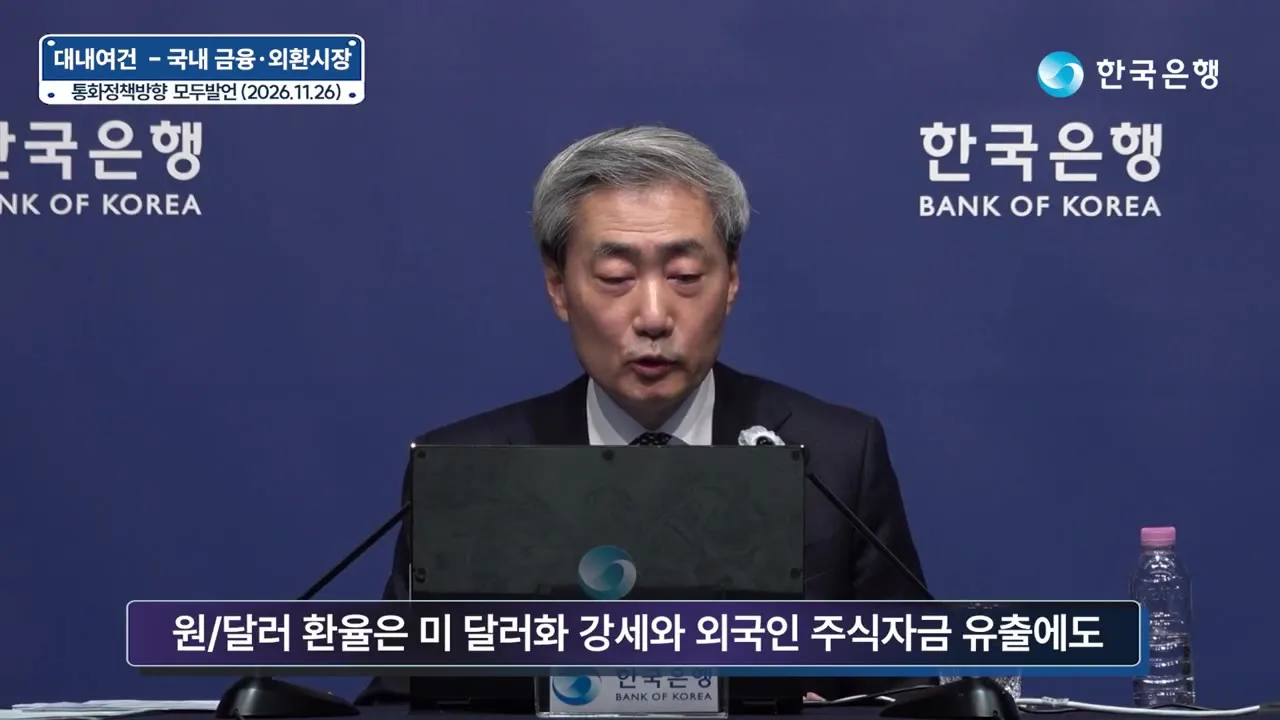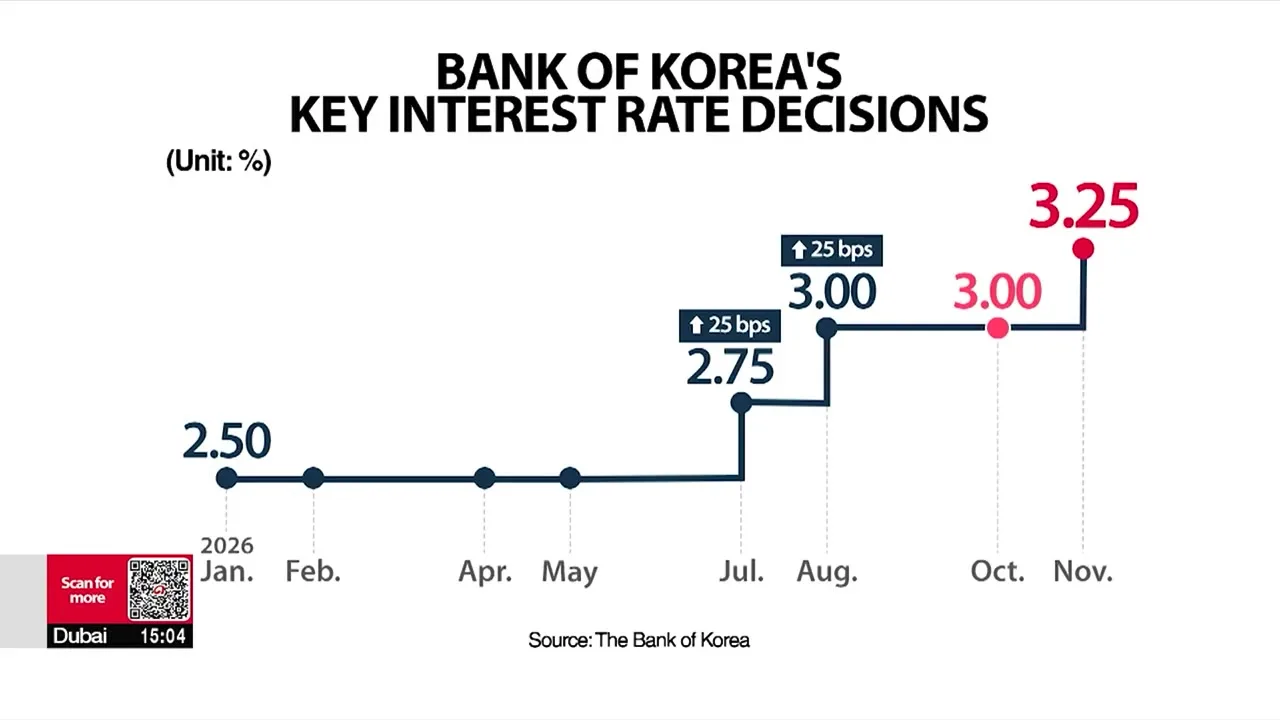
The Bank of Korea raised its benchmark interest rate by 25 basis points to 3.25% on Thursday, its highest level in two years. It lifted the 2026 growth forecast to 3.9%, Arirang News reported Nov. 26.
Four members backed the increase at the central bank’s final monetary policy meeting of the year, while two voted to keep rates unchanged. The decision returned borrowing costs to the level seen before the Bank of Korea cut the rate to 3% in November 2024.
The central bank raised rates by a quarter percentage point in both July and August to contain inflation and address financial stability risks. It then held the rate in October while assessing the effects of those increases amid uncertainty at home and abroad.
The Bank of Korea governor said a 25-basis-point increase was appropriate because economic growth was stronger, inflation was expected to stay above the bank’s target for some time and financial stability risks persisted.
Exports exceeded $1 trillion between Jan. 1 and Nov. 19, driven by demand for semiconductors, shipbuilding, defense and nuclear energy. Consumer price growth slowed to 2.8% in October from its August level but remained above the central bank’s 2% target.
The Bank of Korea raised its 2026 growth forecast from 3.3% in August to 3.9% and set its 2027 forecast at 4.1%. It kept the 2026 inflation forecast at 2.7% and raised the 2027 forecast to 2.4%.
Stronger growth can increase demand and add to inflation concerns, making lower borrowing costs harder to justify. The bank updates its growth and inflation projections four times a year through its quarterly economic outlook.
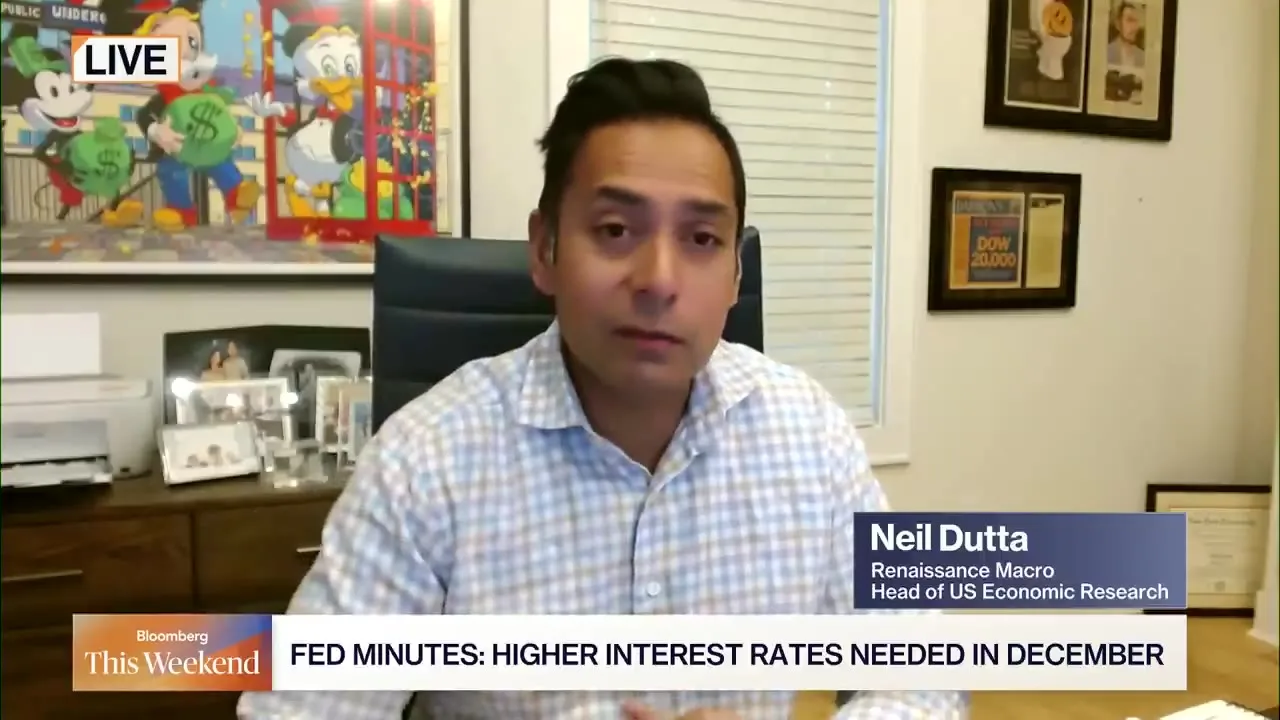
Future decisions will depend partly on the U.S. Federal Reserve’s rate decision next month. Markets widely expect a December increase, and that expectation was already reflected in the Bank of Korea’s latest decision.
The U.S. benchmark rate stands at 3.75% to 4%, leaving a gap of 0.75 percentage point at the upper end between the two countries. A wider gap could encourage capital outflows and weaken the Korean won.
Further U.S. rate increases could influence global financial markets and Korean monetary policy. Rates in South Korea are expected to keep rising for some time unless the semiconductor export boom fails, despite uncertainty in the semiconductor and artificial-intelligence sectors and volatility in share prices.