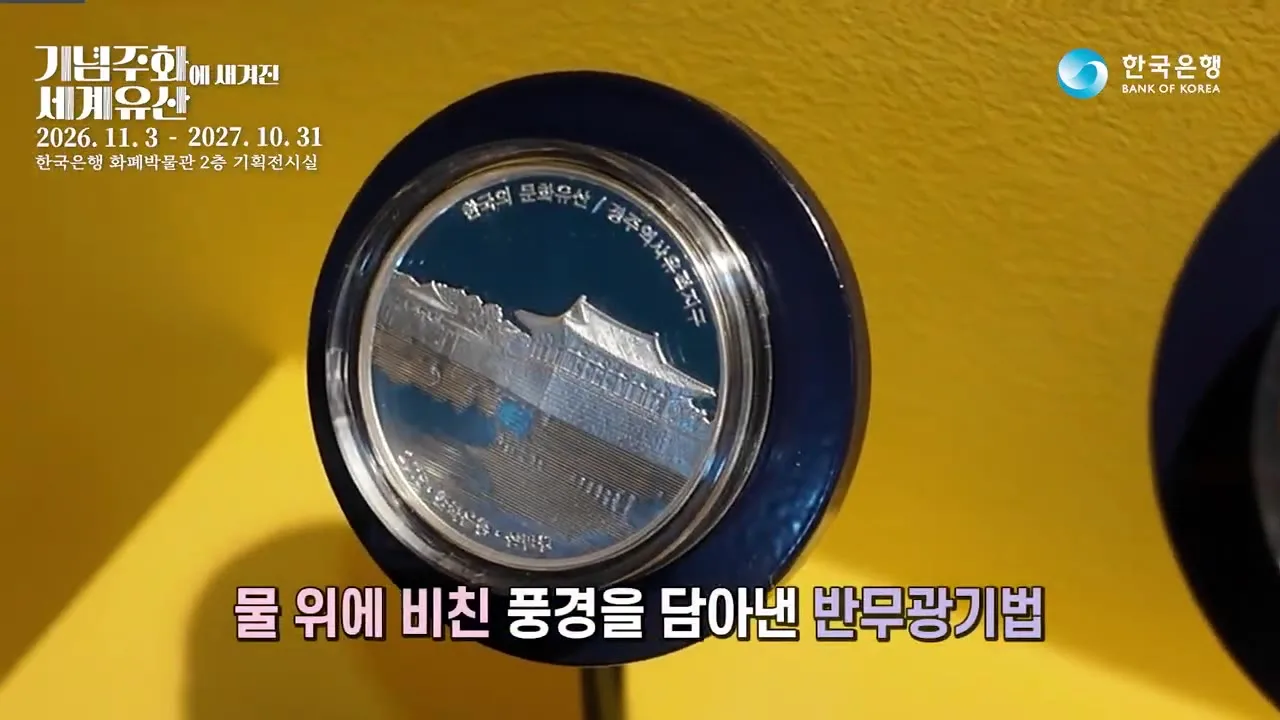
The Bank of Korea opened an exhibition showing how its commemorative coins depict South Korea’s World Heritage sites, including new issues released in 2026, the central bank said.
The exhibition brings coins together with models, video and related materials to help visitors understand the places depicted on them. The central bank presented the exhibition in its own video announcement, published on Nov. 17.
The display includes coins featuring Jongmyo Shrine, Seokguram Grotto, Bulguksa Temple, and Jeju’s volcanic island and lava tubes. It also features issues depicting Korean tidal flats and the petroglyphs, or images carved into rock, along the Bangucheon stream.
The latter two coins were issued to commemorate South Korea’s hosting of the UNESCO World Heritage Committee this year. They connect the exhibition’s displays of historic sites with its treatment of natural heritage.
“The coins express not only the appearance of the heritage, but also the historical, cultural and natural values contained within it,” a Bank of Korea Money Museum curator said, in translated remarks.
The Korean National Commission for UNESCO jointly organised the exhibition. The Korea Heritage Service and the Korea Heritage Agency also helped prepare its contents.
The first section focuses on historical heritage preserved over time. It pairs commemorative coins with models that allow visitors to examine the shapes and features of the sites represented on the metal.
The Korea Heritage Agency lent the models for the display. Visitors can touch them while looking at the coins, giving them another way to understand the buildings and other features shown.
A nearby screen shows the front and back of the coins alongside explanations of the heritage they depict. The display allows visitors to compare the designs with information about the sites.
A coin commemorating the Gyeongju Historic Areas depicts Donggung Palace and Wolji Pond. Its design represents the palace reflected in the pond, using the water’s reflective qualities as part of the image.
A coin featuring the Royal Tombs of the Joseon Dynasty combines views from different angles. Some elements appear from the side, while others appear from above, drawing on a traditional painting method.
The final section turns to natural heritage, including the tidal flats and Bangucheon rock-carving coins. A wall display uses whale images from the Bangudae petroglyphs to present coins depicting nature.
Visitors can also open small doors to find depictions of creatures that inhabit tidal flats, including crabs and spoonbills. These displays extend the presentation beyond the landscapes shown on the coins.
The exhibition presents commemorative coins as records of heritage and a means of passing its value to future generations. The announcement gave no exhibition closing date or admission details.