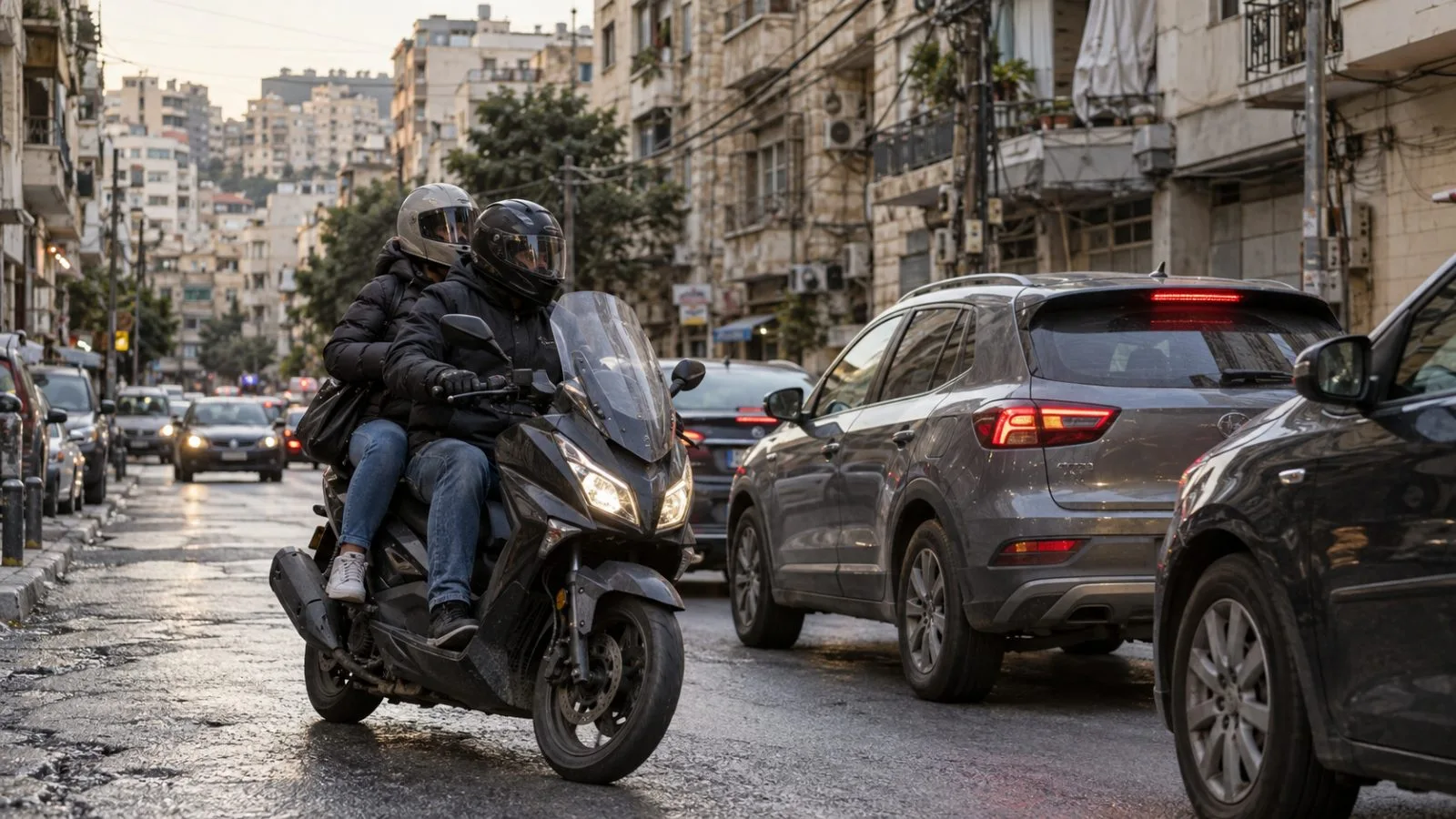
Interviews published by The National on Oct. 23 describe Beirut commuters turning to motorcycle taxis as fuel costs and shared-cab fares rise, including a reported LBP 200,000 trip across the city.
The National said Zainab paid LBP 200,000 for a motorcycle-taxi ride from Ras Al Nabaa to Jisr Al Wati. It also reported that some shared-taxi drivers raised fares from LBP 200,000 to LBP 300,000 after a gasoline levy was introduced in February. Drivers told the outlet that fares on some trips had reached LBP 400,000 or more.
Lebanon’s Cabinet announced a LBP 300,000 charge on a gasoline can as part of a package to fund public-sector salary and pension increases. The package also raised value-added tax from 11% to 12%. Prime Minister Nawaf Salam said it aimed to raise about $800 million.
Moussa, a paramedic quoted by The National, said filling his car had gone from costing $45 to about $90 to $100 or more. He said he had started using motorcycle taxis. The Ministry of Energy and Water listed 95-octane gasoline at LBP 2,837,000 per 20 liters in its latest update, dated Oct. 2.
The shift is also affecting conventional taxi drivers. Wael, a driver quoted by The National, said, “They’re taking half our business.” The outlet reported that he drove a motorcycle during the day and his licensed taxi at night.
Lebanon’s economic and financial crisis began in 2019. In 2021, the World Bank said it could rank among the 10 most severe crises worldwide since the mid-19th century, and potentially among the three worst.
In September, Energy and Water Minister Joe Saddi said he would ask the Cabinet to cancel or suspend the gasoline levy, citing the burden on consumers amid higher global oil prices.